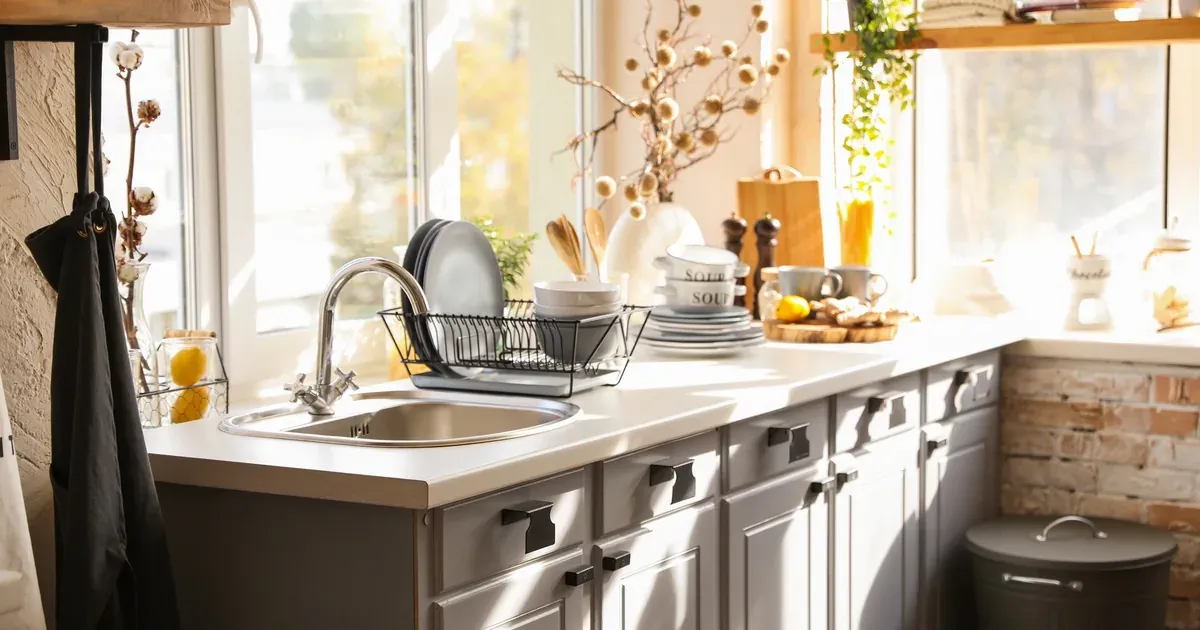
If you’ve ever stood in your kitchen holding a new pot, turning in a slow circle looking for somewhere — anywhere — to put it, this list is for you. Most kitchen organization content assumes you’ve got a 10x10 layout with a walk-in pantry and cabinets to spare. This one doesn’t.
These are 17 ideas built specifically for kitchens where every inch is already spoken for — where the “just add a lazy Susan” advice feels like a joke because there’s no room for a lazy Susan in the first place. Some of these cost nothing but a Saturday afternoon. Others need a small tool or two. None of them assume space you don’t have.
Why Tiny Kitchens Need a Different Strategy (Not Just Smaller Versions of Big-Kitchen Ideas)
Standard kitchen organization advice is written for standard kitchens. That’s the problem.
When you’ve got generous counter space and deep pantry shelves, the advice is mostly about containing things — bins, labels, matching jars. But in a genuinely tiny kitchen, containment isn’t the issue. Space is. You don’t need prettier bins; you need square footage that doesn’t exist yet.
That means thinking differently. Instead of buying more storage containers, you look for dead zones — the back of a cabinet door, the air above your sink, the gap beside the fridge nobody’s using. Instead of one big reorganization, you stack small, vertical, multi-use fixes that each claim a sliver of space you’d otherwise waste.
This list won’t give you a Pinterest-perfect pantry with matching labels. It’ll give you a kitchen that actually functions, which — when your kitchen is this small — matters a lot more.
1. Add a Riser Shelf Inside Every Cabinet
Most cabinets waste half their vertical space. You’ve got a stack of plates on the bottom and 6 empty inches of air above them before the next shelf — because dishes only stack so high before they’re impossible to grab safely.
A riser shelf fixes that instantly. It sits on your existing shelf and creates a second, elevated level, so you’re using both the space below and above it. Works great for plates, canned goods, coffee mugs, spice jars — basically anything that doesn’t need to stack more than one or two high.
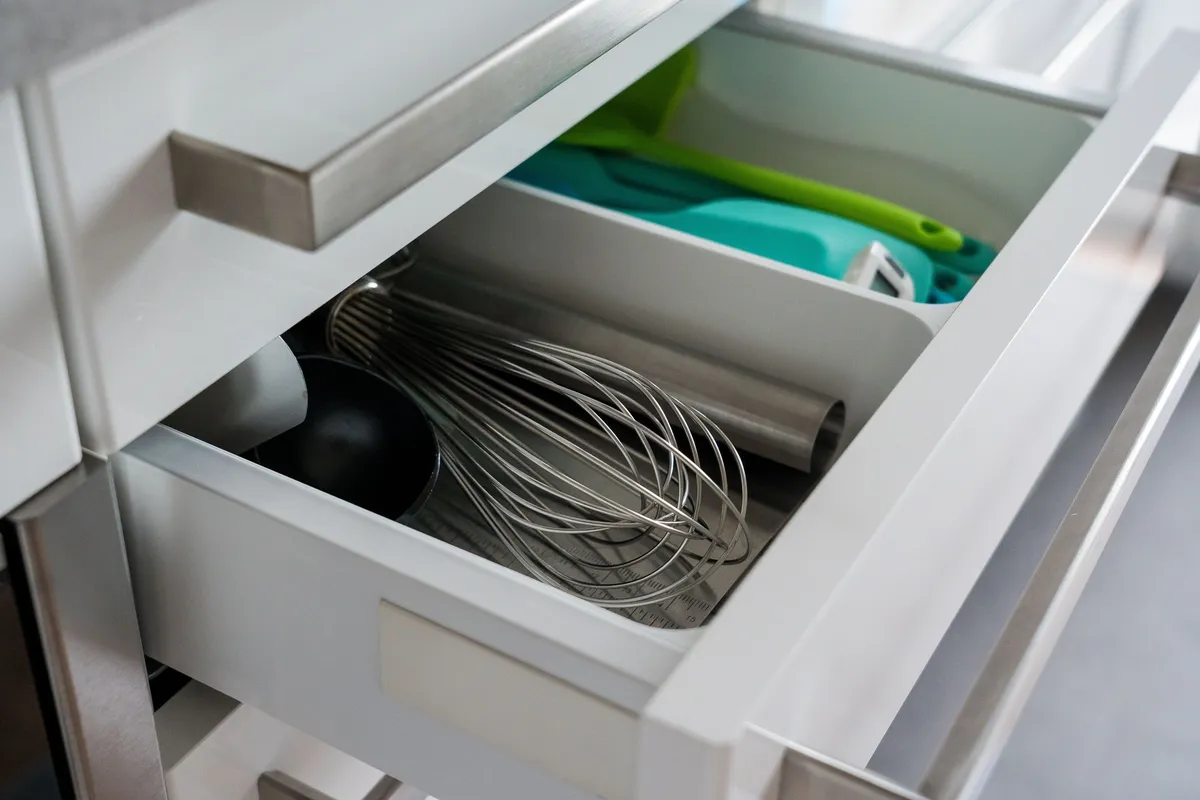
The best part: no tools, no drilling, no commitment. Most expandable cabinet shelf risers just adjust to fit your cabinet width and sit in place. If you only do one thing from this entire list, start here — it’s the lowest effort for the biggest space payoff.
2. Mount a Magnetic Knife Strip to Free Up a Drawer
A knife block takes up a full square foot of counter space you don’t have. A knife drawer insert eats an entire drawer you probably need for something else.
A magnetic strip solves both problems by moving your knives to the wall. It also makes them more visible and, honestly, easier to grab mid-recipe than digging through a drawer.
For renters, adhesive-mount magnetic strips exist that skip the drilling entirely — they hold surprisingly well for kitchen knives, as long as you’re not hanging anything unreasonably heavy. Mount it beside the stove or over a counter edge where you’d naturally reach for a knife anyway, so it doesn’t just become another thing in the way.
3. Use the Inside of Cabinet Doors for Lids and Wraps
Pot lids are the worst offenders in a small kitchen. They’re big, they’re awkward, and they don’t stack with anything else — so they end up loose in a cabinet, sliding around and taking up way more room than they should.
The inside of your cabinet door is completely dead space right now. An over-door lid organizer rack, usually adhesive or tension-mounted, reclaims it.
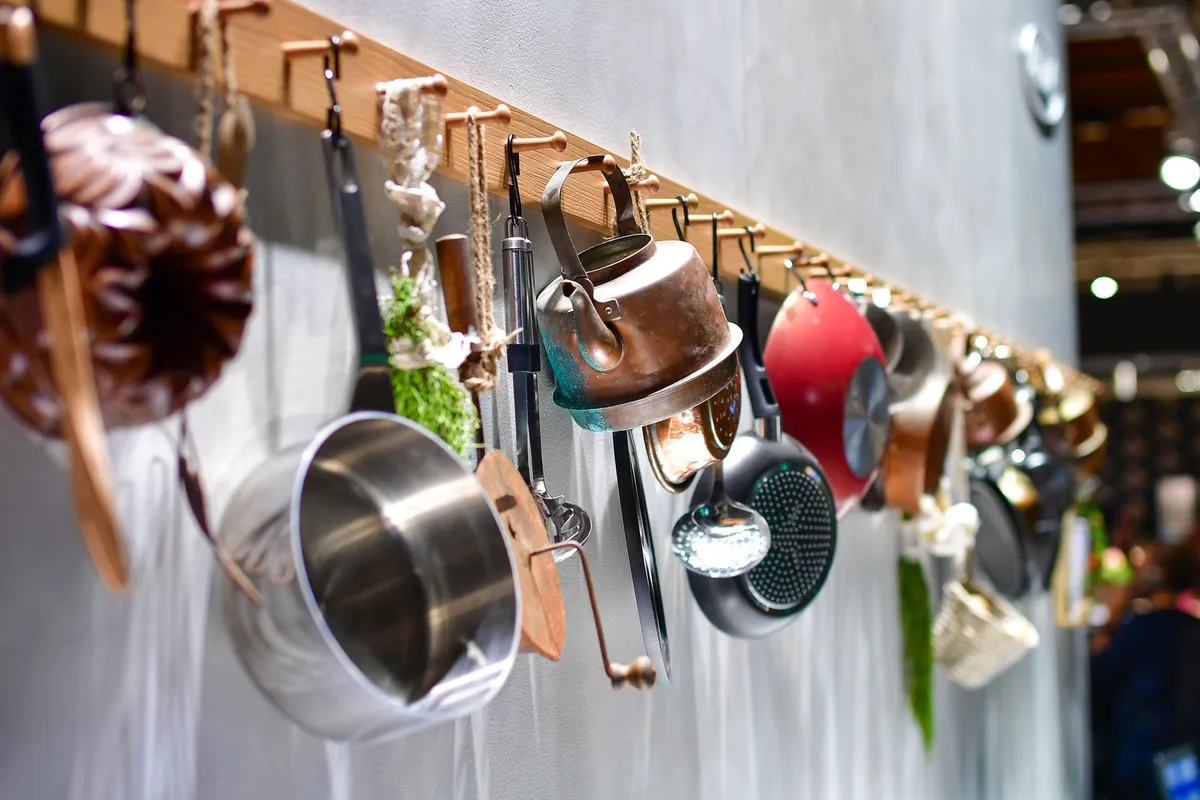
The same trick works for foil, plastic wrap, and parchment paper boxes — there are slim door-mounted racks built just for those, too. This one’s satisfying because it doesn’t just organize clutter, it actually removes an entire category of mess from your shelves.
4. Install a Slim Rolling Cart in Any Leftover Gap
Look at the gap beside your fridge or stove. If it’s even 6-8 inches wide, that’s usable space you’re currently wasting.
Slim rolling carts are built exactly for gaps like this. Some are as narrow as 6 inches, which sounds too tight to be useful — until you realize it fits 2-3 tiers of storage plus a bit of extra surface on top.
The mobility is the real win here. Need more counter space while cooking? Roll it out. Need it tucked away? Roll it back. It’s flexible in a way built-in shelving can’t be, which matters a lot when your whole kitchen is one multi-purpose space.
5. Replace Bulky Dish Racks With a Fold-Flat or Over-Sink Version
A standard dish rack claims a permanent chunk of counter — usually the exact spot you need for actual food prep.
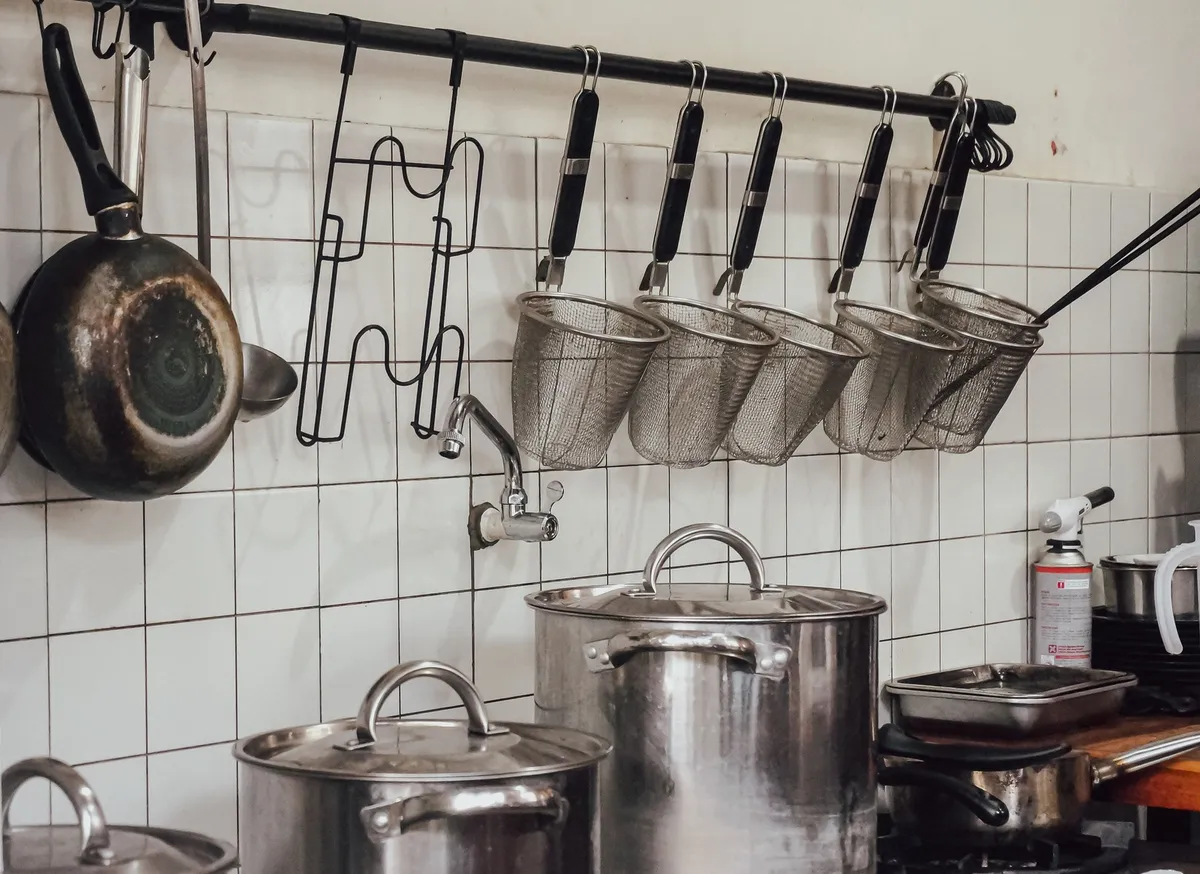
Two fixes here. An over-sink rack uses the air space directly above your basin, which is otherwise doing nothing between washes. Or a fold-flat rack that collapses down to store in a drawer or cabinet when you’re not actively drying dishes.
Either option gets your counter back. If you wash dishes daily but don’t need drying space sitting out 24/7, the fold-flat version is the better call — it only exists when you need it.
6. Corral Under-Sink Chaos With Pull-Out Bins
Under the sink is prime real estate that usually turns into a graveyard of loose spray bottles, extra sponges, and a rag nobody remembers buying.
Pull-out bins bring order without losing access to the pipes. You can also run a tension rod horizontally to hang spray bottles by their necks, which frees up the floor of the cabinet for taller items.
Under-Sink Organization Ideas That Actually Work has more detail if this is your worst zone — for a lot of tiny kitchens, it is. This is a good one to pair with drawer dividers built for depth since both tackle the “loose stuff sliding everywhere” problem.
7. Use a Tension Rod to Divide Baking Sheets and Trays
Flat items — baking sheets, cutting boards, muffin tins — are notorious for turning into a leaning, sliding pile that’s impossible to grab from without everything else falling over.
A spring tension rod, installed vertically inside a cabinet, creates an instant divider. It splits the space into slots so each tray stands upright on its own, instead of stacking into one unstable mess.
This is one of the cheapest fixes on this entire list — you’re using a rod meant for curtains or closets, repurposed for cabinet storage. It fits in cabinets as narrow as 8 inches, so even a genuinely tiny cabinet can handle it.
8. Hang a Pegboard for Pots, Utensils, and Small Tools
An empty wall is wasted storage in a tiny kitchen. A pegboard turns it into exactly the kind of flexible, rearrangeable storage that built-in cabinets can’t offer.
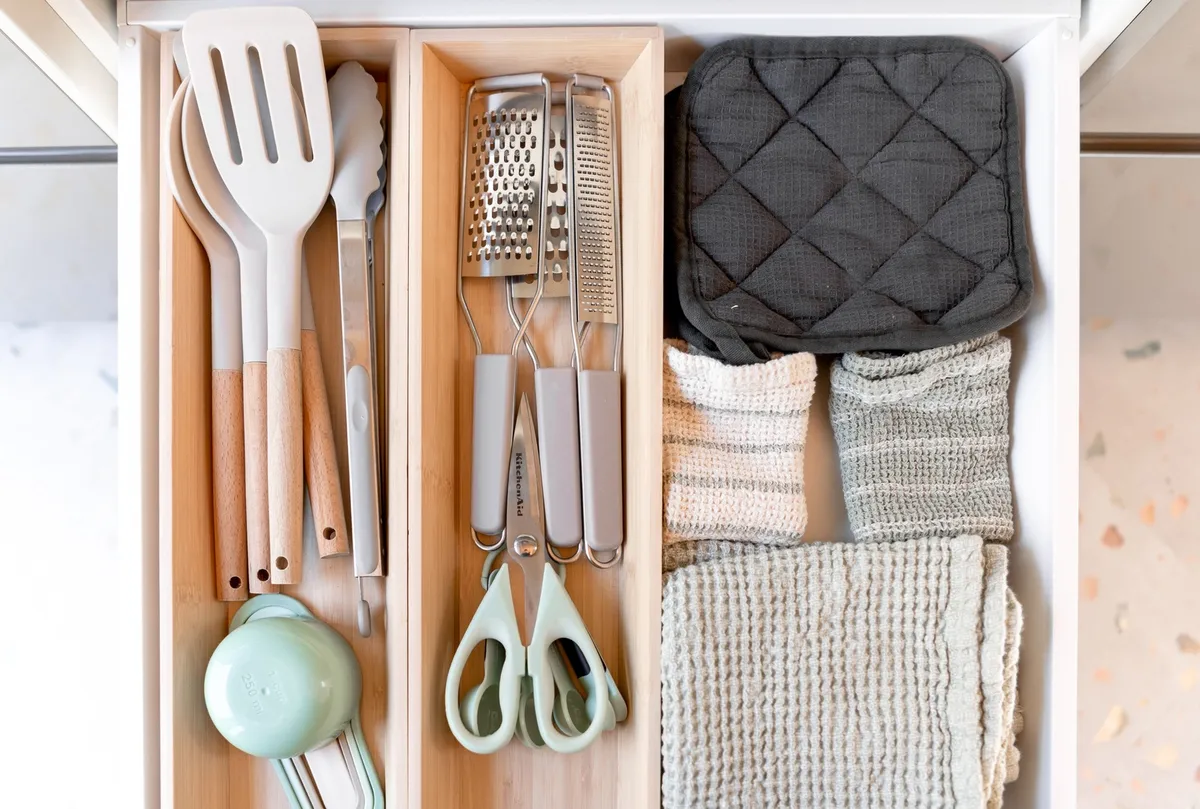
Hang pots, ladles, strainers, cutting boards — whatever’s clogging your cabinets and drawers. As your needs change, you just move the hooks. No other storage system adapts that easily.
For renters, Command-strip mountable pegboard kits exist specifically so you can skip the drilling. They’re sturdy enough for lightweight cookware and utensils, though skip them for your heaviest cast iron pan.
9. Swap Bulky Boxes for Stackable Bins in the Pantry (Even a One-Shelf One)
Cereal boxes, cracker bags, pasta boxes — they’re all irregular shapes that don’t stack cleanly and waste a surprising amount of vertical space.
Uniform stackable bins fix this by turning irregular packaging into a consistent shape you can actually stack two or three high. One shelf starts doing the work of two.
Clear bins are worth the small extra thought over opaque ones — you can see what’s inside without pulling every bin out to check. If your entire “pantry” is a single shelf in a cabinet, this is one of the highest-impact changes on this list, because it maximizes the one shelf you’ve got.
10. Add a Fold-Down Shelf or Table for Extra Prep Space
If your counter space is at zero, sometimes the answer isn’t better storage — it’s more surface, added only when you need it.
A wall-mounted fold-down shelf works like a Murphy bed for your countertop. Flip it down for extra prep space while cooking, fold it flat against the wall the rest of the time.
This is a bigger project than most items on this list — it usually involves mounting hardware to the wall — but for kitchens with genuinely zero spare counter inches, it’s often the only real solution. Worth it if you’ve tried everything else and still run out of room every time you cook.
11. Store Spices on the Inside of a Cabinet Door
Spice jars are small, but they take up a disproportionate amount of shelf space, especially when they’re standing in rows behind other items where you can’t see or reach them.
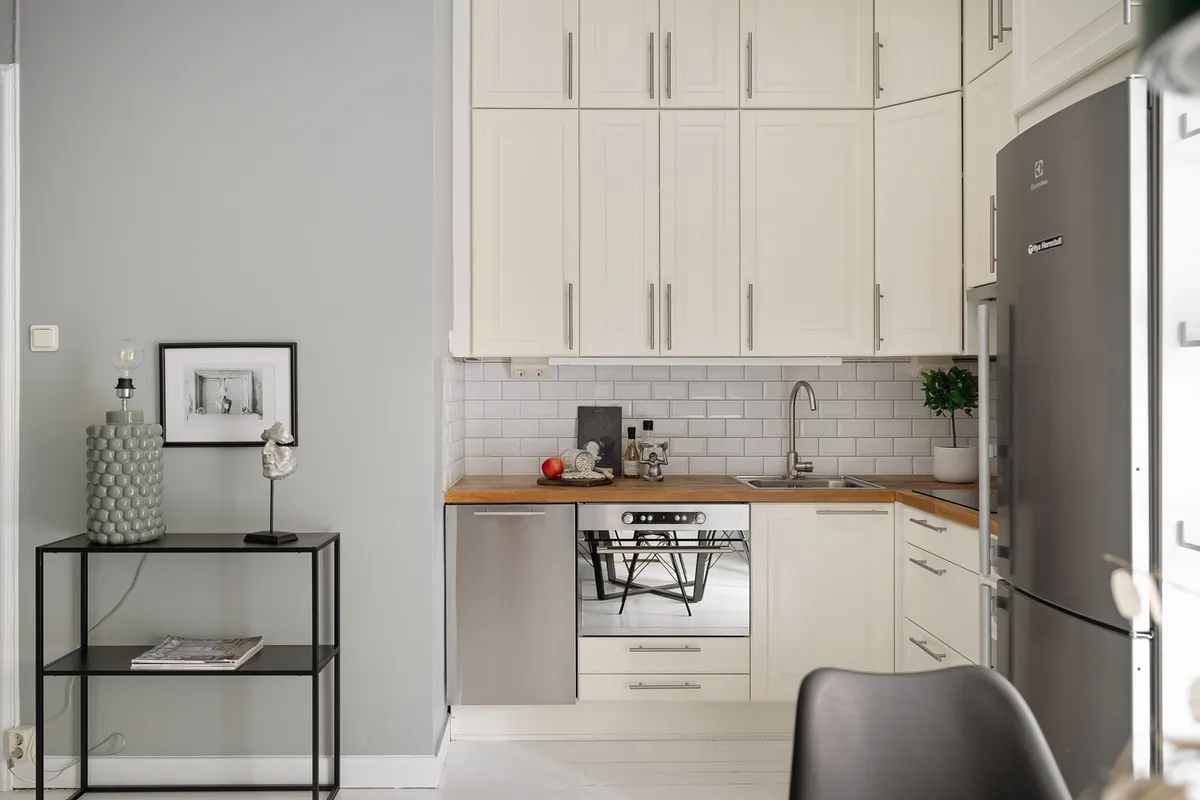
A door-mounted spice rack solves this by using space that was otherwise doing nothing — the inside of a cabinet door. It also keeps every jar visible at a glance instead of buried three rows deep.
Look for adhesive-strip mounted versions if you don’t want to drill into cabinet doors. They hold spice jars fine since the weight is light, and they come off cleanly if you move.
12. Use Drawer Dividers Built for Depth, Not Just Width
Most drawer organizers you see are designed for width — dividing a drawer left to right. But deep drawers waste space front to back, too, which is how you end up with tools sliding forward and piling into a jumble every time you open it.
Adjustable dividers built for depth create small dedicated zones front-to-back, not just side-to-side. This is especially useful for that one utility drawer that’s become a catch-all for everything from twist ties to takeout menus.
Expandable drawer divider organizers are an affordable category — most fit a range of drawer sizes, so you don’t need to measure precisely before buying.
13. Mount Mugs and Cups Under a Cabinet
If a whole shelf in your cabinet is dedicated to mugs, that’s valuable real estate being used inefficiently.
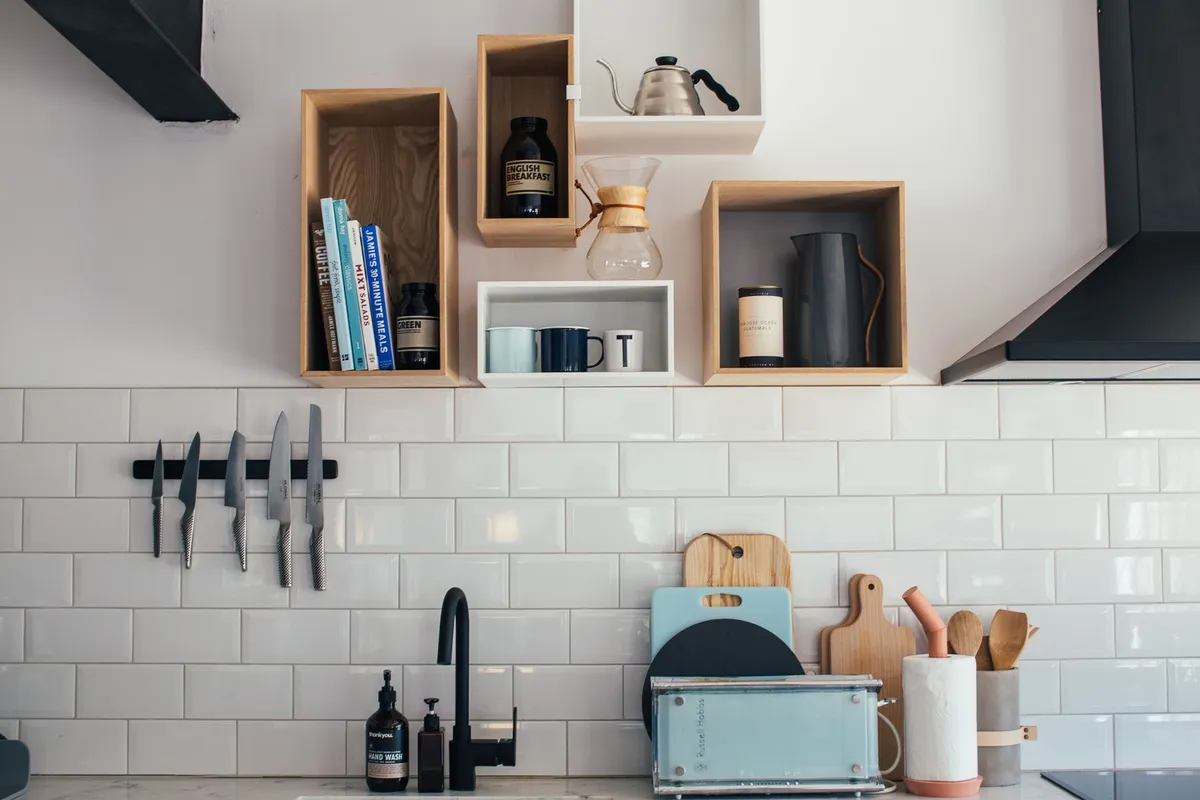
Under-cabinet hooks move mugs off the shelf entirely, hanging them in the air space just below your cabinets — space that’s otherwise completely unused. It also makes your morning coffee routine faster, since you’re not opening a door and digging around.
Peel-and-stick hook strips handle this without any drilling. Just make sure you’re mounting into the underside of a sturdy cabinet, not thin trim that might not hold the weight over time.
14. Use a Vertical Bakeware Organizer Instead of Stacking
Baking sheets, cutting boards, and muffin tins stacked flat means digging from the bottom every time you need the one at the bottom of the pile — which is always the one you need.
A vertical bakeware organizer flips this. Each item slides into its own slot standing upright, so you pull out exactly the one you want without disturbing the rest.
These fit inside a cabinet or slide into a gap beside the fridge or stove. If you’ve already added the slim rolling cart to a nearby gap, a vertical organizer can live on one of its tiers instead of taking separate cabinet space.
15. Replace the Trash Can With a Slim Pull-Out or Door-Mounted Version
A standard trash can can eat 10 or more inches of floor space — space that’s brutal to lose in a tiny kitchen’s already-tight footprint.
A slim pull-out trash bin tucks into a cabinet base, hidden until you need it and completely out of the way otherwise. If a full pull-out install isn’t in the cards, a door-mounted mini bin works well for a smaller category like compost or recycling.
Either option reclaims floor space you’re currently just walking around. It’s a bigger change than most items on this list, but if floor space is your actual bottleneck rather than cabinet or counter space, it might be the highest-impact fix here.
16. Add Floating Shelves Above Counter Height, Not Just at It
Most people stop adding shelves right around eye level, because that’s where shelving typically “makes sense” to reach. But that habit leaves a whole zone of wall space above it completely unused.
Higher floating shelves store items you don’t need daily — the stand mixer you use twice a month, backup serving dishes, the big soup pot. None of that needs to be at arm’s reach, so it’s the perfect use for space you weren’t touching anyway.
A small step stool is the only real cost of this trick, and it makes the extra height genuinely practical rather than just decorative. This pairs well with the pegboard idea if you’re trying to clear wall space at every level, not just one.
17. Keep a “One Touch, One Zone” Rule for Every New Item
This one sounds boring, but it’s the fix that makes every other fix on this list actually last.
Here’s the rule: before a new gadget, tool, or container gets used for the first time, it gets assigned a specific spot. Not “somewhere in the cabinet” — an actual zone. If there’s no obvious spot, that’s the moment to decide if you really need it.
Skip this step and you’ll be back to overflowing counters within a few months, no matter how many risers and pegboards you install. It costs nothing and takes the least physical effort of anything on this list — it’s just a habit. But it’s the one that prevents you from redoing this whole project again next year.
Where to Start If Your Tiny Kitchen Feels Overwhelming
Don’t try to do all 17 of these in one weekend. Pick the single worst zone in your kitchen — for most people, that’s either under the sink or one specific junk drawer — and fix just that one first.
Here’s a simple order that builds momentum without overwhelming you:
- Fix your worst zone first. Whether it’s the under-sink chaos or an overflowing drawer, tackle the thing that annoys you daily before anything else.
- Add one vertical solution before buying more bins. A riser shelf or a tension rod divider costs little and creates space immediately — do this before any other purchase.
- Let one small win build momentum. Once you see one zone actually working, the rest of the list gets easier to tackle over a weekend instead of feeling like a giant project.
You don’t need to buy everything on this list. Most tiny kitchens only need 4-5 of these ideas to feel dramatically less chaotic — the trick is picking the right ones for your specific dead zones, not doing all of them at once.
FAQ
What’s the single best storage upgrade for a tiny kitchen?
Cabinet riser shelves usually deliver the most storage gain for the least effort and cost, since they double usable space in cabinets you already have without any installation. They’re also the easiest to undo if you move or change your mind.
How do I organize a tiny kitchen if I’m renting and can’t drill holes?
Look for adhesive-mount and tension-rod solutions like stick-on hooks, Command-strip pegboards, and spring tension rods for dividers. All of these add storage without damaging walls or cabinets, and most come off cleanly when you move out.
Should I get rid of things to make a tiny kitchen work, or just organize better?
Usually both help, but organizing first is less overwhelming. Start with the ideas in this list, then declutter duplicate tools or rarely used gadgets once you see what space is actually left.
If you’re not sure where to begin tonight, grab a riser shelf and fix just one cabinet. It’s a 10-minute change, and it’ll show you exactly how much space you’ve been sitting on without realizing it.