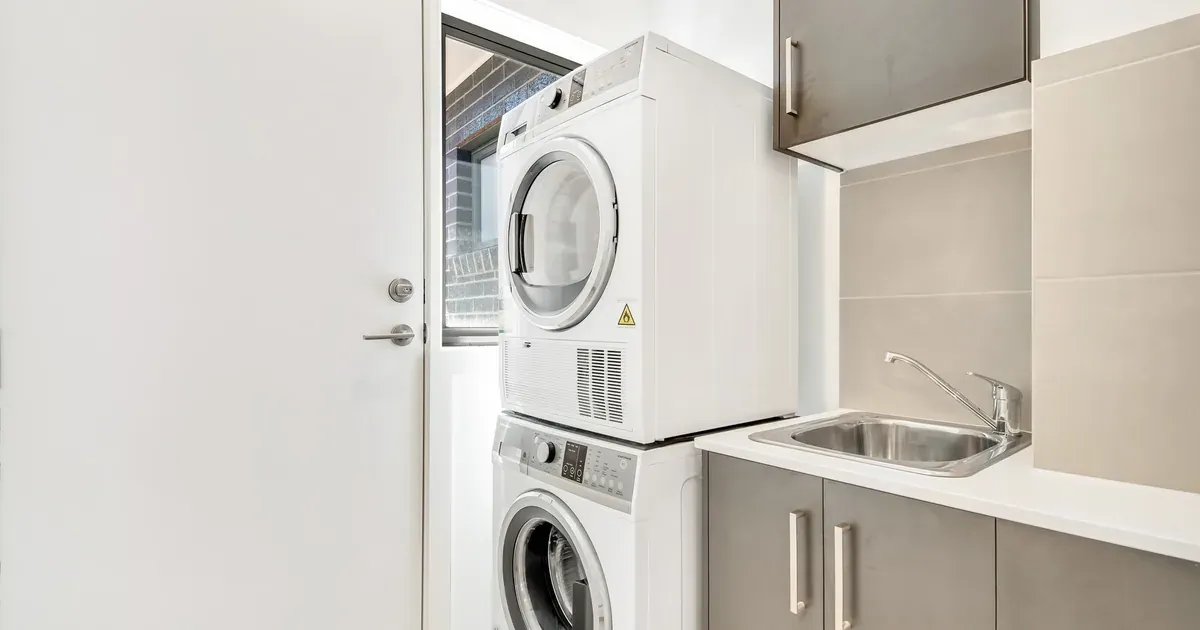
If you’ve ever had to do a little shuffle dance — kick the basket, step over the drying rack, elbow the ironing board — just to start a load of laundry, this list is for you. Small laundry rooms (and closets, and那 weird alcove someone once called a “laundry nook”) don’t need less stuff. They need smarter storage for the stuff they already have.
These are 17 real, doable ideas for tiny laundry spaces. No renovation, no knocking down walls, no pretending you have a pantry-sized closet to work with. Most of these cost little, and a good chunk are totally renter-friendly.
Why Small Laundry Rooms Need a Different Approach
Most organizing advice pictures a laundry room with base cabinets, a folding counter, and floor space to spare. If your laundry area is a closet, a stacked unit, or a room barely wider than the washer itself, that advice just doesn’t apply.
The real estate you actually have is different: the wall above the machines, the back of the door, the narrow gap beside the dryer, the vertical inches nobody thinks to use. Small laundry rooms live or die on how well you use vertical space and awkward gaps — not square footage on the floor.
That’s the lens for this whole list. Every idea here works with limited space, and most require no drilling, no permanent changes, and no big investment. If you rent, you’re covered. If you own and just don’t want to mess with your walls, you’re covered too.
1. Mount a Fold-Down Drying Rack on the Wall
A wall-mounted drying rack folds flat against the wall when you’re not using it, then swings open when you need to hang-dry a load. It’s the single best trade for a standalone drying rack, which eats floor space whether it’s holding clothes or not.
This works especially well positioned over a sink, a tub, or any patch of open floor that’s otherwise wasted. You mount it once, and it disappears into the wall the rest of the time.
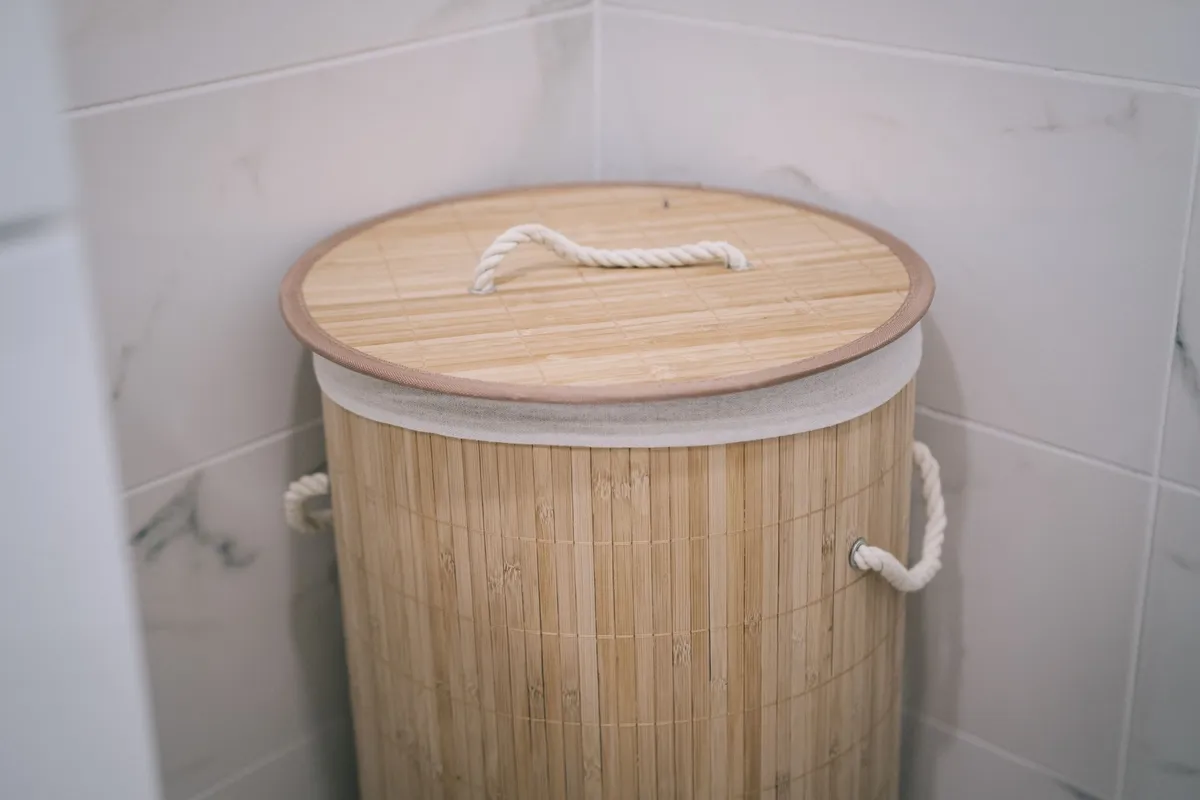
Look for one with multiple arms so you’re not limited to a single layer of clothes. Mount it at a height where you can actually reach the top rungs — sounds obvious, but it’s the most common install mistake.
2. Use the Space Above the Washer and Dryer
That blank wall above your machines is probably the biggest unused space in the whole room. Floating shelves or a tension-mounted shelf unit turn it into storage for detergent, dryer sheets, and stain removers — everything you reach for mid-load.
Keep heavier items like bulk detergent jugs on lower shelves, and lighter things like a box of dryer sheets up top. This isn’t just tidiness — it’s about not dropping a full detergent jug on your head while reaching overhead.
If you’re renting, look for tension-mounted shelving that doesn’t require anchors into drywall. If you own, shelves rated for humidity will hold up better over time near a running dryer.
3. Add a Rolling Cart That Slides Under or Beside Machines
Narrow rolling carts are built for exactly this kind of gap — the sliver of space beside a washer or dryer that’s too small for anything else. Pull it out when you need it, tuck it back in when you don’t.
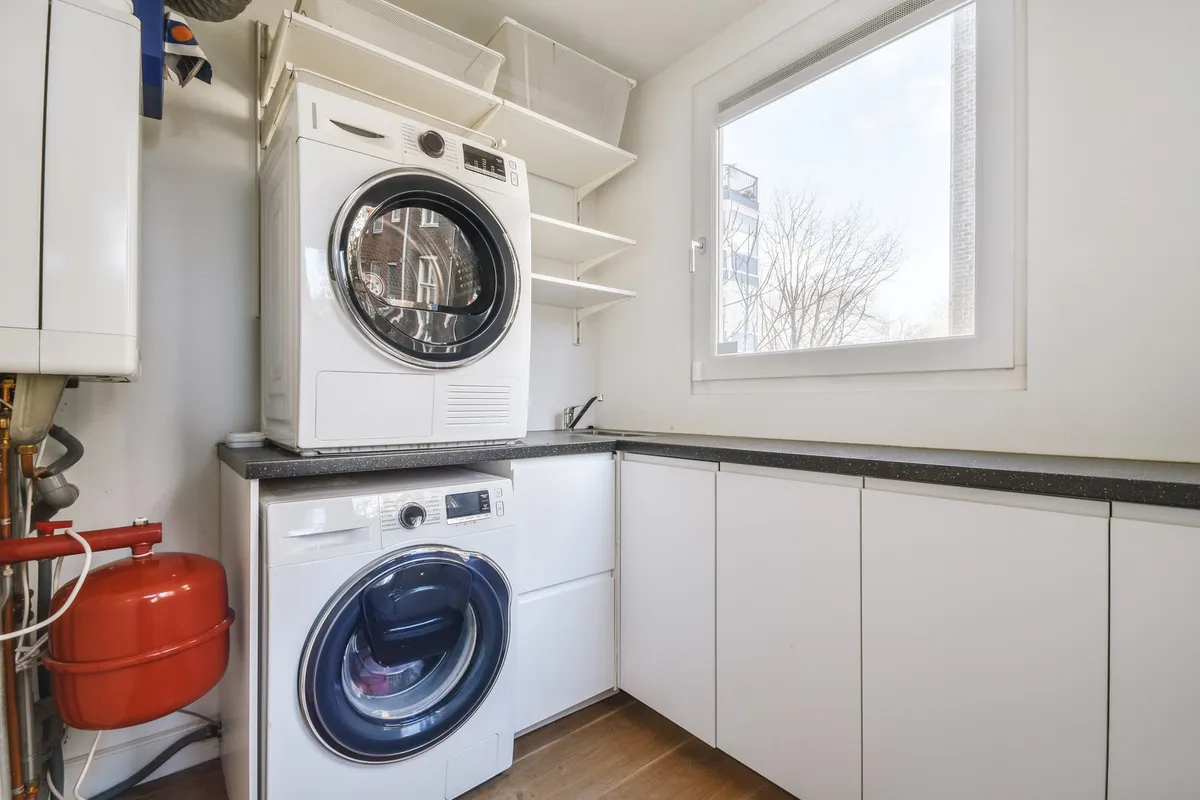
These carts work well for stain treatments, detergent pods, dryer balls, or anything you use during a laundry session but don’t want sitting out permanently. Measure the gap before buying — some carts run wider than they look in photos, and a half-inch can be the difference between fitting and not.
4. Hang a Door-Back Organizer
If your laundry room has a door, it has storage you’re not using yet. An over-the-door pocket organizer hooks over the top of a standard door with zero drilling, and it holds spray bottles, lint rollers, stain pens, and other small stuff that otherwise clutters your shelves.
This is one of the easiest wins on this whole list. It keeps counters and shelves clear for the things that actually need them, like folding space or bins.
Pick one with clear or mesh pockets so you can see what’s inside without patting down every pocket like a security check.
5. Install a Tension Rod for Hang-Dry Items
A tension rod wedges between two walls with no hardware at all, and it’s one of the fastest space-saving wins you can install in a laundry room. Use it for hanging shirts straight out of the dryer, before wrinkles set in.
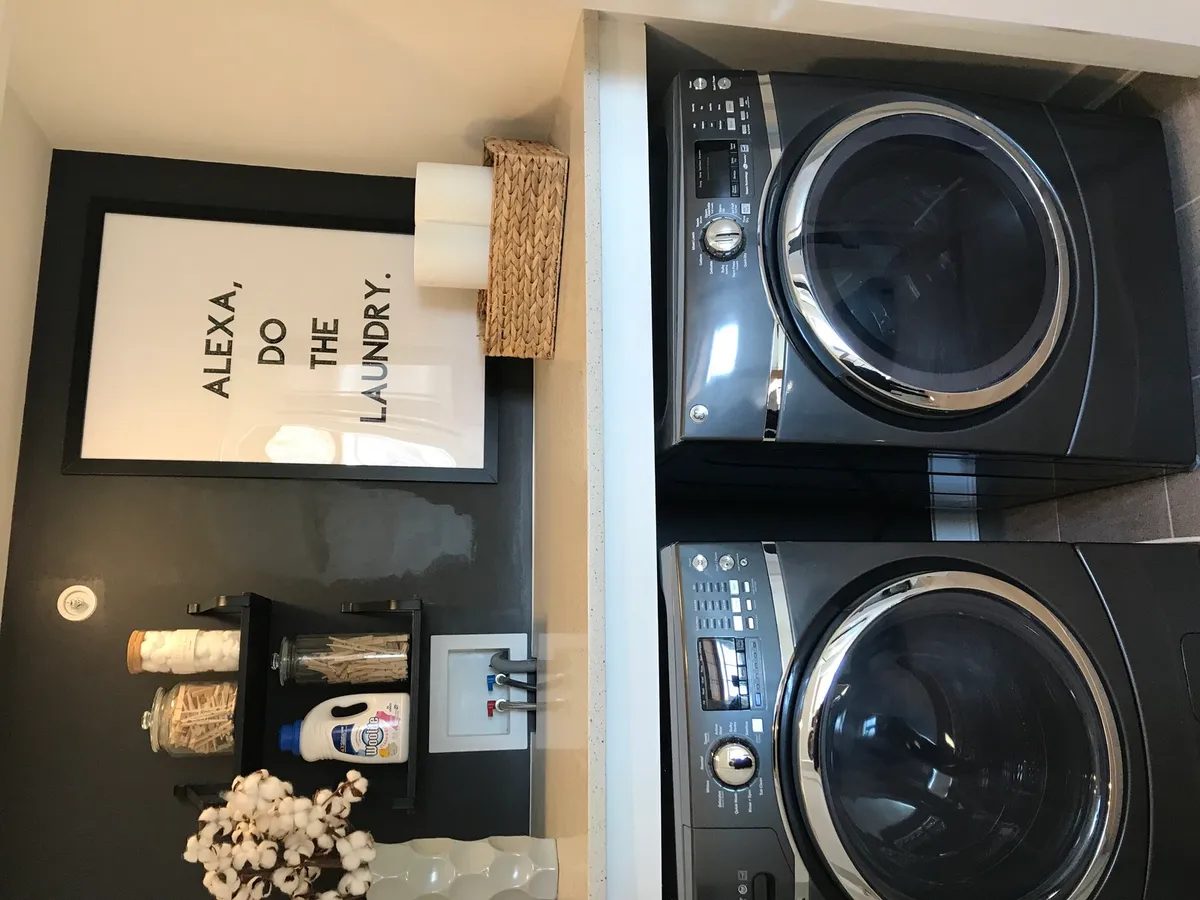
It also doubles as a spot for garment bags or anything that needs to hang for a day before going back in the closet. Because it’s tension-mounted, you can move it, adjust the height, or remove it entirely without leaving a mark — ideal if you’re renting or just testing whether this spot works for you.
6. Use Stackable Bins for Detergent and Supplies
Clear stackable bins let you use vertical shelf space efficiently instead of letting bottles and boxes sprawl out in every direction. Because you can see through them, you’re not guessing what’s inside or digging through a shelf to find the stain remover.
Label each bin — pods, dryer sheets, stain treatment, whatever your household uses regularly. This matters more than it sounds like it should, especially in shared households where everyone needs to find things without asking.
Stackable bins also keep loose powder detergent or pods from spilling out onto open shelving, which is a mess nobody wants to clean up twice.
7. Build a Mini Folding Station with a Countertop Cover
If you don’t have a folding counter, a cut-to-fit board placed over your washer and dryer creates one instantly. It’s removable, so it doesn’t interfere with the machines running underneath, and you can lift it right off when you need full access.
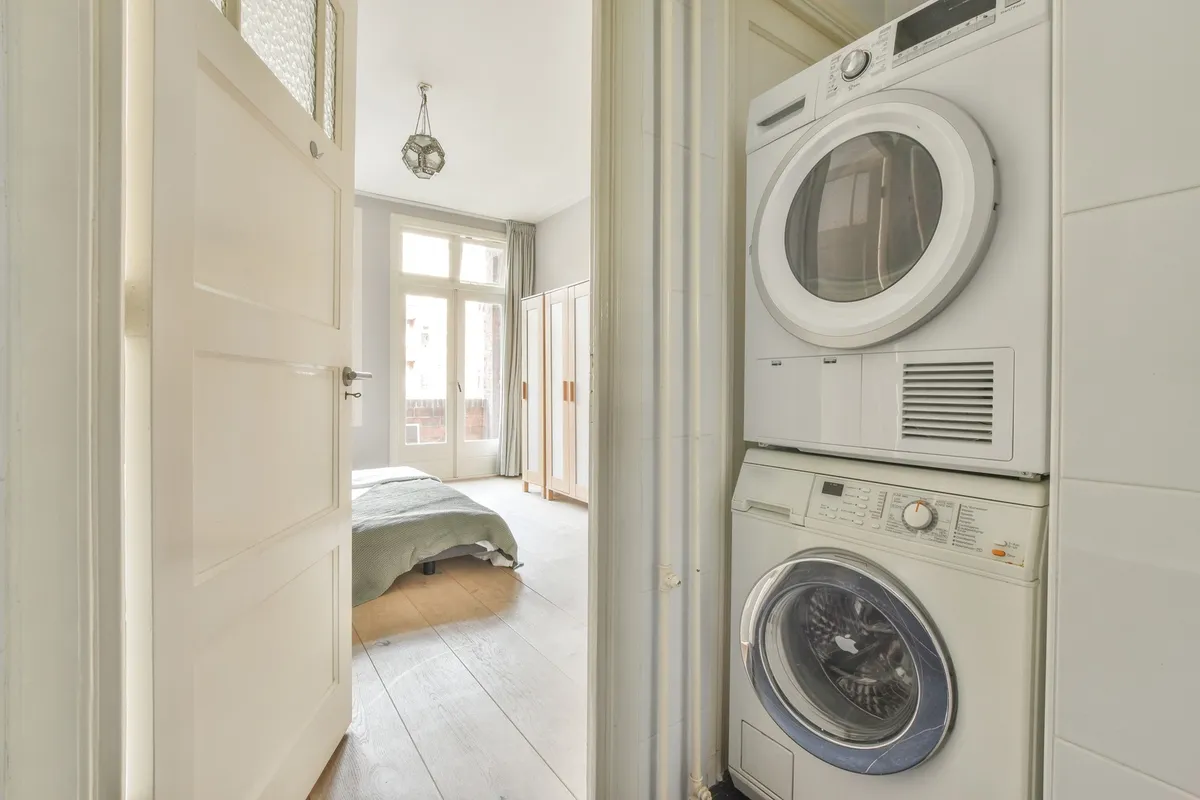
This works for side-by-side units and, with careful placement, for stacked units too — though with stacked machines you’ll have less coverage and need to measure precisely. Either way, it turns dead space directly above your machines into the folding station your room never had.
This is genuinely one of the highest-impact ideas here. A dedicated folding surface changes how the whole room functions.
8. Corral Loose Socks and Small Items in a Mesh Bin
Small mesh or fabric bins exist for one job: catching the socks, hair ties, and loose change that fall out of pockets and pile up on any flat surface. Without one, that pile just spreads across your folding area.
These bins can hook onto a shelf edge or sit inside a cubby, so they don’t need extra floor or counter space. It’s a small fix, but it solves a very specific and very common annoyance.
Keep one bin for “needs a match” socks and a separate one for everything else — you’ll thank yourself during the next big sock reunion.
9. Use a Slim Vertical Cabinet in Any Unused Gap
Narrow gap organizers — some just a few inches wide — fit into the sliver of space beside a washer or dryer that looks too small to be useful. Don’t let a slim gap go empty just because it’s not big enough for a “real” cabinet.

Even a 6-inch gap can hold a rolling cabinet for cleaning supplies, ironing tools, or extra hangers. These cabinets are usually on wheels, so you can pull them out for full access and push them back flush against the machine.
Measure twice here. A cabinet that’s a half-inch too wide simply won’t slide into place, and returns on furniture are a hassle.
10. Add a Pull-Out Hamper System
A pull-out hamper — whether built into cabinetry or a freestanding unit — hides dirty laundry while letting you sort by color right at the point of use. No more separate hampers scattered around bedrooms and bathrooms that all need to be carried to the laundry room eventually.
The best part is that it slides away completely when you’re not using it, so it’s not competing for floor space the rest of the time. If your laundry room is genuinely tiny, look for a slim two-bin version rather than a bulky three or four-bin system.
This is one of those upgrades that changes your actual daily habits, not just how the room looks.
11. Use Wall Hooks for Ironing Boards and Brooms
Bulky flat items — ironing boards, brooms, dustpans, mops — are some of the hardest things to store in a small laundry room because they don’t stack or fit neatly on shelves. Wall hooks solve this by getting them off the floor entirely.
Command-style adhesive hooks work well here if you’re renting or don’t want to drill, and they hold more weight than people expect. For heavier items, a wall-mounted bracket screwed into a stud is more secure long-term.
Either way, getting these items vertical instead of leaning in a corner opens up a surprising amount of usable floor space.
12. Install a Pegboard for Fully Customizable Storage
Pegboard is the most flexible option on this entire list because it adapts as your needs change — no fixed shelf sizes, no committing to one layout. Move the hooks and baskets around whenever your storage needs shift.
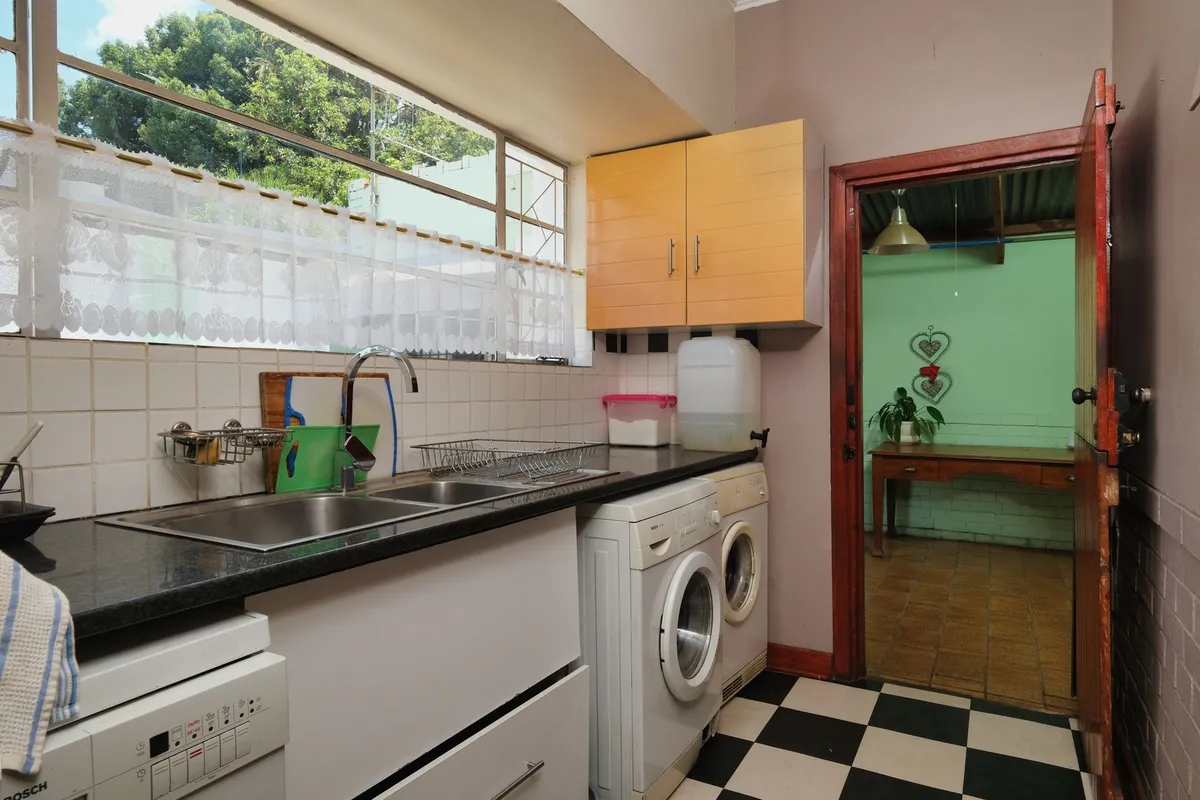
Hang spray bottles, small wire baskets, brushes, or anything else that would otherwise clutter a shelf. This works especially well on the one open wall many laundry closets have — the wall that’s not blocked by machines, shelving, or the door swing.
If you rent, look for pegboard panels that mount with strips instead of requiring holes directly into drywall.
13. Use a Magnetic Strip or Caddy on the Machine Sides
Here’s one people forget entirely: the metal sides of your washer and dryer are magnetic real estate. Magnetic containers stick right to them, holding scissors, stain pens, bobby pins, or anything small you reach for mid-laundry.
This adds zero extra footprint to the room since it’s using surfaces you already have. It’s also one of the cheapest ideas on this list to test out — worth doing even if you’re not sure it’ll stick as a long-term habit.
Just check that your machine sides are actually magnetic first. Some newer models use non-magnetic panels, so give it a quick test with a fridge magnet before buying anything.
14. Swap Bulky Detergent Bottles for Refillable Dispensers
Big detergent jugs are one of the worst offenders for eating up shelf space in a small laundry room. Slim glass or plastic dispensers hold less at once but take up a fraction of the footprint, and they stack more neatly than an odd-shaped jug ever will.
Buy detergent in bulk and refill the smaller dispenser as needed. It’s a small extra step, but it makes your shelves look — and function — a lot better.
This also works for fabric softener and any other liquid laundry product that normally comes in an oversized bottle.
15. Add a Fold-Out Ironing Board Cabinet
An ironing board is one of the bulkiest, most awkward things to store in a tiny laundry room. A wall-mounted fold-out cabinet solves this by hiding the board vertically, flat against the wall, until you need it.
Flip it down to iron, flip it back up when you’re done — it takes up almost no depth when stored. This single swap solves one of the most persistent storage headaches in small laundry spaces.
If you don’t iron often, this might not be worth installing. But if you do, it’s a genuine game-changer for reclaiming floor space.
16. Use Clear Labeled Jars for Pods and Dryer Balls
Glass or plastic jars keep small loose items — pods, dryer balls, stray buttons — contained and easy to see. This matters more than it sounds like it should, because loose boxes and bags tend to take up more space than the product actually needs.
Labeled jars also make it obvious when you’re running low, so you’re not discovering an empty pod container mid-wash. Line a few up on a floating shelf and it instantly looks more intentional than a shelf of half-open boxes.
This is a small, low-effort idea, but it’s one of the more satisfying ones to actually finish.
17. Create a Vertical Zone for Hangers and Garment Bags
A single wall hook or short rod gives you a spot for hangers, ready to catch clothes fresh out of the dryer before they wrinkle. Without this, clean clothes tend to pile up on top of the dryer, which defeats the purpose of drying them carefully in the first place.
This is especially useful in closet-style laundry setups, where there’s no nearby closet to hang things in right away. Combined with the tension rod from idea 5, you can create a full mini hang-dry-and-hold zone in a space that’s barely a few feet wide.
It’s a small addition, but it closes the loop on one of the most common “clean clothes chaos” problems in small laundry rooms.
Where to Start When Your Laundry Room Is Tiny
Don’t try to do all 17 of these in one weekend. Pick one wall, one gap, or one annoyance and start there — momentum matters more than speed here.
The easiest wins, if you’re not sure where to begin:
- Hang a door-back organizer — no tools, no drilling, done in five minutes.
- Install a tension rod — instant hang-dry space with zero commitment.
- Add stackable bins — turns cluttered shelves into something you can actually navigate.
After that, prioritize whichever idea solves your single biggest daily annoyance. If you’re constantly hunting for a place to fold clothes, jump to idea 7. If loose socks are taking over, idea 8 is a five-minute fix.
For more small-space strategies that go beyond the laundry room, check out Small Space Organization Ideas for Every Room. And if you’re renting and want ideas specific to that constraint, How to Organize a Laundry Closet in a Rental digs deeper into no-drill solutions.
FAQ
How do I organize a laundry room with no closet or cabinets?
Focus on the walls and door — over-the-door organizers, tension rods, and pegboards create storage without needing built-in cabinetry. Floating shelves above the machines add space too, especially for items you reach for during every load.
What’s the best way to save space in a laundry closet with stacked units?
Use narrow, vertical solutions like a slim gap cabinet or door-back organizer since floor space is minimal. A fold-down shelf or countertop cover above the unit can double as a folding spot, even if it’s a smaller surface than you’d get with side-by-side machines.
Can I organize a small laundry room without drilling holes?
Yes — tension rods, adhesive hooks, magnetic caddies, and rolling carts all work without any hardware or wall damage, making them ideal for renters. Most of the ideas on this list fall into that no-drill category.
If you only do one thing tonight, hang a door-back organizer on the back of your laundry room door. It takes five minutes, needs zero tools, and instantly clears clutter off your shelves — proof that small laundry rooms don’t need a renovation, just a smarter use of the space you’ve already got.