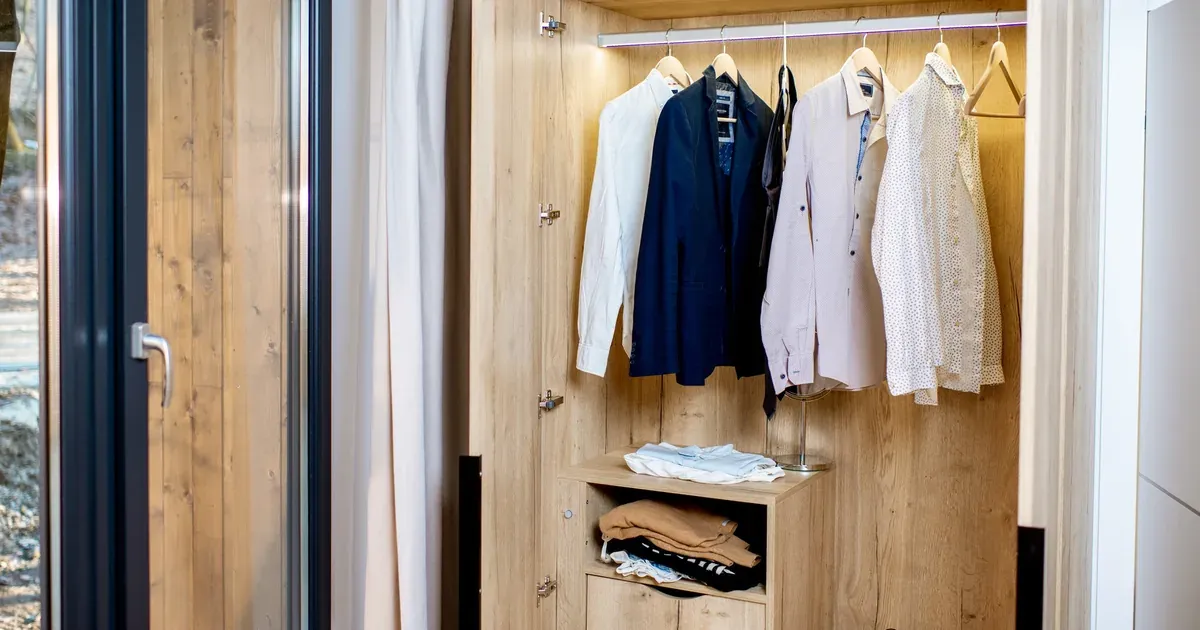
Her closet looks like it exploded. Shirts on the floor, one lone hanger holding three things by force, and that mystery pile in the corner that’s been there since March. Here’s the thing: it’s probably not actually a space problem. It’s a using-the-space-she-has problem.
Most small closets waste two areas completely — the vertical gap above the top shelf, and the entire inside of the door. Once you claim those two spots, plus tighten up the rod space you already have, the closet that felt impossible starts feeling merely annoying. Progress.
This list moves in a specific order: cheap and easy first, bigger investments last. You don’t need all 13. Pick a few based on what’s actually overflowing.
Why Small Closets Feel Impossible (And What Actually Fixes It)
Stand in your closet and look up. There’s a good chance you’ll see a foot or more of dead air above your top shelf — space you’re paying rent or mortgage on and not using at all.
Now look at the door. Also empty, also wasted, also prime real estate for anything that doesn’t need a hanger.
The truth is most small closets aren’t undersized — they’re underused. A single hanging rod with clothes spaced an inch apart, one flat shelf, and a bare door is what closets looked like in 1985. You don’t have to organize like it’s still 1985.
This list works from the floor up and the cheap fixes first: hanger swaps and rod tricks before you get to modular systems. By the end, you’ll know exactly where to start based on what’s actually overflowing in your closet right now.
1. Double Hanging Rods for Instant Vertical Space
If your closet has one rod running the full width, you’re using about half of its vertical potential. Adding a second rod below the first — positioned for shirts, folded pants, or skirts — effectively doubles your hanging capacity in the same footprint.
This works best on the side of the closet where you’re hanging shorter items. Dresses, long coats, and jumpsuits need the full rod height, so don’t try to double up there — you’ll just end up with everything bunched at an angle.
Renters have an easy option here: a tension rod wedges into place with no drilling, and it holds shirts and folded items just fine. If you own your place or have a more permanent setup, a fixed closet rod with mounted brackets is sturdier and won’t budge if you’re loading it up. Either way, this is often the single biggest capacity gain on this whole list for the least effort.
2. Slim Velvet Hangers to Reclaim Rod Space
This one sounds too simple to matter. It matters.
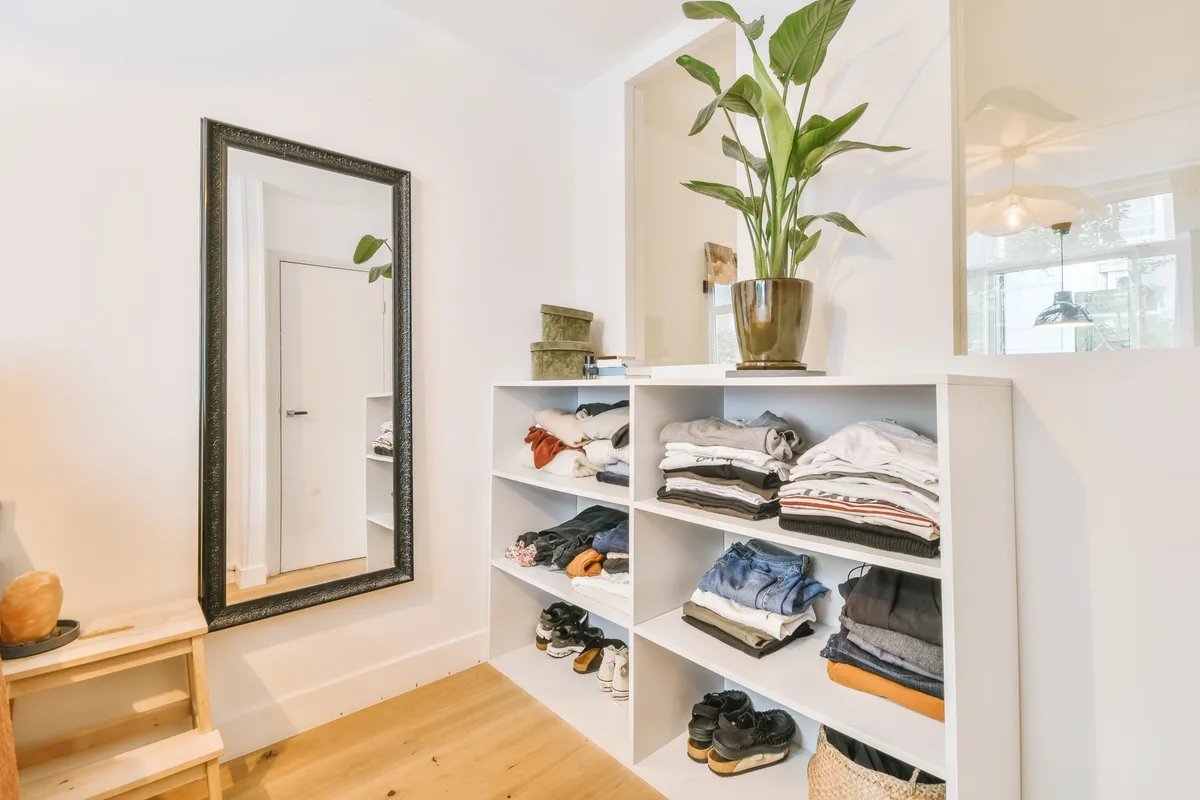
Swap your bulky plastic or wood hangers for slim velvet ones, and you’ll typically free up several inches of usable rod space just from the hangers themselves being thinner. Multiply that across 40 or 50 items of clothing, and suddenly there’s room for things that used to get shoved to the end and forgotten.
The velvet coating is a bonus feature, not just a texture thing — it grips fabric so clothes don’t slide off and end up in a heap on the floor. If you’ve ever found a silky blouse pooled at the bottom of your closet for no clear reason, this is why.
It’s a one-time swap. No tools, no installation, no rearranging shelves. You just buy a set, transfer your clothes over an afternoon (or honestly, during laundry folding over a week), and donate the old hangers. This is the lowest-effort item on the entire list and one of the more noticeable.
3. Over-the-Door Shoe Organizer (Used for More Than Shoes)
Everyone knows these for shoes. Fewer people use them for the other stuff cluttering up shelf space: rolled scarves, folded belts, small bags, hair tools, even snacks if we’re being honest about what ends up in closets.
It hangs over a standard door with no drilling and no hardware — the door itself does all the work. That makes it one of the most renter-friendly options here.
When you’re picking one out, look for a design with adjustable or expandable pockets rather than fixed-size slots. Rigid shoe-only pockets won’t stretch to fit a rolled sweater or a bulkier bag, and you’ll end up frustrated that it “doesn’t work” when really it just wasn’t designed for flexible use.
4. Stackable Shelf Dividers for the Existing Shelf
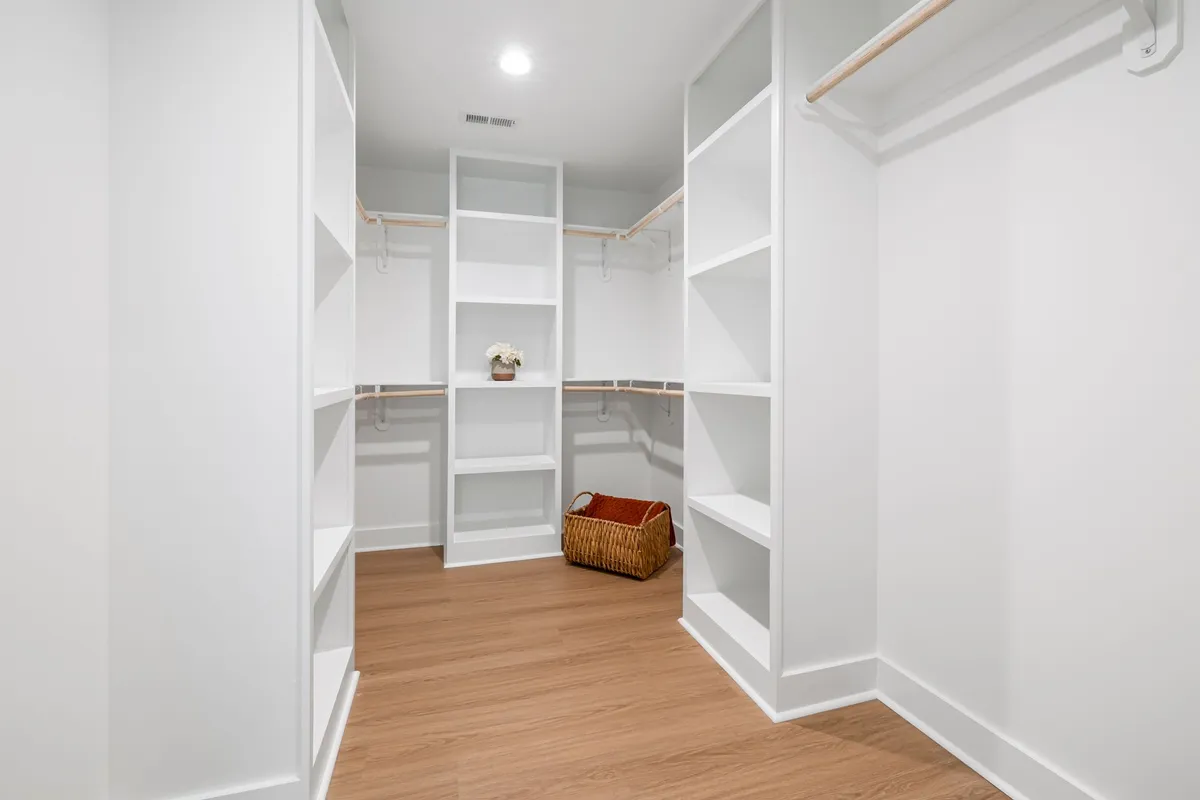
One flat shelf can only hold one messy stack before things start avalanching. Stackable dividers turn that same shelf into two or three defined levels, so sweaters don’t have to balance on top of jeans on top of bags.
This is especially useful for anything that topples easily — folded sweaters are the classic offender, but bags and shoeboxes have the same problem on a flat surface.
Look for adjustable-width dividers rather than fixed-size ones. Closet shelves vary in depth and width more than you’d expect, and a divider that doesn’t fit snugly will just slide around and defeat the purpose.
5. Cascading Hangers for Multiple Tops in One Slot
This is the underrated one — slow down for a second here, because it’s easy to skip past and it shouldn’t be.
Cascading hangers (sometimes called waterfall hangers) hook onto each other vertically, so you can hang four or five tops in the vertical space one hanger used to take up. For everyday shirts and blouses, this is a huge space reclaim with almost no effort.
Don’t use these for anything heavy — a wool sweater or a structured jacket will drag the whole chain down. Save them for the lightweight rotation: T-shirts, blouses, casual button-downs, the stuff you’re grabbing daily.
The other nice part: you can unhook one shirt from the middle of the chain without disturbing the rest. It’s not like a scarf hanger where pulling one thing tugs everything sideways.
6. Clear Stackable Bins for the Top Shelf
Remember that dead air above your top shelf we talked about earlier? This is where it gets put to work.
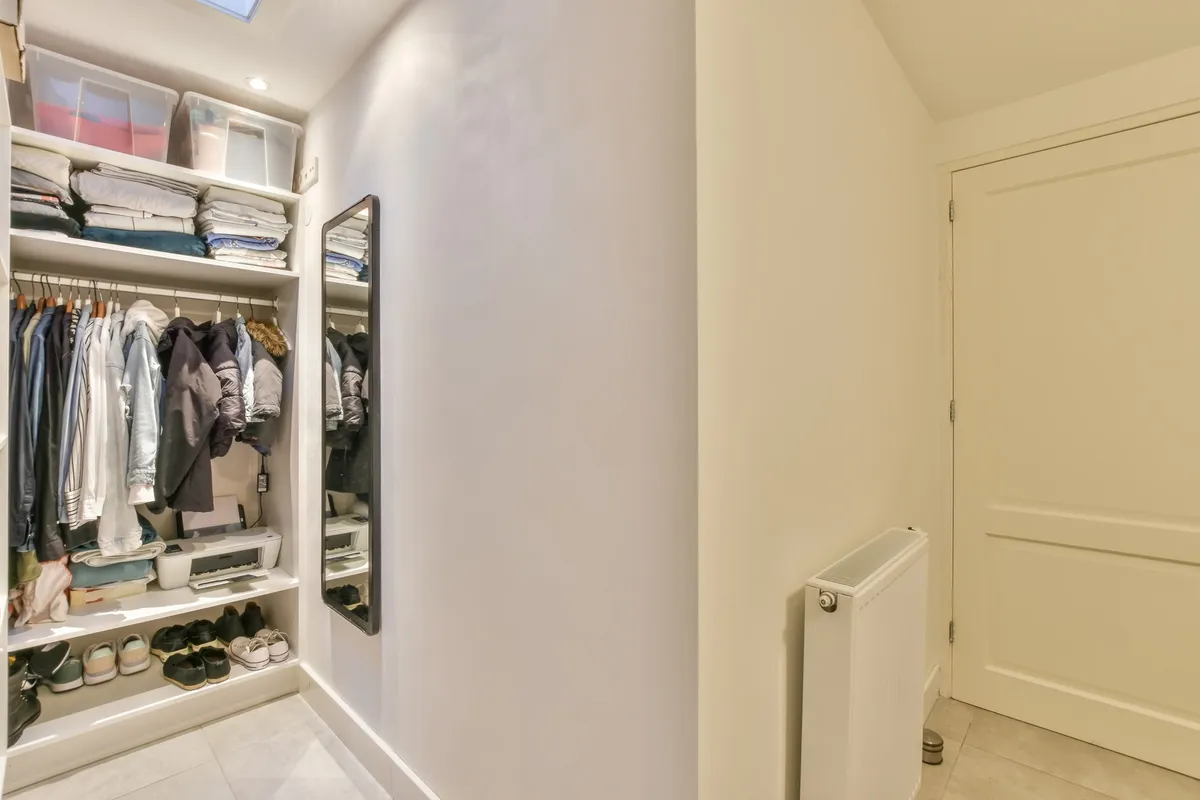
Clear stackable bins let you use that vertical space in an organized way instead of just piling loose sweaters up there until an avalanche happens every time you grab something. And because they’re clear, you can actually see what’s in each one without hauling it down and prying off a lid.
Use one bin for off-season clothing, one for accessories you don’t reach for often, one for memory-box type items — whatever categories make sense for your stuff. Label each one anyway, even though they’re clear. You will still forget what’s in bin three by next season; nobody’s memory is that good.
7. A Hanging Sweater Organizer for Fold-Only Items
Some things just shouldn’t go on a hanger. Sweaters stretch out of shape at the shoulders, and you know this because you’ve done it to a favorite sweater at least once.
A hanging cubby organizer solves this by using rod space — that’s the part people don’t expect — for items that need to be folded. It hangs like a garment but holds horizontal cubbies, so sweaters, jeans, or workout clothes stay folded and stacked without taking up a single inch of shelf or drawer.
This is a smart trade if your shelves are already full but you’ve got open rod space. You’re essentially converting rod real estate into fold storage, which most closets have plenty of one and not enough of the other.
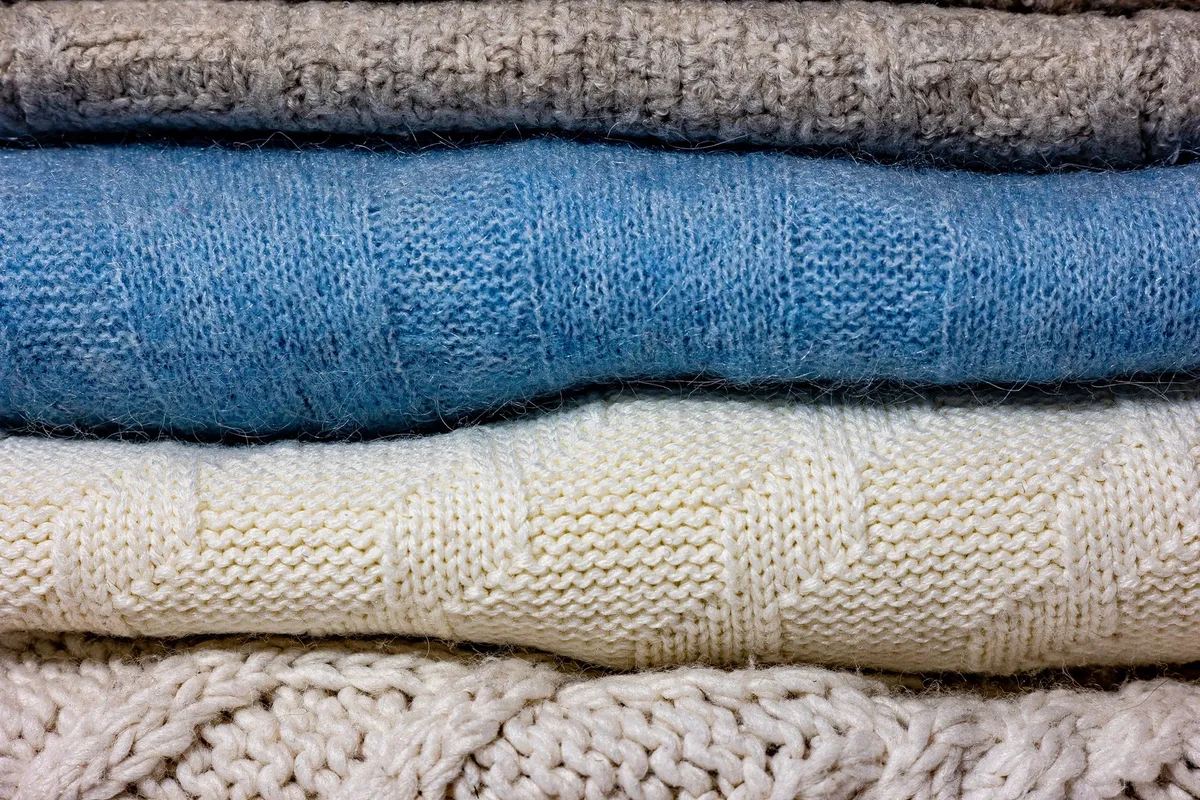
8. Slim Under-Shelf Storage Baskets
Here’s another spot people miss: the gap between your shelf and whatever’s stacked on top of it. Under-shelf baskets clip onto the lip of an existing shelf and hang just below it, creating a second storage layer without costing you any shelf height above.
These are ideal for small folded items — socks, workout gear, hair accessories, the stuff that’s annoying to store because it’s too small to justify its own bin but too much to just toss loose.
No tools required. It slides onto the shelf edge and stays put with its own weight and design. This is a five-minute add, not a project.
9. A Belt and Scarf Hanger That Uses Zero Extra Floor Space
Accessories are the thing that ends up crammed into a junk drawer, tangled in a bin, or just draped over whatever’s nearby because there’s no dedicated spot for them.
A rotating or multi-hook accessory hanger fixes this by hanging on your existing rod exactly like a regular hanger would — it’s not adding new footprint, just using a slot more efficiently. Belts, scarves, and even jewelry can hang here, visible and untangled instead of buried.
It’s a small fix, but it’s the kind of small fix that stops accessories from becoming their own category of clutter problem somewhere else in the house.
10. Vacuum Storage Bags for Bulky Off-Season Items
Winter coats and comforters are the space hogs of any closet. They take up shelf or floor real estate year-round even though you only need them for a few months.
Vacuum storage bags compress these bulky items down to a fraction of their normal size by sucking out the air. A puffer coat that used to eat up a foot of shelf space can shrink down to something you can tuck into a corner or slide under a bed.
Once compressed, store the bags on your top shelf (see clear stackable bins for a way to keep them organized up there) or under a bed frame. Either way, you’re freeing up an entire section of your closet for things you actually reach for in daily life.

11. A Small Closet Island or Floor Shelf Unit
Look down. If there’s a stretch of bare floor under your hanging clothes that’s just collecting stray shoes or nothing at all, that’s usable space you haven’t claimed yet.
A narrow floor shelf unit — sized specifically for closet use — sits under hanging clothes and gives you organized storage for shoes, bins, or folded items without needing to add shelving to the walls.
The key spec to check is depth. Look for units under 12 inches deep so the unit doesn’t push out far enough to block your hanging clothes or make the door hard to close. This is especially useful in reach-in closets, where floor space tends to go completely unused compared to walk-ins.
12. Command Hooks for Bags, Robes, and Everyday Grabs
Not everything needs a hanger or a bin. Sometimes you just need a hook for the bag you use every day, the robe you want within arm’s reach, or tomorrow’s outfit so it’s not the fifth thing you touch while running late.
Command hooks go on the closet wall or the back of the door with zero installation commitment — no drilling, no anchors, and they come off clean if you move. That makes them fully renter-friendly, which is a running theme for a lot of this list.
The real win is keeping frequently grabbed items off the floor and off your already-crowded hangers. A robe on a hook instead of draped over a hanger is one less thing competing for rod space.
13. A Modular Closet Organizer System for a Full Reset
If you’ve read through this whole list and thought “I need basically all of these,” a modular closet system might be the better move instead of piecing together a dozen separate products.
These systems combine rods, shelves, and drawers into one configurable unit that adjusts to your closet’s exact dimensions — narrow, shallow, oddly shaped, doesn’t matter. You’re not working around a single fixed rod and shelf anymore; you’re designing the layout around what you actually own.
15 Bedroom Closet Ideas for Maximizing Storage has more on full closet layouts if you want to see this concept applied at a larger scale.
This is the biggest investment on the list, both in cost and setup time, but it solves multiple problems at once — vertical space, fold storage, hanging capacity — instead of layering fix after fix onto a closet that’s fundamentally poorly configured. Save this one for closets that need a real overhaul, not a tune-up.
Where to Start With Your Small Closet
Before you buy anything, empty the closet completely. This feels like overkill, but you cannot organize around clutter you haven’t looked at — How to Declutter Your Closet Before Organizing It walks through this step if you want a full guide. Sort into keep, donate, and “why do I own this” piles first.
Once it’s empty and edited down, here’s a sensible order to tackle the rest:
- Start with slim velvet hangers — zero installation, immediate rod space gain, and you’ll use every single one you buy.
- Add an over-the-door organizer — claims completely unused space for accessories or shoes with no tools needed.
- Install a double hanging rod if your closet has one long rod and a lot of short items — this is usually the biggest single capacity jump on the list.
After those three, reassess. You might find your closet already breathes easier and you don’t need bins, cubbies, or a floor unit at all. If it’s still tight, work up through the list based on what’s actually overflowing — fold-heavy wardrobes lean toward cubby organizers and shelf dividers, while accessory-heavy closets benefit more from door organizers and rotating hooks.
The two most underused spots in almost every small closet are the vertical space above the top shelf and the inside of the door. Fix those two, and most of the “impossible” feeling goes away before you’ve spent much at all.
FAQ
What is the best organizer for a very small closet?
Start with what adds capacity without taking up floor space, like a double hanging rod, slim velvet hangers, and an over-the-door organizer. These three alone can noticeably increase usable space before you buy anything bigger.
How do I organize a small closet with no room for storage bins?
Use hanging solutions instead of floor storage: cascading hangers, hanging sweater cubbies, and over-the-door pockets all use rod or door space rather than the closet floor. Vacuum storage bags also help by shrinking bulky items so they take up less room wherever they’re stored.
Do closet organizer systems work in rental apartments?
Yes, many options require no drilling at all, including tension rods, Command hooks, over-the-door organizers, and freestanding floor shelf units. Save the permanently mounted modular systems for closets you own or have landlord approval to modify.
If you only do one thing tonight, swap in the slim velvet hangers. It costs you an evening of transferring clothes and gives back real rod space immediately — no drilling, no measuring, no decisions about bin sizes. Everything else on this list can wait until the weekend.