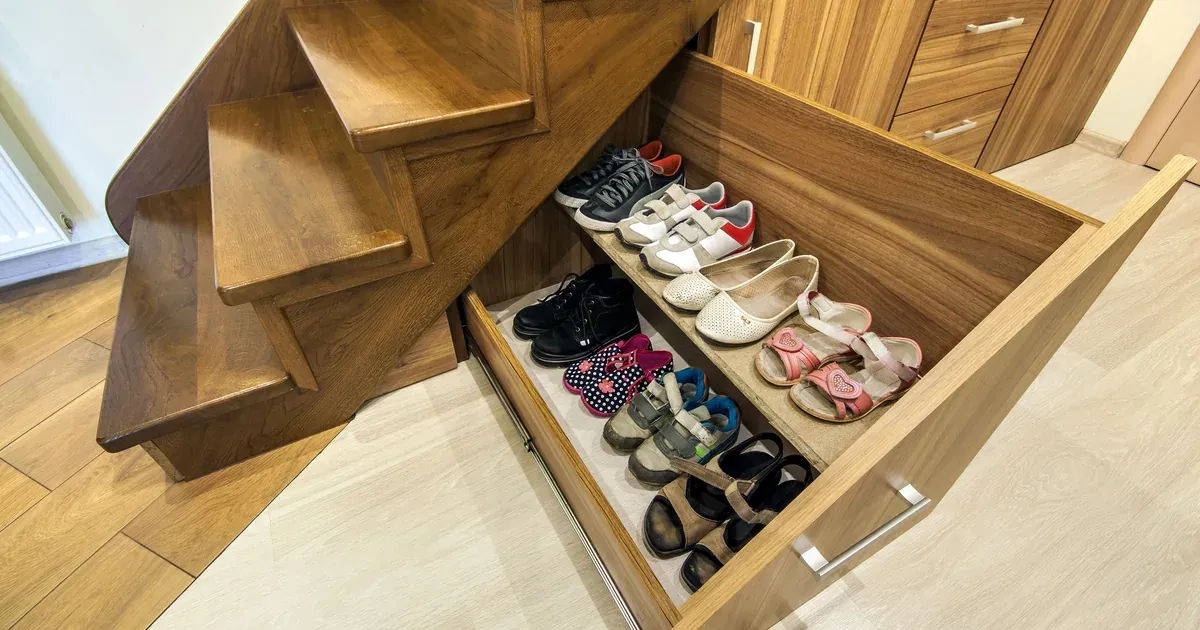
Your shoes are not the problem. Your floor space is.
If you’ve ever stood at the door doing that little shuffle-hop trying not to step on a stray sneaker, you already know the pile isn’t a discipline issue — it’s a design issue. Most entryways and closets were never built with a real shoe plan, so shoes default to wherever they land. Below are 13 ways to fix that without knocking down walls or buying a giant cabinet you don’t have room for.
Every idea here works in small apartments, rentals, or closets that just weren’t built generously. Pick one, not all thirteen — more on that at the end.
Why Shoe Storage Gets So Hard in Small Spaces
Entryways in older buildings and apartments are often just… a door. No closet, no bench, no mudroom buffer between outside and your living room. Small home closets aren’t much better — one rod, one shelf, and shoes shoved wherever they fit.
That’s when the daily friction starts. You trip over a boot in the dark. You can’t find the matching flat because it slid under something. The space “never looks clean” even right after you tidy it, because shoes have nowhere to actually live.
The fix isn’t a bigger space — it’s using the space you already have differently. Walls, doors, and vertical gaps hold a surprising amount of shoe storage once you stop thinking “floor” as the only option. That’s the theme running through every idea below.
1. Over-the-Door Shoe Organizer
This one uses a door you already own and adds zero floor footprint. Hang it on a closet door, a pantry door, or even a bedroom door if that’s what’s closest to your shoes’ actual landing zone.
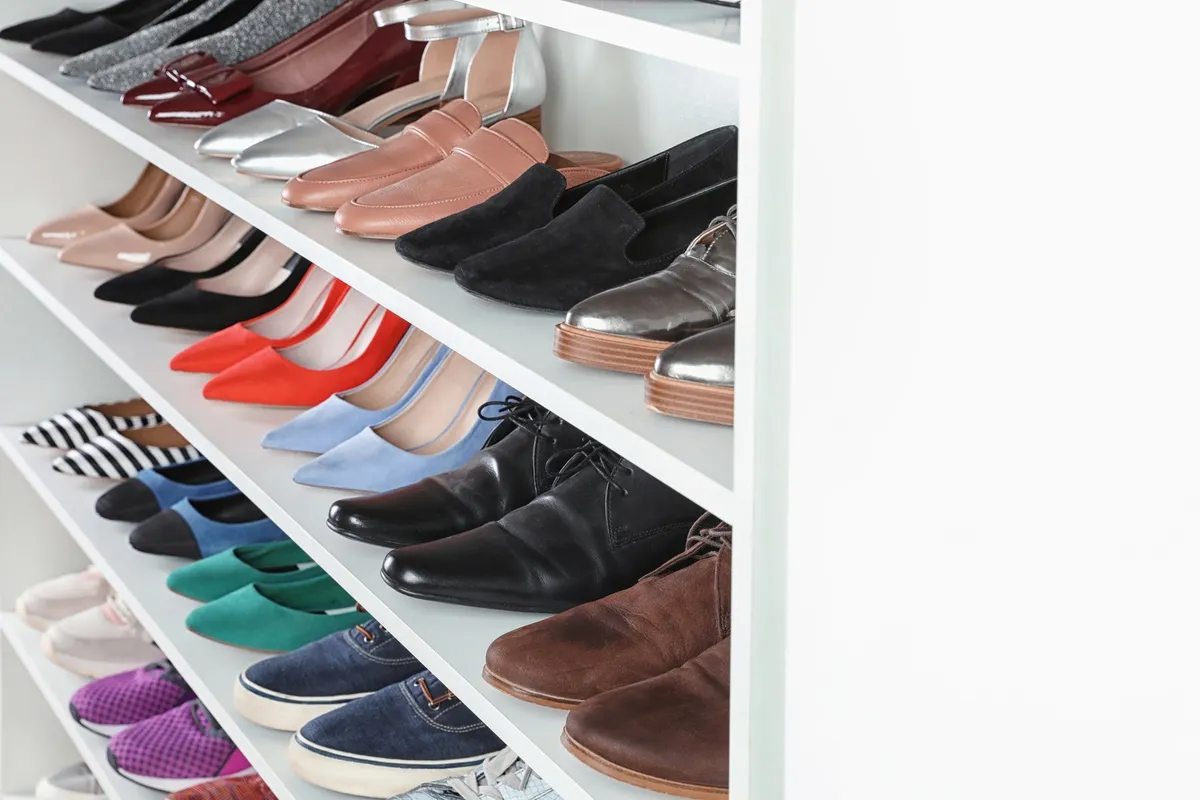
Clear pocket versions are worth the small upgrade over solid fabric ones. You can see every pair at a glance instead of patting down pockets trying to find the black flats.
These work best for lighter shoes — flats, sandals, kids’ sneakers, slippers. Heavy boots tend to sag the pockets over time and pull at the door hardware.
If you’re short on door space, prioritize this for whichever door gets opened and closed the least, so the organizer doesn’t bang around all day.
2. Slim Rolling Shoe Cart Between Cabinets
Look at the gap next to your fridge, dresser, or a kitchen cabinet — there’s a decent chance a few inches of dead space are just sitting there. A narrow rolling cart slides right into it.
The wheels are the actual genius part. Instead of crouching into a closet to dig through a pile, you roll the whole cart out, grab your shoes, and push it back.
Measure the gap before shopping — you need a cart under about 6 inches wide for most of these tight spots. These are usually marketed as kitchen storage, but nothing says you can’t repurpose one entirely for shoes.
3. Stackable Shoe Cubbies
Modular cube units let you build shoe storage upward instead of hunting for floor space you don’t have. Start with two or three cubbies and add more as your collection grows.
That modularity is the whole appeal — you’re not locked into a fixed rack size. If you downsize your shoe collection later, you just remove a cube.
Most closets have unused vertical space above the hanging clothes line down to the floor. That’s exactly where stackable cubbies earn their keep.
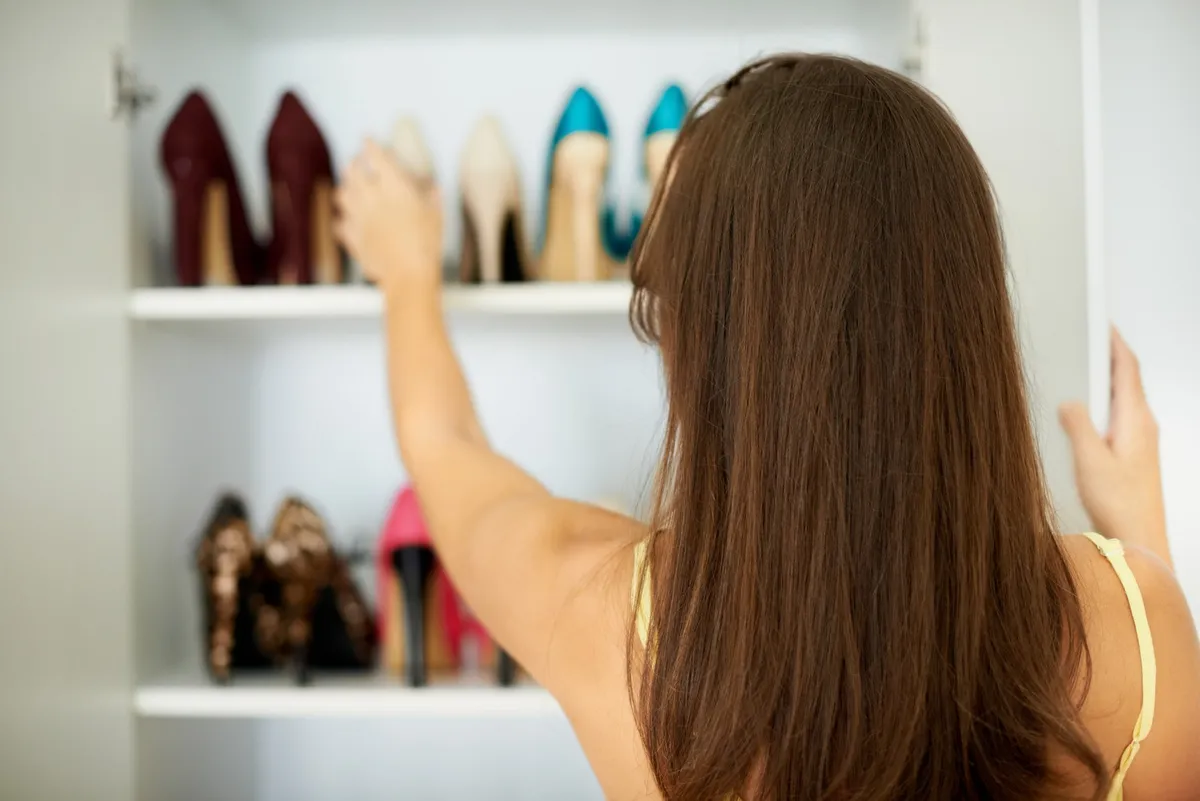
Keep your most-worn pairs at eye level or below — nobody wants to reach overhead for sneakers every morning.
4. Under-Bed Shoe Storage Bins
If your bed frame has at least 4 inches of clearance underneath, you have shoe storage you’re probably not using. Low-profile bins with lids slide right in and stay out of sight.
This spot is ideal for shoes you wear occasionally rather than daily — think off-season boots, dress shoes, or that one pair of heels you own for weddings.
Clear lids make a real difference here. You don’t want to pull out three bins just to find the right pair, so either go clear or label each one on the short end that faces out.
5. Hanging Closet Shoe Shelves
A fabric hanging organizer clips onto your closet rod and creates a column of shelves that uses zero floor space. It’s basically an over-the-door organizer’s closet-rod cousin.
The real win is what it frees up. With shoes off the floor entirely, you suddenly have room down there for bins, a laundry basket, or even a small dresser.
This setup works best for 4 to 8 pairs of everyday shoes — the ones you actually reach for, not your full collection. It’s a rotation tool more than permanent storage.
Pair this with How to Organize a Small Coat Closet if your coat closet is doing double duty as shoe storage too.
6. Bench with Built-In Shoe Cubby
An entryway bench with an open shelf underneath solves two problems at once — somewhere to sit while you put shoes on, and somewhere for the shoes to actually go.
This is the pick for small entryways that need to multitask, since most tiny entries don’t have room for separate seating and separate storage.
Measure your entry width before buying. You want something narrow enough to sit beside the front door without narrowing the walking path or blocking the door’s swing.
7. Wall-Mounted Shoe Racks
Floating shelves or slatted racks mounted at a slight angle keep shoes fully visible and completely off the floor. It’s one of the few solutions that looks intentional rather than like storage-as-an-afterthought.
Renters, don’t count yourselves out. Adhesive command-strip versions exist specifically for this — no drilling, no landlord conversation required, as long as you check the weight rating first.
These work especially well in mudrooms or along a narrow hallway wall where a rack or cabinet would stick out too far and block traffic.

If you’re deciding between this and item over-the-door organizer, wall racks tend to hold heavier shoes better since they don’t rely on fabric pockets.
8. Clear Stackable Shoe Boxes
Individual clear boxes stack into a tidy column without needing a bulky rack to hold them up. Each box is its own little unit, so you can add or remove one without disturbing the rest.
The see-through sides solve the “which box has my boots” guessing game completely. No more pulling down four boxes to find the fifth.
Some styles snap together at an angle rather than straight up, which saves even more vertical space in a tall but narrow closet corner.
9. Tension Rod Shoe Shelf in a Closet Corner
This is the cheapest idea on this list, and it might be the most underrated one too. Wedge a tension rod low in an awkward closet corner, and it instantly becomes a heel-hanging shelf for flats and heels.
It costs next to nothing and needs zero tools or hardware — just tension and a corner that’s otherwise wasted space.
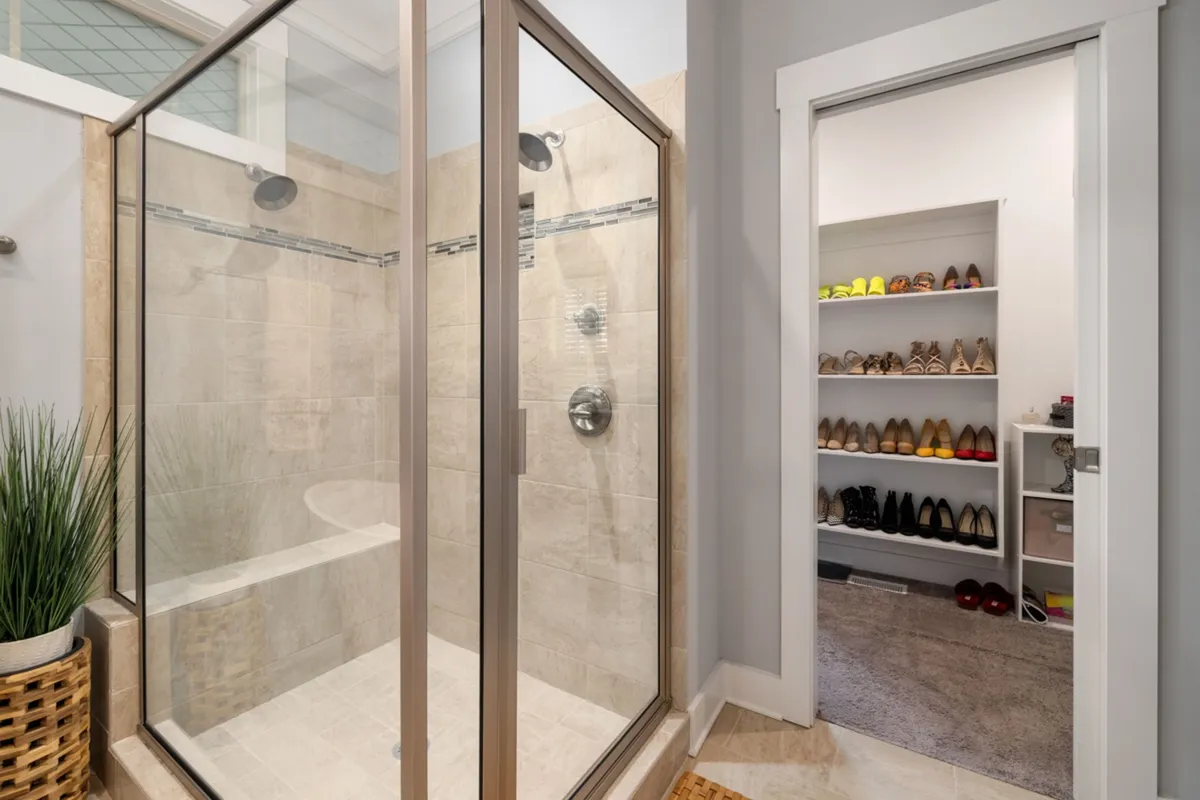
This works best for a single odd corner rather than your whole shoe collection. Think of it as a bonus 4-6 pairs of storage you’re currently not using at all.
10. Narrow Shoe Cabinet for Entryways
Slim cabinets as narrow as 6 to 8 inches deep can sit flush against a wall without eating into your hallway. That shallow depth is the whole point — most “shoe cabinets” you picture are far bulkier than this.
Closed doors mean the shoe clutter disappears completely, which matters if your entry is the first thing guests see.
Look for flip-down or swing-out compartments rather than open shelving. They’re specifically designed to maximize storage in that tiny footprint instead of wasting the depth.
11. Basket or Bin System by the Door
If your apartment has zero closet near the entry, this is your workaround. One basket per household member keeps everyone’s daily shoes grabbable without needing a rack at all.
It’s simple, it’s flexible, and it doesn’t require measuring a gap or mounting anything.
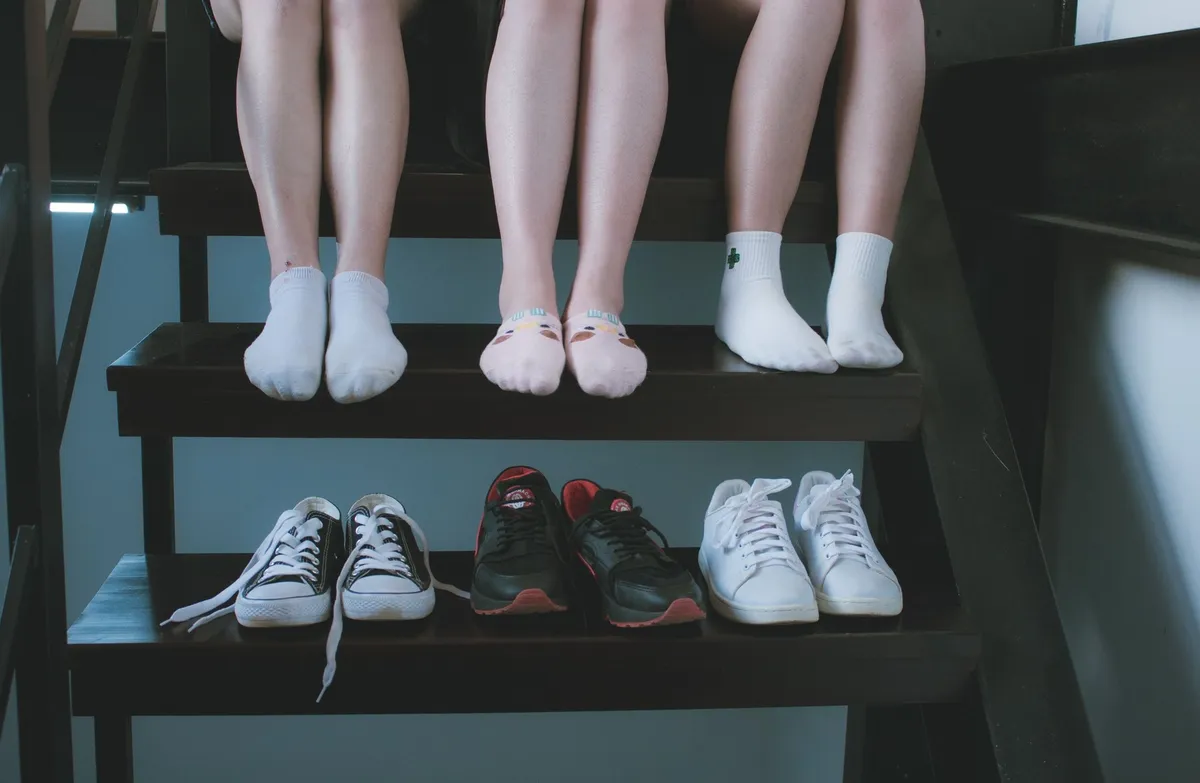
Pick baskets with handles so you can lift the whole thing out for vacuuming underneath — dust and grit collect fast in a high-traffic shoe spot. This pairs well with ideas in Small Entryway Organization Ideas for Apartments if your entry is doing a lot of jobs at once.
12. Stair-Step Shoe Rack (Angled Tiers)
An angled tiered rack fits into a closet or against a wall without taking up much floor space, and the stepped design means every pair stays visible instead of hiding behind the one in front.
This is the middle ground between a basic flat rack and a full cabinet — good for 8 to 12 pairs when a cabinet feels like overkill but a single shelf isn’t enough.
Some versions expand or contract in width, which is handy if you’re not sure exactly how much wall space you’ll dedicate to shoes long-term.
13. Vacuum-Sealed Bags for Off-Season Shoes
For boots or seasonal shoes you only wear a few months a year, vacuum bags compress them down to a fraction of their normal size. It sounds extreme for shoes, but it works the same way it does for bulky sweaters.
Store the flattened bags on a closet shelf or slide them under furniture — they take up almost no vertical space once compressed.
This frees up your prime, easy-to-reach shoe storage for what you’re actually wearing this season, instead of it being clogged with snow boots in July. If you don’t own a vacuum sealer, manual roll-style bags do a similar job without any equipment.
Where to Start When You Have Almost No Space
Don’t try to implement five of these at once. Start with the shoes you actually wear every week — those need the most convenient, most accessible spot in your home, not the fanciest solution.
The most common mistake is buying a large rack or cabinet before measuring anything. It arrives, it’s 2 inches too deep, and now it’s blocking the closet door from opening all the way.
Here’s a simple way to approach it:
- Measure your actual space first — door swing, closet depth, and any gaps beside furniture, before you shop for anything.
- Sort your shoes into “worn weekly” and “worn occasionally” — the weekly pile gets the most accessible spot; everything else can go under a bed or in vacuum bags.
- Pick one hack from this list that matches your biggest constraint (no closet, no drilling, no floor space).
- Test it for two weeks before buying anything else — you’ll know fast if it’s actually convenient or just looked good on paper.
- Add a second solution only if you still have overflow — most small spaces solve 80% of the problem with just one well-chosen system.
A basic tape measure is worth keeping in a junk drawer for exactly this kind of project — it’ll save you a return trip more often than you’d think.
FAQ
How many pairs of shoes should I actually keep?
A common guideline is keeping what you’ve worn in the past year, plus a few seasonal or special-occasion pairs. If a pair hasn’t been worn in 12+ months and doesn’t fit a specific upcoming use, it’s a good candidate to donate.
What’s the best shoe storage for renters who can’t drill holes?
Over-the-door organizers, tension rods, adhesive wall-mounted racks, and freestanding cubbies are all damage-free options. Command strips rated for the weight of a full shoe rack work well for lighter wall-mounted solutions.
How do I store shoes in an apartment with no coat closet?
A slim rolling cart, a basket system by the door, or a narrow entryway cabinet all work without a dedicated closet. Look for options under 8 inches deep so they don’t block walkways.
Should boots be stored differently than flats or sneakers?
Yes — boots take up more vertical space and benefit from boot shapers or being stored upright in bins rather than stacked. Off-season boots are also good candidates for vacuum-sealed bags to save shelf space.
If you only do one thing tonight, grab a tension rod and wedge it into that one awkward closet corner you’ve been ignoring — it takes five minutes and gives you a spot for your most-worn heels or flats before you buy anything else on this list.