If your clothes smell musty even right out of the wash, your washing machine is probably the problem — not your detergent. That funky “wet dog” scent clinging to your laundry? It’s coming from mold, mildew, and soap scum built up inside the machine itself.
The good news: you can fix this in one afternoon, using supplies you probably already own. This guide walks you through every step — dispenser to drum — for both front-loaders and top-loaders. Plan for about 2 hours of total time, with most of that being hands-off waiting while cycles run.
Why Your Washing Machine Needs Regular Cleaning
Here’s the thing nobody tells you when you buy a washer: it doesn’t clean itself.
Every load of laundry leaves behind a little residue. Soap scum coats the drum walls. Minerals from hard water deposit along the rim. Detergent builds up in the dispenser. And somewhere in there — usually in the rubber door gasket on front-loaders — mold and mildew find a warm, damp place to thrive.
Over time, all of that transfers back onto your “clean” clothes. That’s why fresh laundry can smell worse coming out of the wash than it did going in.
Most manufacturers recommend cleaning your washing machine once a month. That sounds like a lot until you realize the actual process takes less time than you’d expect — and skipping it means your machine works harder and cleans less effectively.
Front-loaders and top-loaders both have this problem, but they have different weak spots. Front-loaders are notoriously prone to gasket mold because the rubber door seal traps moisture with every single cycle. Top-loaders are less prone to that specific issue but still collect grime along the drum rim, under the lid, and in the agitator base. The cleaning steps are slightly different for each type, and this guide covers both.
What You’ll Need Before You Start
No special tools, no plumbing knowledge, no mystery products. Here’s what to gather before you begin:
- White distilled vinegar — the plain, inexpensive kind from the grocery store
- Baking soda — standard household baking soda works fine
- Dish soap — just a few drops
- Microfiber cloths — at least 2-3 clean ones
- Old toothbrush — for scrubbing dispenser crevices and gasket folds
- Commercial washing machine cleaner tablet (optional) — products like Affresh or OxiClean washing machine cleaner are widely available at Target, Walmart, and grocery stores, and work well as an alternative or supplement to the vinegar method
That’s it. Everything on this list is a pantry staple or a dollar-store find — nothing fancy required.
One important caveat before you start: check your machine’s owner’s manual for any restrictions on vinegar use. Some manufacturers, including Samsung, advise against it because vinegar can degrade rubber seals over time with repeated use. If your manual says to skip vinegar, use a commercial cleaning tablet instead — it’s a reliable swap.
Step 1: Clean the Detergent Drawer and Dispenser
This step gets skipped more than any other, and it’s a big reason why machines still smell funky even after people “clean” them. The dispenser drawer is one of the most mold-prone spots in the entire machine.
Here’s how to tackle it:
- Remove the drawer completely if it’s designed to come out — most front-loaders and many top-loaders have a release tab you press while pulling the drawer forward.
- Soak it in hot water with a few drops of dish soap for 10-15 minutes. This loosens caked-on detergent and softener residue that’s been sitting there for months.
- Scrub with an old toothbrush. Get into every corner, groove, and compartment. Black or pink spots are mold — keep scrubbing until they’re gone.
- Wipe out the cavity where the drawer sits. Use a damp microfiber cloth and get into the back corners. This area is constantly moist and almost always has mold growth that people never check.
- Rinse the drawer thoroughly under hot running water, then dry it with a clean cloth before putting it back.
If your drawer doesn’t come out fully, use the toothbrush to scrub what you can reach and a damp cloth wrapped around a butter knife to get into the back of the cavity. It’s awkward but effective.
This step takes about 15-20 minutes and makes a significant difference in both smell and washing performance.
Step 2: Scrub the Door Gasket (Front-Loaders) or Lid and Rim (Top-Loaders)
If your washing machine has a smell, it’s almost certainly hiding here.
For front-loaders:
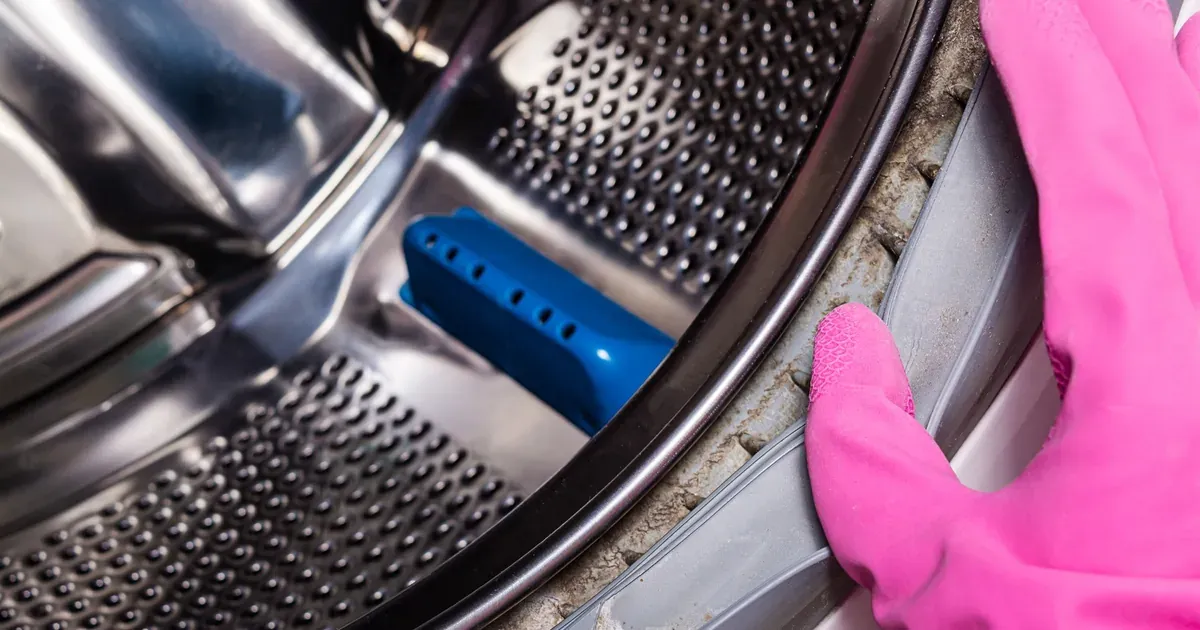
The rubber gasket that seals the door is the single biggest source of that “wet dog” smell. It folds back on itself in a way that traps lint, hair, water, and detergent residue — and never fully dries between loads.
- Peel back the gasket all the way around and look inside the fold. You’ll probably find lint and debris at minimum, and dark mold spots if it’s been a while.
- Wipe it out with a vinegar-soaked cloth. Use a 50/50 mix of white vinegar and water, or a diluted bleach solution (1 tablespoon bleach to 1 cup water) for stubborn black mold. Work around the entire gasket, getting into every fold.
- Use your toothbrush on any spots that don’t wipe clean with a cloth.
- Dry the gasket with a clean cloth when you’re done.
If you see heavy black mold that doesn’t respond to vinegar, switch to the diluted bleach solution — but not in the same session. Use one or the other, never both.
For top-loaders:
- Wipe the underside of the lid — the part that faces down when closed — with a vinegar-soaked cloth.
- Clean the rim around the top of the drum, including the lip where the lid rests.
- Wipe around the agitator base if your machine has one.
Going forward, one habit that helps more than anything else: leave the washer door or lid propped open between uses. Even a couple of inches of airflow prevents moisture from sitting and turning into mildew. It takes zero extra effort and cuts down on odor significantly. You can also read more about the gasket-specific cleaning process in How to Clean a Front-Load Washer Gasket (Step-by-Step).
Step 3: Run a Hot Cleaning Cycle
This is the main event. A hot cycle with vinegar or a commercial cleaner dissolves the detergent buildup and bacteria coating the inside of the drum that you can’t reach with a cloth.
For top-loaders:
- Set the machine to the largest load size and hottest water temperature.
- Add 3-4 cups of white distilled vinegar directly into the drum.
- Start the cycle, then pause it after the drum fills and agitates briefly — about 1 minute in.
- Let it soak for 30-60 minutes with the lid closed.
- Resume and let the full cycle finish.
For front-loaders:
- Pour 2 cups of white vinegar into the detergent dispenser.
- Select the hottest, longest cycle available — often labeled “Sanitize,” “Heavy,” or “Cotton.”
- Let it run to completion. No pausing needed.
Using a commercial cleaner tablet instead:
Place the tablet directly in the drum (not the dispenser) according to package directions. Run the hottest cycle available. These tablets are a great option if your manual warns against vinegar — they’re formulated to be safe for all washer types.
One rule that matters: do not mix vinegar and bleach. Ever. In any combination, in any cycle. The fumes are genuinely harmful. Pick one approach — vinegar or bleach — and stick with it for the whole cleaning session.
Hot water is the key variable here. Cold water won’t dissolve mineral deposits or kill mold effectively. If your machine has a “hot” and “extra hot” option, use the hotter one.
Step 4: Run a Second Rinse Cycle with Baking Soda
You could stop after Step 3, but this extra cycle makes a real difference — especially if the vinegar smell is strong or you want to make sure you’ve cleared out every bit of residue.
Sprinkle 1/2 cup of baking soda directly into the drum. Then run another hot water cycle.
Baking soda is mildly abrasive and alkaline, which means it neutralizes any remaining acidity from the vinegar and lifts residual grime from the drum walls. It also tackles lingering odors on its own — not just masking them but actually neutralizing the source.
When the cycle finishes, open the door and wipe down the inside of the drum with a clean microfiber cloth. You’re wiping away anything the cycle loosened but didn’t fully rinse out.
Your machine should smell noticeably cleaner at this point. If there’s still a faint odor, the gasket or dispenser likely needs another pass — go back and check both.
For a broader appliance cleaning routine, How to Deep Clean Your Dryer — Inside and Out is a natural next step once the washer is done.

Common Mistakes to Avoid When Cleaning Your Washing Machine
- Using too much detergent on a regular basis. Extra soap doesn’t mean cleaner clothes — it means more residue coating your drum and creating mold. If you have an HE machine, use HE-formulated detergent and measure carefully.
- Mixing vinegar and bleach. This bears repeating: the combination creates chlorine gas. Don’t do it, even in separate cycles during the same session. Wait 24 hours between them if you’re switching approaches.
- Only running the drum cycle and skipping the gasket and dispenser. The smell will come back within a week. The drum cycle kills bacteria in the drum, but mold in the gasket fold doesn’t rinse away on its own.
- Leaving wet laundry sitting in the machine. Even 2-3 hours is enough for mildew to start developing. Transfer clothes to the dryer as soon as the cycle ends.
- Using liquid fabric softener too frequently. It leaves a waxy, filmy residue on the drum and drum seal that traps odor and doesn’t rinse off easily. If you love fabric softener, consider dryer sheets or wool dryer balls as alternatives.
- Cleaning the machine once and calling it done. Monthly cleaning is the goal. Every 2 months is the bare minimum. Setting a recurring phone reminder takes 10 seconds and keeps your machine from sliding back into mildew territory.
How to Keep Your Washing Machine Fresh Between Deep Cleans
Monthly deep cleaning is the foundation, but what you do between cleans matters just as much.
- Leave the door or lid cracked after every wash. This single habit does more to prevent mildew than almost anything else. Air circulation dries out the drum and gasket before mold can take hold.
- Wipe the gasket and drum rim weekly. This takes literally 60 seconds with a dry cloth. Run it around the gasket fold and the rim to pick up any lint or moisture before it turns into a problem.
- Run a quick hot cycle with vinegar weekly if your household does heavy laundry loads — think sports uniforms, baby clothes, or multiple loads a day. Just one cup of vinegar in the drum on a hot cycle, once a week, keeps buildup from accumulating between deep cleans.
- Set a recurring monthly reminder on your phone. Name it “Clean the washer” and set it for the first Saturday of every month. You won’t remember otherwise — nobody does.
- Consider a monthly washer cleaning tablet as a low-effort maintenance habit. Drop one in the drum, run the hottest cycle, done. It’s a small routine that prevents the bigger problem.
For a complete laundry room reset, Natural DIY Laundry Room Cleaning Routine You Can Do in 20 Minutes pairs well with this routine. And if you want to apply this same approach to other surfaces in your home, 10 Cleaning Habits That Keep Your Home Smelling Fresh All Week is worth bookmarking.
FAQ
How often should you clean your washing machine?
Most manufacturers and cleaning experts recommend cleaning your washing machine once a month. If you do laundry for a large family or notice odors sooner, cleaning every 2-3 weeks is even better. Setting a recurring phone reminder makes it easy to stay on schedule.
Can I use bleach instead of vinegar to clean my washing machine?
Yes — bleach is effective at killing mold and bacteria in your washing machine. Add 1 cup of liquid chlorine bleach to the bleach dispenser (not the drum directly) and run a hot cycle. Never mix bleach and vinegar in the same cleaning session, as the combination creates harmful fumes.
Why does my washing machine still smell after cleaning it?
If the smell persists, the most likely culprit is mold hiding inside the rubber door gasket — especially on front-loaders. Pull back the gasket and inspect it closely for black spots. You may need to scrub it with a vinegar or diluted bleach solution and repeat the deep-clean cycle a second time.
Is it safe to clean a washing machine with vinegar?
For most washing machines, white distilled vinegar is safe and effective. However, some manufacturers (including Samsung) advise against using vinegar because it can degrade rubber components over time. Check your owner’s manual first, and if in doubt, use a commercial washing machine cleaner tablet instead.
What is the self-clean cycle on my washing machine?
Many modern washers have a built-in “Self Clean,” “Clean Washer,” or “Tub Clean” cycle that runs at a high temperature to sanitize the drum. You can run it with a commercial cleaning tablet, a cup of bleach in the dispenser, or nothing at all. It does not clean the gasket or detergent drawer, so you still need to scrub those manually.
Start tonight with the detergent drawer — pull it out, soak it in hot soapy water, and scrub it while you’re watching TV. That one step takes 20 minutes and you’ll be able to smell the difference immediately. Do the gasket and drum cycles this weekend, and by Monday you’ll have a washing machine that actually cleans your clothes instead of making them smell worse.