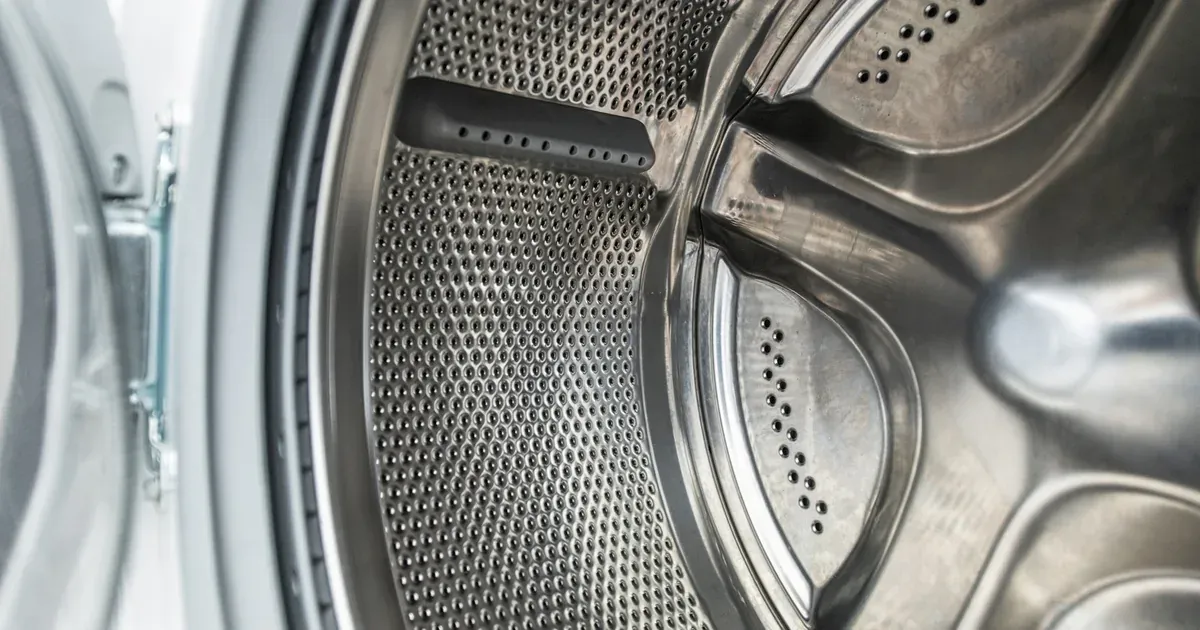
Your washing machine is supposed to clean things. So it’s a little ironic when it starts making your laundry smell worse.
If you’ve noticed a musty odor on clothes fresh out of the wash, or you’ve peeked inside the drum and thought “I should really deal with that” — you’re in the right place. This guide walks you through exactly how to clean your washing machine from top to bottom, using supplies you probably already have under your sink.
Total time: about 1-2 hours, and most of that is machine run time. Hands-on effort is maybe 20-30 minutes.

Why Your Washing Machine Needs Regular Cleaning
Here’s the uncomfortable truth: every load of laundry leaves something behind. Detergent residue, fabric softener buildup, body oils, lint — it all accumulates inside the drum, the rubber door seal, and the detergent drawer. Add moisture and warmth, and you’ve got ideal conditions for mold and mildew.
A dirty machine doesn’t just smell bad. It transfers that smell — and bacteria — to clothes you think are clean. That “musty towel” problem? Often it’s the washer, not the towels.
Front-loaders are especially prone to this because the rubber door gasket traps moisture in its folds every single time you run a load. But top-loaders aren’t immune — the drum rim and agitator base collect grime too.
Signs your washing machine needs cleaning:
- Clothes smell musty even right after washing
- You notice a sour or mildew smell when you open the door
- There’s visible black residue on the door gasket
- The detergent drawer has buildup or discoloration
- You’ve never cleaned it (no shame — most people haven’t)
Most manufacturers recommend a cleaning cycle once a month. If you’re doing laundry for a full household, that schedule matters even more.
What You’ll Need Before You Start
Good news: you don’t need a special kit. The basics are probably in your kitchen right now.
For the DIY method:
- White distilled vinegar (you’ll use 2-4 cups depending on machine type)
- Baking soda (1 cup)
- An old toothbrush
- Microfiber cloths (at least 2-3)
- Dish soap
- A spray bottle (optional but handy)
If you’d rather use a store-bought cleaner:
Washing machine cleaner tablets — brands like Affresh or OxiClean Washing Machine Cleaner — are a solid alternative. You drop one in the drum and run the cycle. They’re widely available at Target, Walmart, and Amazon. Use one in place of the vinegar and baking soda cycles if you prefer.
One critical safety note: Never use bleach and vinegar together. They create toxic fumes. Pick one method and stick with it for the whole cleaning session.
Both DIY methods and store-bought tablets work for top-loaders and front-loaders — the process just varies slightly by machine type, which I’ll flag at each step.
Step 1: Clean the Detergent Dispenser and Door Gasket First
This is the step most people skip. It’s also the reason their machine still smells after “cleaning” it.
Start here, before you run any cycles, so loosened grime doesn’t just redistribute inside a wet drum.
Detergent drawer: If your drawer is removable, pull it out completely and drop it in a sink filled with hot soapy water. Let it soak for 10-15 minutes. Then use your old toothbrush to scrub out the soap scum, mold spots, and crusty detergent buildup in the corners and compartments. Rinse thoroughly and set it aside to dry.
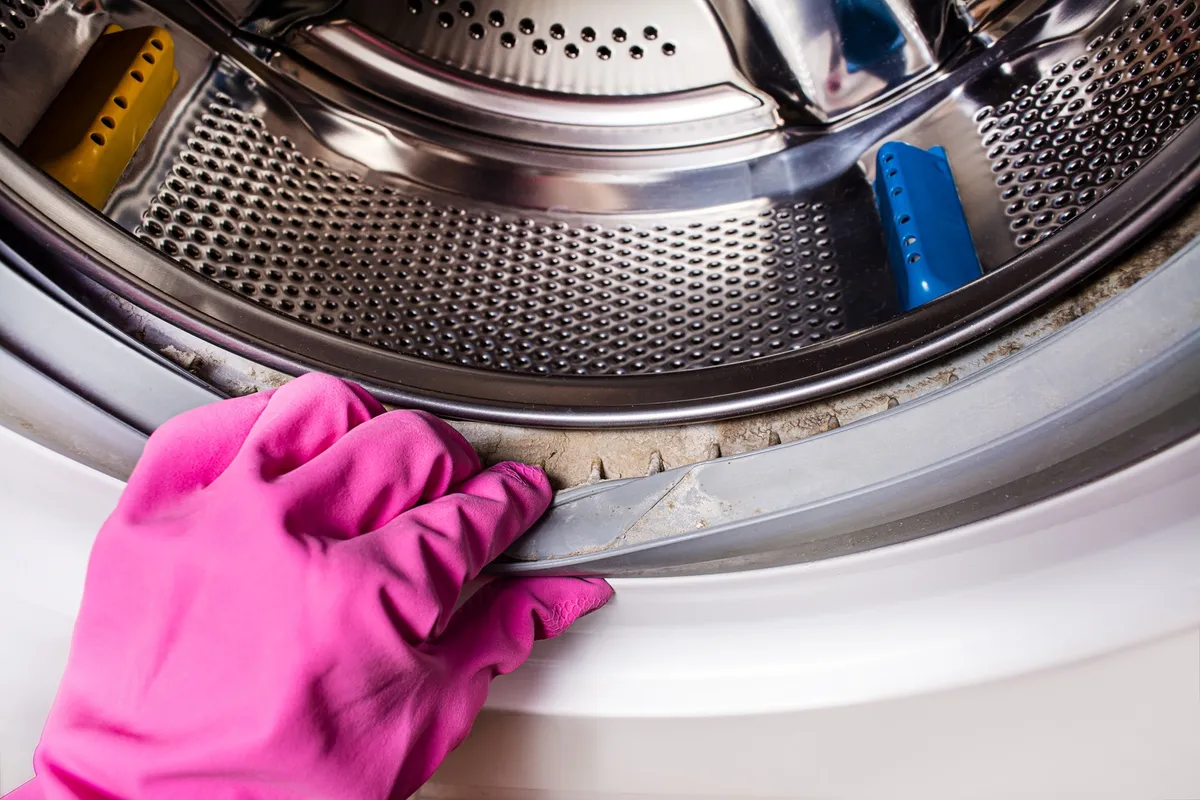
Front-loader gasket: This is the big one. Peel back the rubber door seal and look inside the folds. What you find will probably motivate you to do this monthly from now on — trapped lint, hair, and black mold are common. Dampen a microfiber cloth with white vinegar and wipe out every fold of the gasket. Use the toothbrush for any stubborn spots. Be thorough.
Top-loader drum rim and agitator: Use a vinegar-dampened cloth to wipe around the inside of the lid opening and the base of the agitator (the central column). Grime collects in the seam where the agitator meets the drum floor.
Once you’ve scrubbed everything, dry the gasket thoroughly with a clean cloth before moving on. Leaving it wet defeats the purpose.
Step 2: Run a Hot Cleaning Cycle with Vinegar
Vinegar is doing real work here. It dissolves mineral deposits and soap scum, kills odor-causing bacteria, and deodorizes the drum. The key is using hot water — a warm or cool cycle won’t cut through buildup the same way.
For top-loaders:
Set your machine to the largest load size and hottest water setting. Start the cycle and let the drum fill with water. Once it’s full and agitating, add 4 cups of white vinegar directly to the water. Let it agitate for 1 minute, then pause the cycle and let the vinegar water soak for 1 full hour. After the hour, restart and let the cycle finish completely.
For front-loaders:
Pour 2 cups of white vinegar directly into the detergent dispenser (the main wash compartment, not the softener slot). Select the hottest and longest wash cycle your machine offers. If your machine has a “Clean Washer” or “Tub Clean” setting — use it here. This is exactly what it’s designed for.
Don’t add any laundry during this cycle. The machine needs to run empty.
If you’re using a commercial cleaner tablet instead of vinegar, drop it in the drum now and follow the package instructions — most tell you to run the same clean/hot cycle.
Step 3: Follow Up with a Baking Soda Cycle
The vinegar cycle loosens buildup and kills odors. The baking soda cycle scrubs away what the vinegar lifted and neutralizes any remaining vinegar smell in the drum.
This is why you do them separately, not together. If you add baking soda directly to vinegar, they react immediately (the fizzing you’ve seen) and cancel each other out before doing much useful work. Sequential cycles = actually effective.
For top-loaders: Once the vinegar cycle finishes, sprinkle 1 cup of baking soda directly into the drum. Run another hot water cycle on the largest load setting. Let it agitate and complete the full cycle.
For front-loaders: Add 1 cup of baking soda directly into the drum (not the dispenser this time) and run another hot cycle.
That’s it. Two cycles, maybe 90 minutes of machine time, and your drum is in a dramatically better place than when you started.
Step 4: Wipe Down the Drum, Door, and Control Panel
When both cycles are done, the machine has done most of the work. Now you finish the job.
Open the door and do a visual check inside the drum. Wipe the drum walls with a clean, dry microfiber cloth to pick up any loosened residue the cycles didn’t fully flush out. If you see spots remaining, dampen the cloth with a little vinegar and scrub them.
For front-loaders, go back to the gasket one more time with a dry cloth. Make sure it’s fully dry — not damp.
Wipe the inside and outside of the door, including the glass window if you have one. These surfaces collect dust, splatter, and lint over time and are easy to overlook.
For the control panel, use a barely-damp cloth — just lightly moistened, nothing dripping. You don’t want water getting into the buttons or display.
Once the detergent drawer is completely dry (remember, you set it aside in Step 1), slide it back in.
Open the door wide and leave it that way for an hour or two to let everything air dry completely before running a load of laundry.
How to Keep Your Machine Fresh Between Deep Cleans
The monthly deep clean matters. But what you do between cleans makes an equally big difference.
- Leave the door or lid open after every load — this is the single most effective prevention habit. Moisture needs somewhere to go. Trapping it inside the drum is how mildew starts.
- Wipe the gasket dry after each use — takes 30 seconds and prevents the black mold that makes front-loaders notorious.
- Use the right amount of detergent — more detergent does not mean cleaner laundry. Excess detergent is the primary cause of residue buildup. Check the cap measurements.
- Use HE detergent if you have an HE machine — regular detergent produces too many suds for high-efficiency machines and leaves significant residue.
- Set a monthly reminder on your phone — the cleaning cycle is mostly hands-off. You just need to actually start it. A recurring calendar reminder on the first of the month takes 10 seconds to set.
- Remove wet laundry promptly — wet clothes sitting in a closed drum for hours is one of the fastest ways to develop a mildew smell in both the laundry and the machine.
For the Laundry Room Organization Ideas That Make Wash Day Easier angle — keeping your detergent measured and your routine streamlined makes all of this easier to maintain.
Common Mistakes to Avoid When Cleaning Your Washer
- Mixing bleach and vinegar. This isn’t a “they cancel each other out” situation — it creates chlorine gas. Genuinely dangerous. Pick one and stick with it.
- Skipping the gasket on a front-loader. This is the single biggest reason front-loaders keep smelling even after people run a cleaning cycle. The drum can be spotless and the gasket still harbor mold.
- Using too much cleaner. More Affresh tablets or extra vinegar doesn’t mean a cleaner machine. Excess cleaning product leaves its own residue.
- Running a warm or cool cycle. Heat is what kills mold and bacteria and dissolves soap scum. If you’re not using the hottest setting, you’re mostly just rinsing.
- Cleaning only once a year. One thorough annual clean is not a substitute for monthly maintenance. Monthly is much more effective than playing catch-up once a year.
- Forgetting the detergent drawer. It’s a mold hotspot and easy to ignore because it’s small. That drawer needs to come out and get scrubbed.
If your front-loader has a persistent mold problem even with regular cleaning, check out How to Clean a Front-Load Washer Gasket (Stop the Mold for Good) — there’s a deeper fix for serious cases.
And if you’re dealing with towels that smell musty no matter what, How to Get Musty Smell Out of Towels (Even If They’ve Been That Way for Months) — spoiler: a clean washer is step one.
FAQ
How often should you clean your washing machine?
Most manufacturers recommend cleaning your washing machine once a month. If you do laundry frequently or have a front-loader, a monthly routine is especially important since moisture and detergent residue build up faster.
Can I use bleach instead of vinegar to clean my washer?
Yes, bleach is effective at killing mold and bacteria. Add 1 cup of liquid chlorine bleach to the bleach dispenser and run a hot cycle. Just never use bleach and vinegar at the same time — the combination releases harmful fumes.
Why does my washing machine still smell after cleaning it?
The most likely culprit is the rubber door gasket on a front-loader, which traps moisture and grows black mold in its folds. Pull back the gasket and scrub it thoroughly with a vinegar-soaked cloth. Also make sure you’re leaving the door open between washes to let it air out.
Is it safe to clean a top-loader and front-loader the same way?
The same cleaning agents (vinegar, baking soda, or machine cleaner tablets) work for both types, but the process differs slightly. Front-loaders need extra attention on the rubber gasket, while top-loaders need focus on the agitator and drum rim. Always check your machine’s manual for any specific restrictions.
What is the best washing machine cleaner to buy?
Affresh Washing Machine Cleaner tablets are a widely available option that works for both top-loaders and front-loaders. OxiClean Washing Machine Cleaner is another solid pick. Both are available at Target, Walmart, and Amazon — check current listings for sizing and pricing options.
Start tonight with the detergent drawer. Pull it out, soak it for 15 minutes while you do something else, scrub it clean, and set it out to dry. Tomorrow, run the vinegar cycle. You’ll have a clean machine by the end of the week — and clothes that actually smell like nothing, which is exactly what clean laundry should smell like.