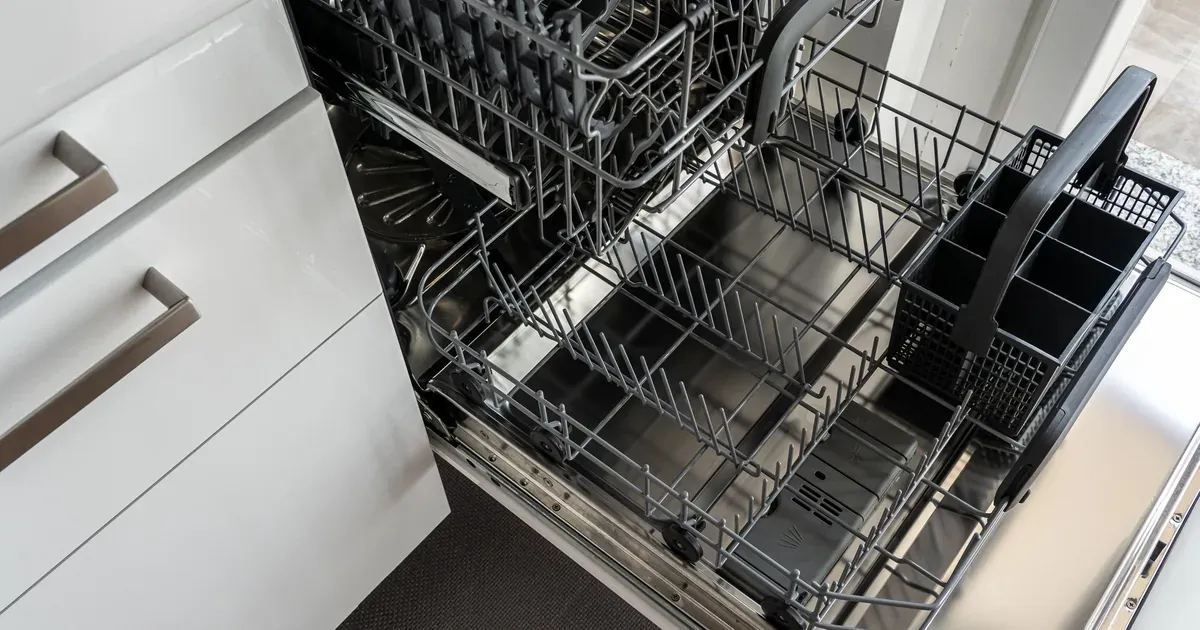
You pull out a glass expecting it to sparkle, and instead it’s got that hazy film across it — like it went through the dishwasher and then rolled around in dust. Or maybe it’s the smell. You open the door to load breakfast dishes and get hit with something musty, like wet cardboard.
Here’s the thing nobody tells you when you buy a dishwasher: it doesn’t clean itself. It cleans your dishes, sure, but all that grease, food debris, and hard water residue has to go somewhere. Most of it ends up trapped in the filter, stuck in the spray arm holes, or growing quietly in the door seal.
This guide walks you through a full deep clean, start to finish. It takes about 45 minutes of hands-on work, plus two cycle runs you can do while you’re making dinner or watching TV. You’ll need white vinegar, baking soda, dish soap, an old toothbrush, a microfiber cloth, and rubber gloves. That’s it — no special tools required.
Signs Your Dishwasher Needs a Deep Clean (and Why It Matters)
If your dishes are coming out cloudy or gritty, that’s not a detergent problem. It’s almost always a buildup problem. Food particles, grease, and hard water minerals collect in the filter and spray arms over months of normal use, and eventually there’s so much gunk in there that clean water can’t circulate properly.
Watch for these signs that your dishwasher is overdue for attention:
- Cloudy or filmy glasses — a hazy layer that wipes off with your finger means mineral deposits or grease residue, not a rinse problem.
- Gritty texture on dishes — tiny food particles redistributing means the filter is clogged and can’t trap debris anymore.
- Musty or sour odor — trapped food and standing water breed bacteria, especially in the door seal and filter housing.
- Slow draining or standing water — a clogged filter or drain area is blocking water flow at the end of the cycle.
- Visible residue on the interior walls — chalky white buildup is hard water scale, and greasy film means grease is escaping the wash cycle.
As a general rule, rinse the filter monthly and do a full deep clean every 1-3 months. If you have hard water or run the dishwasher daily, lean toward the more frequent end.
What You’ll Need Before You Start
You probably have most of this already. Grab white vinegar, baking soda, a squirt of dish soap, an old toothbrush (or any soft-bristle brush), and a microfiber cloth. Rubber gloves are worth putting on too — filter grime is not something you want under your fingernails.
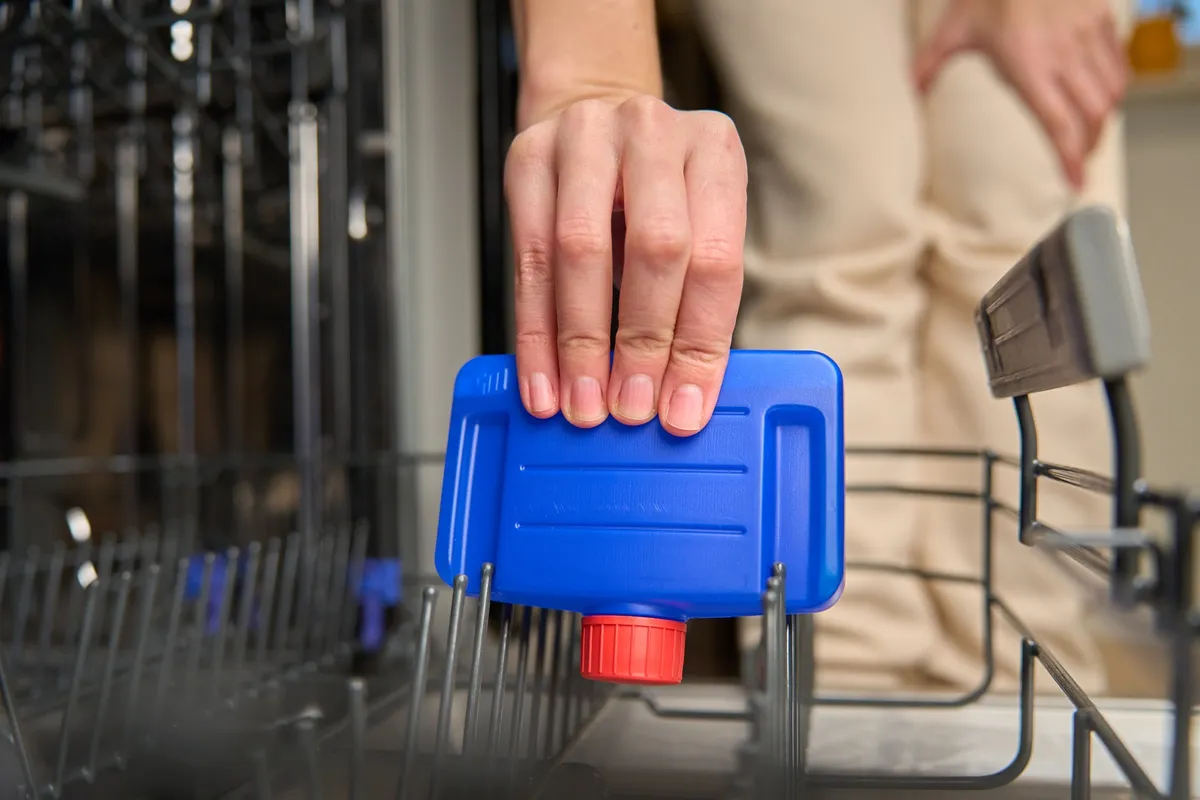
If you want an easier maintenance routine between deep cleans, dishwasher cleaning tablets are a solid option. They’re a convenient once-a-month drop-in that handles light buildup without any scrubbing. Think of them as the maintenance plan, and this deep clean as the reset button.
Here’s your short supply list:
- White vinegar — breaks down grease and dissolves mineral deposits.
- Baking soda — deodorizes and scrubs away dulling residue on interior walls.
- Dish soap and an old toothbrush — for hand-scrubbing the filter and spray arm holes.
- Rubber gloves and a microfiber cloth — for handling grime and wiping down seals.
- Dishwasher cleaner tablets (optional) — for monthly upkeep between full deep cleans.
Step 1: Remove and Clean the Bottom Rack and Filter
The filter is where most of your dishwasher’s problems are hiding, and it’s also the part people forget even exists. Start here — it’s the single change that fixes most cloudiness and odor complaints.
Pull out the bottom rack completely so you have full access to the bottom of the tub. You’ll see a cylindrical filter, usually in one of the back corners. It typically twists counterclockwise a quarter turn and then lifts straight out.
Once it’s out, take a good look. If it’s your first time cleaning it, don’t be surprised if it’s genuinely disgusting — coffee grounds, food bits, maybe a stray piece of rice that’s been in there since last spring. Rinse it under hot running water first to knock loose debris off, then use your toothbrush with a little dish soap to scrub the mesh screen thoroughly. Get into every groove.
Rinse again until the water runs clear, then set the filter back in place and twist it to lock. This step alone often solves the “why are my dishes gritty” problem, since a clogged filter means food particles just keep recirculating instead of draining away.
Step 2: Unclog and Clean the Spray Arms
The spray arms are the two propeller-looking pieces above and below your dish racks, and they’re doing all the actual washing. If their holes are clogged, water can’t reach your dishes with any real pressure — which explains why that top rack always seems to come out worse than the bottom.
Check each hole on both spray arms with a toothpick or a straightened paperclip. Mineral deposits and food debris love to lodge right in these tiny openings, and it usually takes almost no time to clear each one.
If your model allows it (check your dishwasher’s manual, but most modern ones do), unclip the spray arms and soak them in a sink of warm, soapy water for 10-15 minutes. This loosens up grease that’s clinging to the plastic even where you can’t see it. After soaking, rinse thoroughly under the faucet, making sure water flows freely through every hole, then click them back into place.
You’ll notice the difference on your very next load. Water pressure that’s been slowly declining for months suddenly comes back, and dishes on both racks get properly rinsed instead of just the bottom ones.
Step 3: Wipe Down the Door Seals and Edges
This is the step people skip, and it’s usually the source of that lingering musty smell. The rubber gasket that runs around the door traps moisture, food splatter, and soap scum in its folds — exactly the environment mildew loves.
Dampen your microfiber cloth with white vinegar, or make a simple paste with baking soda and a splash of water if you’re dealing with visible grime. Run the cloth along the entire seal, pressing into the folds where crumbs and gunk tend to hide. You may need to fold the cloth over your finger to really get into the crevice.
While you’re in there, don’t forget the detergent dispenser and the utensil basket. Both collect soap residue and food debris that can affect how well future loads get clean. A quick wipe-down of the dispenser compartment and a rinse of the utensil basket under hot water takes two extra minutes and makes a real difference.
Step 4: Run a Vinegar Cycle to Deep Clean the Interior
Now that you’ve handled the physical grime, it’s time to tackle what’s baked onto the interior walls and hiding in places you can’t reach by hand. Vinegar is the workhorse here — it cuts through grease and dissolves hard water mineral deposits without any harsh chemicals.
Place a cup of white vinegar in a dishwasher-safe bowl and set it upright on the top rack of the empty dishwasher. Run a full hot water cycle. The steam and water circulate the vinegar throughout the entire interior, breaking down buildup on the walls, around the door, and in spots your toothbrush can’t reach.
This step also does double duty on odor. Vinegar neutralizes smells rather than just masking them, which is why a lot of “dishwasher smells musty even though it’s clean” complaints get solved right here.
Step 5: Finish with a Baking Soda Cycle for Odor and Shine
After the vinegar cycle finishes, sprinkle about a cup of baking soda across the bottom of the still-empty dishwasher. Run a short cycle on hot water.
Baking soda picks up where vinegar leaves off — it tackles any remaining odor and gives the interior walls a noticeably brighter, less dingy look. Think of vinegar as the degreaser and baking soda as the polish. Together they handle both the smell problem and the dull, filmy appearance that builds up over months of regular use.
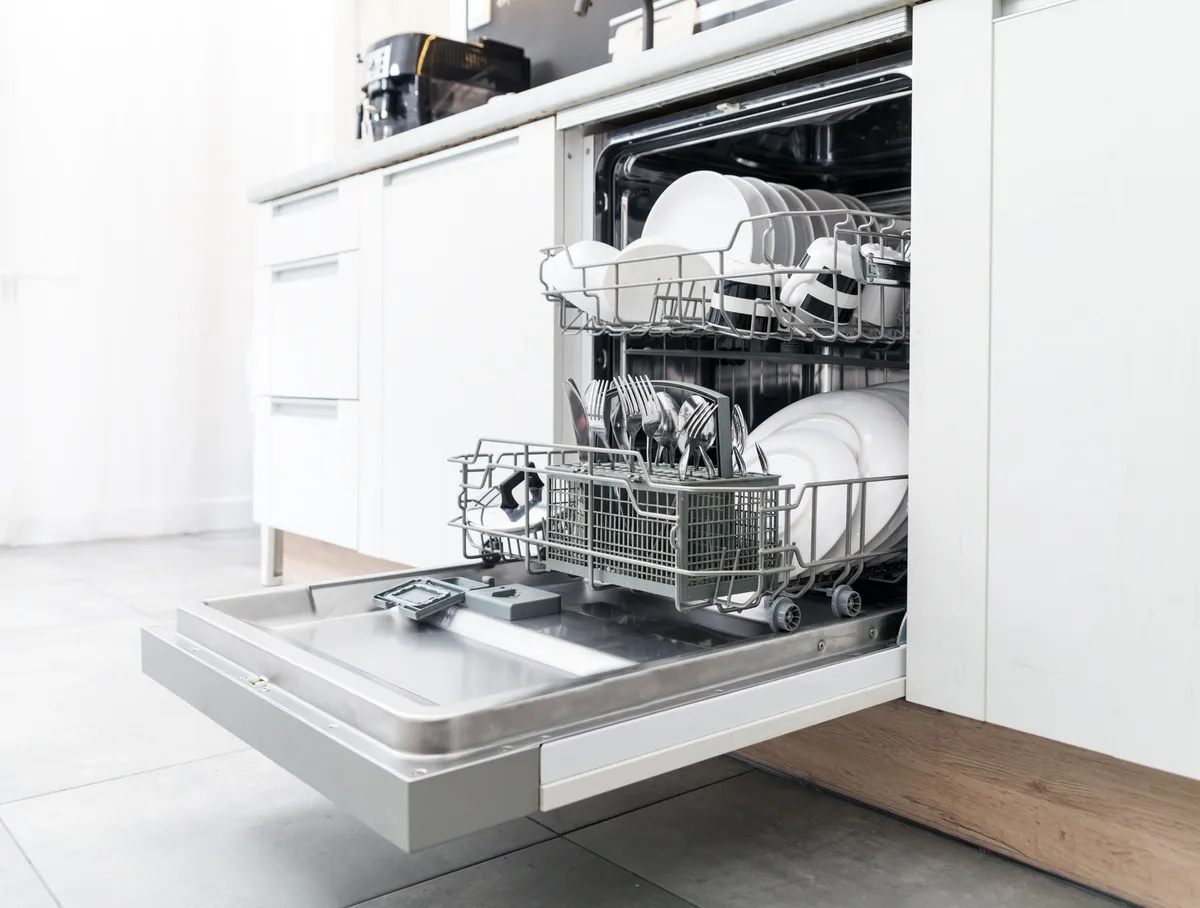
When this cycle finishes, prop the door open for a few minutes to let everything air out before you run your next load of actual dishes.
How to Keep Your Dishwasher Clean Between Deep Cleans
A deep clean resets things, but a few small habits keep your dishwasher performing well for months afterward — so you’re not starting from scratch every time.
- Scrape, don’t rely. Scrape large food chunks off dishes before loading. Dishwashers handle light residue fine, but chunks of food are exactly what clogs the filter fastest.
- Rinse the filter monthly. It only takes a couple of minutes once you know where it is, and it prevents the gritty-dish problem from creeping back.
- Crack the door after cycles. Leaving the door open a few inches after each wash lets moisture escape instead of sitting in the seal, where mildew loves to grow.
- Use rinse aid. Rinse aid helps water sheet off dishes instead of pooling, which cuts down on hard water spots and mineral buildup over time.
- Wipe visible spills right away. If something spills or splatters near the door seal or dispenser, a quick wipe now saves you scrubbing later.
Common Mistakes to Avoid When Cleaning Your Dishwasher
- Skipping the filter because it seems “self-cleaning.” Most modern dishwashers do not have a true self-cleaning filter — check your manual, but assume you need to clean it by hand unless it specifically says otherwise.
- Mixing bleach and vinegar. This combination creates toxic fumes. Never combine them, and never use bleach at all if your dishwasher has a stainless steel interior, since it can pit and discolor the metal.
- Overloading right after a deep clean. Cramming in too many dishes blocks the spray arms from rotating freely, which undoes your hard work almost immediately and causes new buildup fast.
- Using too much dish soap in the filter cleaning step. A little goes a long way — excess soap can leave its own residue if not rinsed thoroughly.
- Ignoring the drain hose. If odors persist after cleaning everything else, the drain hose or air gap might need attention, since they’re a common hidden culprit.
- Forgetting to run a cycle empty. Skipping the vinegar and baking soda cycles because “the filter looked clean enough” leaves mineral deposits and bacteria on the interior walls untouched.
FAQ
How often should I clean my dishwasher?
Clean the filter monthly and do a full vinegar-and-baking-soda deep clean every 1-3 months, depending on how often you run it. Homes with hard water may need to clean more frequently to prevent mineral buildup.
Can I use bleach to clean my dishwasher?
Only if your dishwasher has a stainless steel tub — bleach can damage stainless steel interiors and should never be mixed with vinegar. For most machines, vinegar and baking soda are safer and just as effective.
Why does my dishwasher smell even after cleaning?
Lingering odors are often trapped in the door seal, filter, or drain hose. Double-check these areas were fully scrubbed, and make sure the filter is seated correctly after rinsing.
Is it safe to run a dishwasher cleaner tablet instead of vinegar?
Yes, commercial dishwasher cleaner tablets work well for regular maintenance and are a convenient alternative to the vinegar method. For a deeper clean of visible grime, manually cleaning the filter and spray arms is still recommended.
If your dishwasher has been leaving dishes cloudy or smelling off, don’t wait for a free weekend to fix it. Pull the bottom rack out tonight, find the filter, and give it a good rinse — that five-minute task alone solves most of the problem, and you can tackle the rest of the steps whenever you’ve got 45 minutes to spare. For related fixes, check out How to Get Rid of a Smelly Dishwasher for Good if odor is your main issue, or How to Clean a Washing Machine (Front-Load and Top-Load) while you’re on an appliance-cleaning roll.