If you’ve ever bought something at the grocery store only to discover you already had three of them hiding behind a cereal box, this article is for you. A disorganized pantry doesn’t just look chaotic — it wastes food, wastes money, and wastes the 10 minutes you spend digging around every time you cook.
The fix usually isn’t a full kitchen renovation. It’s finding the right cabinet for your actual space.
This list covers 10 different types of pantry cabinets, from freestanding units perfect for renters to DIY built-ins that look custom without the custom price tag. Whether you’ve got a 12-inch gap beside your fridge or a whole empty wall just waiting for a purpose, there’s something here that fits. By the end, you’ll know exactly which type suits your kitchen — and how to set it up so it stays organized.
Why the Right Pantry Cabinet Changes Everything
The average household throws out a significant portion of the food it buys each year. A big chunk of that waste happens because pantry items get pushed to the back, forgotten, and expire. That’s not a willpower problem — it’s a visibility problem.
The wrong cabinet makes it worse. Deep shelves you can’t see into turn into black holes. Doors that swing wide in a cramped kitchen make you avoid the cabinet entirely. Wire shelving tips over small cans and lets lightweight bags fall through. The cabinet you bought to fix the problem becomes part of the problem.
Before you buy anything, assess three things:
- Available floor space — measure width, depth, and how far any door will swing open
- Ceiling height — tall cabinets gain you serious storage, but only if there’s clearance
- Renter vs. owner — some solutions require drilling or permanent installation; others don’t
The 10 cabinet types below cover every situation: tight gaps, open walls, corner dead zones, rental apartments, and homes ready for a more permanent upgrade. There’s a right answer for your kitchen specifically.
1. Freestanding Pantry Cabinet with Adjustable Shelves
This is the most versatile pantry cabinet on the list — and the one most people should start with. It requires zero drilling, zero landlord permission, and can move with you if you change apartments or rearrange your kitchen.
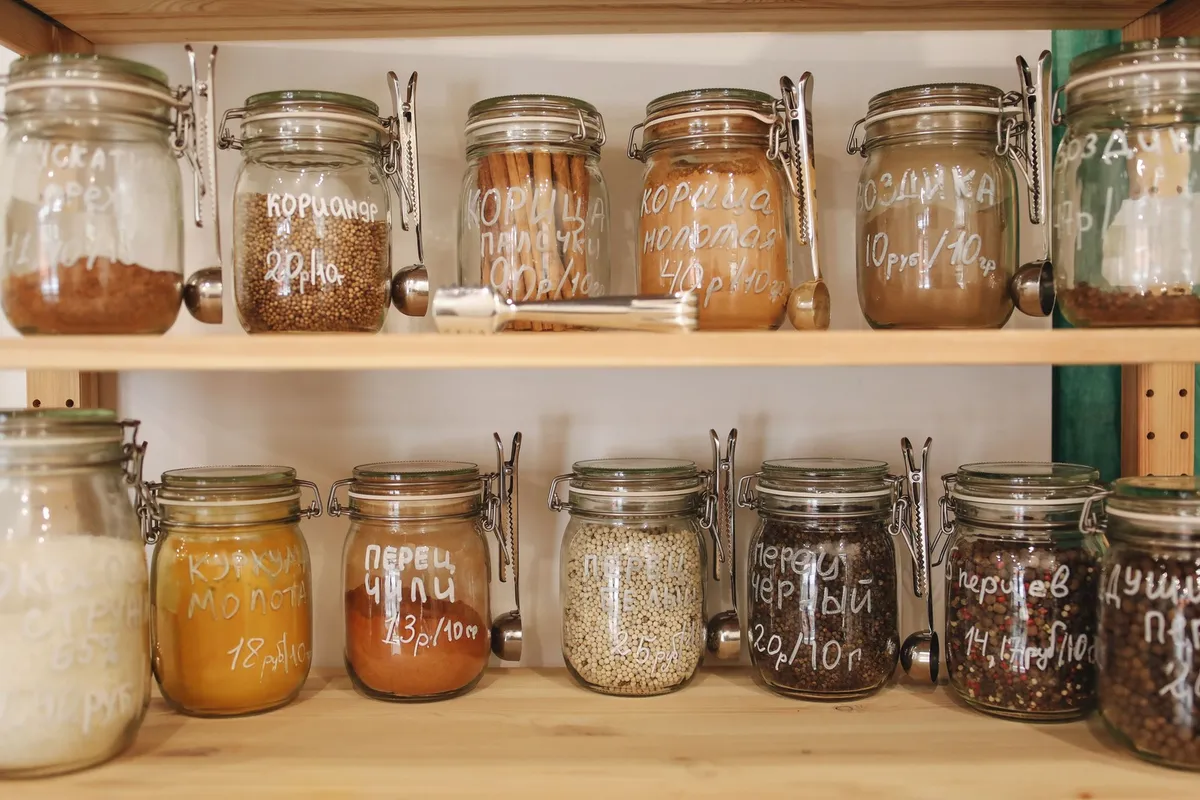
The key word in the name is adjustable. A pantry that can only store cereal boxes in one configuration will fail you the moment you buy bulk rice. Look for models with at least 4 adjustable shelves so you can reconfigure for tall bottles, short cans, or bulky snack bags as your storage needs change. Ideal width is 24–36 inches, which fits neatly beside a fridge or against a short kitchen wall without overwhelming the room.
One thing to avoid: wire shelving. It looks fine in photos but small items tip, lightweight bags fall through the gaps, and rolling cans will test your patience within a week. Solid wood or laminate shelves are worth the slight cost difference.
Most freestanding pantry cabinets arrive flat-packed and assemble in about an hour. Keep the hardware bag — you’ll want it if you ever move or swap components.
This is the right pick for renters, for people in transitional homes, and for anyone who wants a low-commitment solution that still looks intentional. Check Target, Walmart, and Amazon — all three carry a solid range of options at accessible price points. For a deeper look at setting one up, see How to Organize a Small Kitchen Pantry From Scratch.
2. Tall Armoire-Style Pantry Cabinet
If you have an open-concept kitchen where your pantry area is visible from the living room, an armoire-style cabinet is worth the extra thought. It looks like furniture — intentional, finished — instead of utilitarian storage tacked onto the kitchen.
These cabinets typically run 70–80 inches tall and 30–40 inches wide, maximizing vertical space while keeping the footprint compact. Everything closes behind doors, so the “organized chaos” stays hidden until you need it.
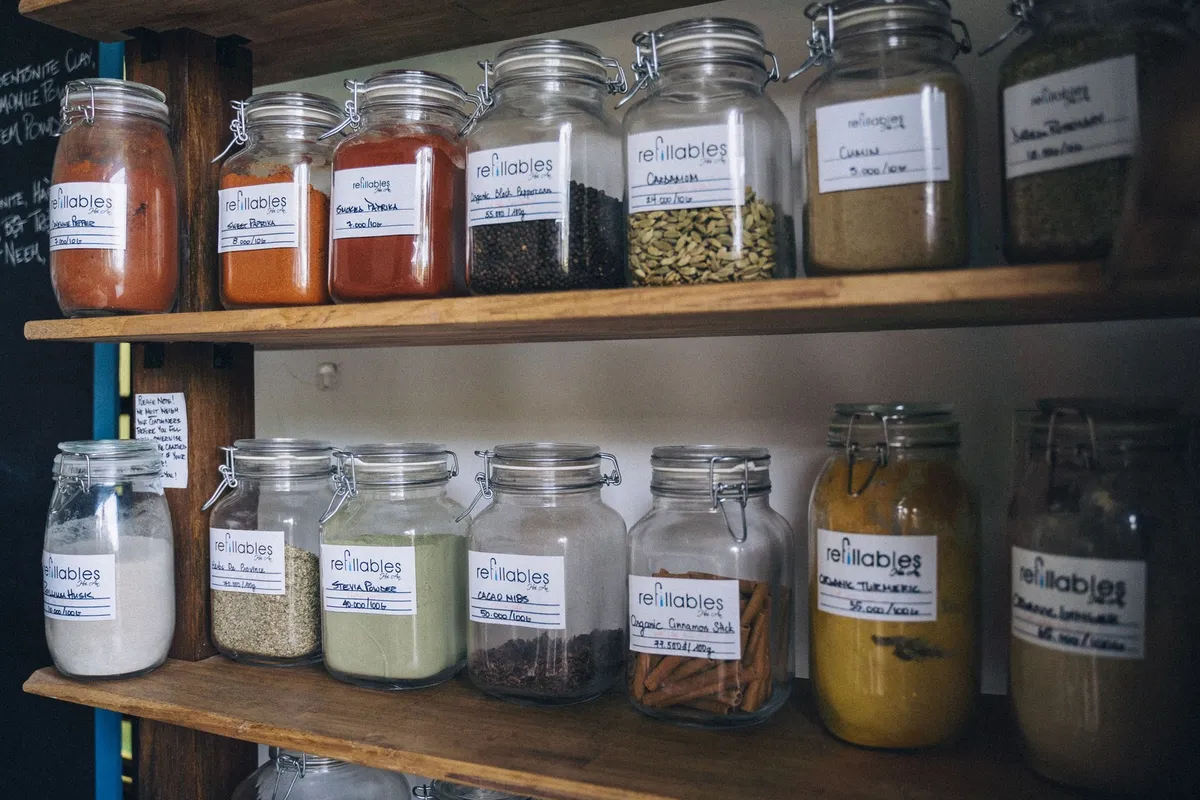
The smartest move with an armoire-style pantry is to use the inside of the doors. Most people ignore that real estate entirely. Over-door organizers — shallow racks, spice holders, or small baskets — can add the equivalent of a full extra shelf without changing the cabinet’s footprint at all.
Because these cabinets are designed to look good in living spaces, they’re often available in finishes that match furniture: white, black, walnut-tone, and painted colors. If your kitchen has no dedicated pantry wall, an armoire creates one wherever you park it.
This is also a good option if you’re renting a place that’s open to the idea of nice furniture but won’t budge on drilling. No installation required.
3. Narrow Pantry Cabinet (12–18 Inches Wide)
That weird 14-inch gap between your refrigerator and the wall? Stop feeling guilty about it being wasted space. A narrow pantry cabinet is built exactly for that spot.
Slim pantry cabinets start at about 12 inches wide, which is genuinely enough for canned goods, spice jars, condiment bottles, and boxed mixes stored upright. They go up to 18 inches, which adds room for pasta boxes and cereal bags. The key is height — a narrow cabinet that goes floor-to-ceiling makes up in vertical space what it gives up in width.
Pull-out drawer versions are the clear winner here if your budget allows it. Instead of reaching into a 12-inch-wide cabinet and knocking everything over, you slide the whole shelf out toward you. Everything is visible, nothing gets buried, and you stop buying duplicates of things you already own.
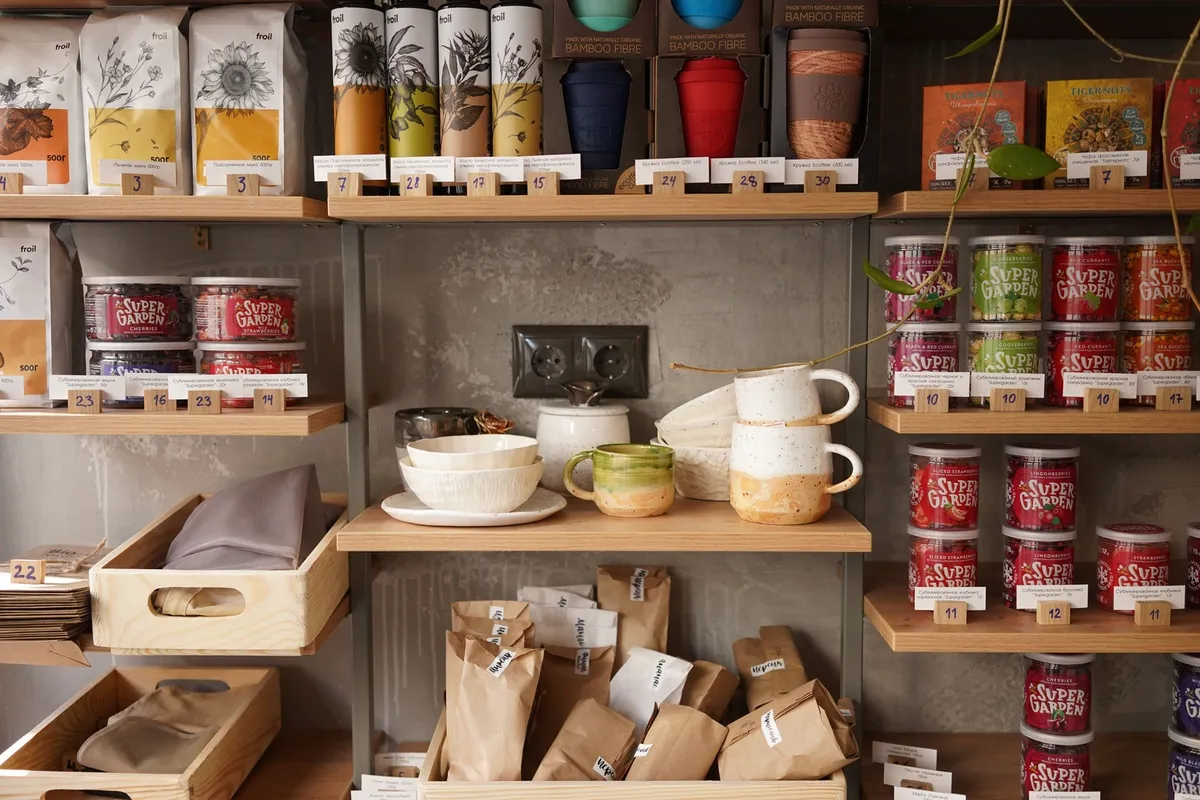
Cans, condiments, spices, and boxed goods are the ideal tenants for a narrow pantry. Avoid storing anything too wide or too lightweight — bulky snack bags can fall over easily in a shallow space.
If you’re wondering whether this is also a good solution for deeper built-in gaps, it overlaps with the pull-out pantry tower in the next section.
4. Pull-Out Pantry Cabinet (Slide-Out Tower)
Different from a narrow cabinet, this one is specifically designed for spaces where a standard swinging door would block access entirely — like the gap beside the oven or in an alcove where you can’t stand in front of it.
The whole unit slides out on full-extension glides, letting you pull the entire tower toward you. Every shelf is accessible, including the back. No leaning, no squinting, no forgotten cans.
Many slide-out pantry towers are DIY-installable with basic tools and a few hours on a weekend. If you rent, this is worth a conversation with your landlord — it’s a home improvement that’s easy to reverse, and most landlords who allow minor modifications will say yes.
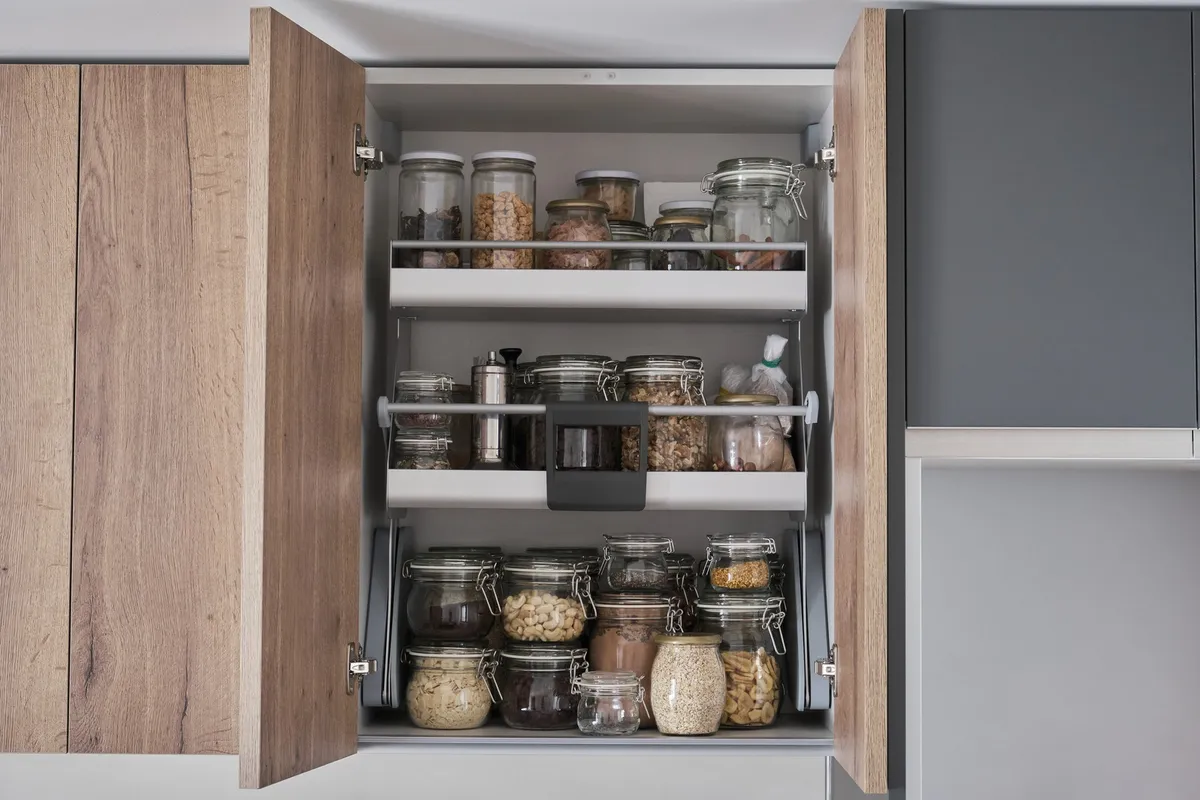
One common mistake: buying a unit without checking the weight rating on the slides. A fully loaded pantry tower with canned goods, jars, and appliances can get heavy fast. If the slides aren’t rated for the load, they’ll start to bind or drag within a few months. Check the spec sheet before you buy.
For even more capacity without floor space, this pairs well with the over-the-fridge cabinet for bulk overflow storage.
5. Corner Pantry Cabinet
Corners are the most neglected real estate in any kitchen. A corner cabinet — done right — can hold as much storage as two standard-width cabinets combined.
The debate here is between two systems: lazy Susan rotating shelves vs. blind corner pull-out organizers. Here’s the honest breakdown:
- Lazy Susan: Easy to use, affordable, widely available. Downside — items on the outer edge can fall off as it spins, and you lose a bit of space to the rotation mechanism.
- Blind corner pull-out: Brings the back of the corner out to you in two sliding sections. More expensive, but nothing gets lost and there’s no spinning chaos. Better for kitchens where organization really matters.
Corner pantry cabinets work best in L-shaped or U-shaped kitchens where corners exist by necessity. If you’re buying a freestanding corner unit rather than installing a built-in, measure the diagonal clearance — not just the depth. A cabinet that’s 24 inches deep might need 34 inches of diagonal space to open without hitting adjacent appliances.
This is one of those solutions that sounds complicated but pays off fast. Turning a dead corner into functional storage changes how the whole kitchen flows.
If you’ve been skimming, slow down for the next section. Open-shelf cabinets get a lot of hate, but used correctly, they’re genuinely faster to live with than any door-based system.
6. Open-Shelf Pantry Cabinet (No Doors)
Open shelving works. Just not the way most people try to use it.
The mistake is treating an open pantry shelf like a closed one — stacking random boxes and loose bags and hoping it looks fine. It won’t. Open shelving only works when everything is contained in matching bins or baskets with labels. The structure the door was providing? Now the bins provide it.
Done that way, it’s genuinely faster than any other pantry type. No door to open, no handle to grab, no cabinet to swing out of the way. You walk up, you see everything, you grab it. For busy households with kids, that speed matters.
The real trade-off: dust collects faster on open shelves, and you have to stay reasonably tidy or the whole thing looks like chaos. It’s not a “shove it in and close the door” solution.
How to style it so it stays working:
- Group items by category — grains together, snacks together, canned goods together
- Use labeled wicker or fabric baskets for loose items
- Put rarely-used items on the top shelf (bulk backup stock, seasonal baking supplies)
- Keep a small basket for “things that need to go somewhere else” instead of letting them drift
For more on making the bin system actually hold up, see How to Use Baskets and Bins to Organize Every Kitchen Cabinet.
7. Cabinet with Glass Doors
Glass-door pantry cabinets are the compromise between fully open shelving and fully closed storage — and it’s a good compromise.
You get the clean look of closed doors without the “open every door to find the crackers” problem. The glass lets you see what’s inside at a glance, so you get some of the speed benefit of open shelving without the dust and the pressure to keep everything perfectly visible.
Frosted glass is worth considering if your pantry contents are, let’s say, works in progress. It diffuses the view enough to hide minor disarray while still letting light through. You’ll know something is there; you just won’t see exactly how the granola bar wrappers are piled.
Pair this type of cabinet with interior LED strip lighting if the shelves are deep. A glass door that opens onto a dark interior defeats the whole purpose. LED strips are inexpensive and easy to install with adhesive backing — no wiring required.
This option works best when you’ve already committed to matching pantry containers or jars. The glass turns your organization system into part of the kitchen’s look, which is satisfying when it’s working and obvious when it isn’t.
8. Modular Stackable Pantry Cabinet System
The best thing about modular systems is the entry point: you can start with one unit and add more over time instead of buying everything at once.
Each section is a standalone cube or cabinet that connects to the others. Start with two stacked units in a kitchen corner. Add a third when your pantry needs grow. Take the whole system apart and reconfigure it when you move. It’s flexible in a way that custom cabinetry or a single large freestanding unit isn’t.
What to look for when shopping:
- Interlocking connectors that keep stacked units from shifting
- Anti-tip hardware — essential once you’re stacking more than 2-3 units high
- Consistent finishes across the product line so units bought months apart still match
IKEA’s KALLAX and Sauder’s modular lines are two of the most widely available options in this category, both solid for everyday budgets. They’re not premium furniture, but they’re durable enough to last through several moves.
This is the right choice for renters, people in transitional housing, or anyone who doesn’t want to commit to a permanent solution but still wants something that looks intentional and grows with them.
9. Over-the-Fridge Pantry Cabinet
Most kitchens have 12–18 inches of dead space between the top of the refrigerator and the ceiling. It’s awkward to reach, so people leave it empty — or pile things up there in a way that guarantees something falls on them eventually.
An over-the-fridge cabinet converts that dead zone into legitimate storage. These units are specifically designed to match standard refrigerator widths (typically 30–36 inches) so they sit flush and look intentional rather than improvised.
The key is to store the right things up there: bulk paper towels, extra snack packs, seasonal baking supplies, backup stock of things you buy in quantity. Anything you reach for every day is wrong for this shelf — save the inconvenient height for the things you only need once a month.
One practical tip that makes this cabinet actually usable: store a small folding step stool nearby. Not in a closet three rooms away — near the kitchen. A step stool that takes 30 seconds to retrieve is a step stool you’ll use. One that requires a whole expedition is a step stool that turns your over-fridge cabinet into forgotten territory again.
10. DIY Built-In Pantry Cabinet Using Stock Cabinets
This is the big one. If you own your home and want the pantry to look like it was always there, a floor-to-ceiling built-in made from stock kitchen cabinets is the most cost-effective way to get that result.
Custom cabinetry can run into thousands of dollars. Stock cabinets from IKEA, Home Depot, or Lowe’s are a fraction of that — and when you stack base cabinets plus wall cabinets floor-to-ceiling with trim details, the result looks indistinguishable from custom work to most eyes.
Basic steps to make it work:
- Measure and plan your layout — decide on base cabinet height, wall cabinet heights, and total width before ordering anything
- Run a level line on the wall before mounting a single cabinet — this is the step people skip and regret
- Install base cabinets first, shimming as needed to get them plumb and level
- Mount wall cabinets above, aligning to the level line
- Add crown molding along the top edge to close the gap between cabinets and ceiling — this single detail is what makes it look built-in instead of assembled
- Fill gaps with wood filler, sand, and paint for a seamless finish
This is a weekend project (a full weekend, with a helper), not an afternoon. But the result is a permanent, tailored pantry that adds real value to the kitchen. Best for homeowners who want a lasting upgrade without commissioning a full renovation.
How to Choose the Right Pantry Cabinet for Your Kitchen
Now that you’ve seen all 10 types, here’s how to narrow it down to your actual situation.
Step 1: Measure before you do anything else. Width, depth, ceiling height, and door swing clearance. A cabinet that looks spacious in a product photo can completely block your dishwasher in real life. Measure the diagonal clearance for corner options specifically.
Step 2: Count what you’re actually storing. Canned goods need 12–16 inches of shelf depth. Cereal boxes need height clearance. Bulk bags need wide shelves. Appliances stored in the pantry need deep, sturdy shelving. Know your inventory before you decide on shelf configuration.
Step 3: Match the cabinet to your lifestyle.
- Renters → Freestanding, modular, or narrow pull-out (no drilling required)
- Owners ready for permanent → Built-in stock cabinet system or corner pull-out
- Busy households with kids → Open-shelf or pull-out tower for grab-and-go access
- Open-concept kitchens → Armoire-style or glass-door (keeps clutter hidden or contained)
- Tight gaps → Narrow cabinet (12–18 inches) or slide-out tower
Step 4: Know where to flex and where not to. You can save on the frame material — laminate vs. solid wood makes little functional difference for pantry use. Don’t save on shelf weight ratings or slide hardware. A shelf that bows under canned goods or slides that bind under load will frustrate you every single day.
Common mistake to avoid: buying based on product photos without reading dimensions. Many pantry cabinets look large online but arrive with 10–12 inch shelf depths — fine for spices, not fine for cereal boxes. Always readthe full spec sheet before you click purchase, and if the listing doesn’t include exact shelf depth (not just overall cabinet dimensions), assume it’s shallower than you want and check reviews for real measurements.
Once you’ve picked the right cabinet, the last step is finishing it out. A tape measure, a roll of shelf liner, a set of matching baskets, and some pantry labels turn a good cabinet into a system you’ll actually maintain. That final layer of organization is often what separates a cabinet that stays neat for years from one that slides back into chaos within a month.
FAQ
What size pantry cabinet do I need for a small kitchen?
For most small kitchens, a freestanding pantry cabinet 24–30 inches wide and 70–80 inches tall offers the best storage-to-footprint ratio. If floor space is truly tight, a narrow pull-out cabinet 12–18 inches wide can fit in gaps beside appliances. Always measure your ceiling height and door swing clearance before ordering.
Are freestanding pantry cabinets worth it for renters?
Yes — freestanding pantry cabinets require no drilling or permanent installation, making them ideal for renters. Many models come fully assembled or with minimal tools required. When you move, the cabinet moves with you, making it a smart long-term investment even if you change apartments.
How deep should pantry cabinet shelves be?
For most pantry items like canned goods, cereal boxes, and snacks, 12–16 inches of shelf depth is ideal. Deeper shelves (18–24 inches) work for large appliances or bulk items but make it easy to lose small items in the back. If you go deep, add pull-out drawer inserts or risers so nothing gets buried.