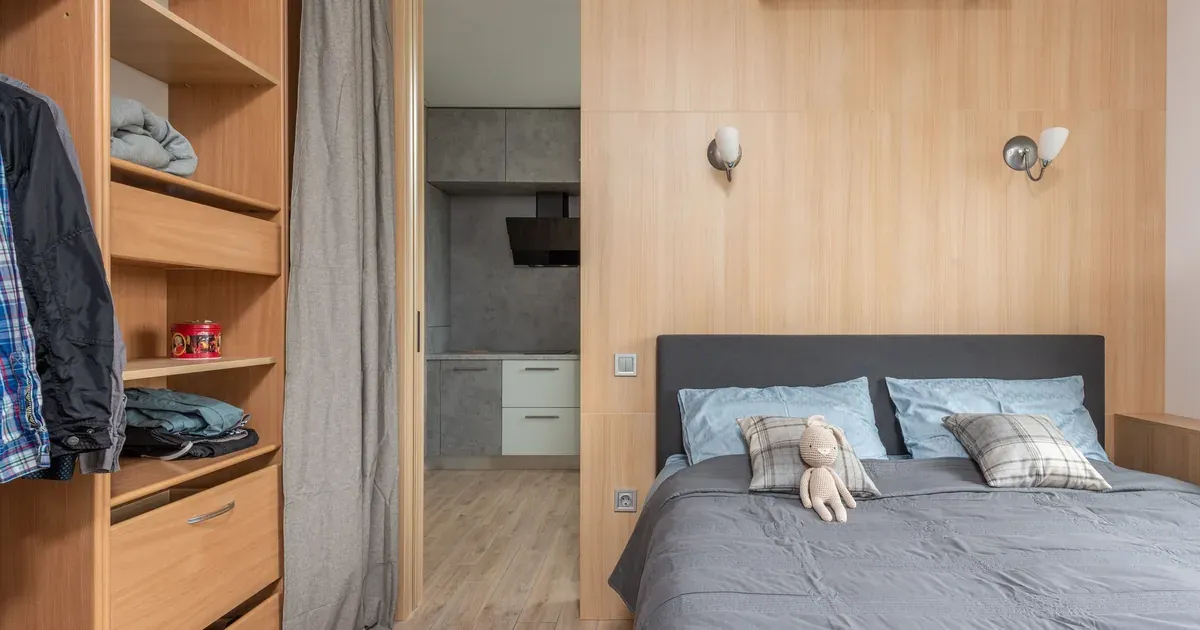
If you’ve ever stood in the doorway of your bedroom and felt your shoulders tense up before you even walked in, you’re not imagining it. Small bedrooms have a way of collecting chaos — and once the clutter takes over, the room stops feeling like a place to rest and starts feeling like another thing to deal with.
The good news: the problem is almost never the square footage. It’s how the space is being used. These 15 practical ideas are built for real small bedrooms — not magazine rooms with nothing in them — and they work whether you’re renting, own your space, or are somewhere in between.
Start anywhere on this list, but if you want a fast gut-check on where to begin, jump to Where to Start at the bottom.
Why Small Bedrooms Feel So Overwhelming (And How to Fix That)
The real problem isn’t the size of the room. It’s the ratio of stuff to space.
Visual clutter has a compounding effect — a dresser top with 12 items on it doesn’t just look like 12 items, it reads as chaos. That chaos signals to your brain that the room is out of control, which makes it feel smaller and more stressful than it actually is.
The fix starts with one mindset shift: vertical space and hidden storage are your best friends. Most small bedroom solutions focus on the floor. The real opportunity is the walls, the space under the bed, and the backs of doors.
Before you try a single idea on this list, do this first:
- Walk through your bedroom and remove everything that doesn’t belong there — dishes, mail, random items that “landed” and never left
- Clear every flat surface, even temporarily, so you can see what you’re actually working with
- Look up — note how much wall space above furniture is completely unused
That quick reset will make every idea below easier to implement and way more effective.
1. Use Your Bed Frame as a Storage Powerhouse
Your bed takes up more floor space than any other piece of furniture in the room. It might as well earn its keep.
Platform beds with built-in storage drawers are one of the smartest swaps you can make in a small bedroom. They eliminate the need for a dresser entirely in many cases — the drawers handle folded clothes, extra bedding, or anything else that would otherwise pile up elsewhere.
If you’re not ready to replace your bed frame, bed risers are a budget-friendly alternative. They lift a standard frame 6-8 inches, which is enough clearance for flat rolling bins underneath. Use labeled, flat-profile rolling containers so you can actually pull them out and find things without playing Jenga.
Lift-top storage beds are another option — the entire mattress platform lifts to reveal a large cavity underneath, perfect for bulky off-season items like comforters or winter gear.
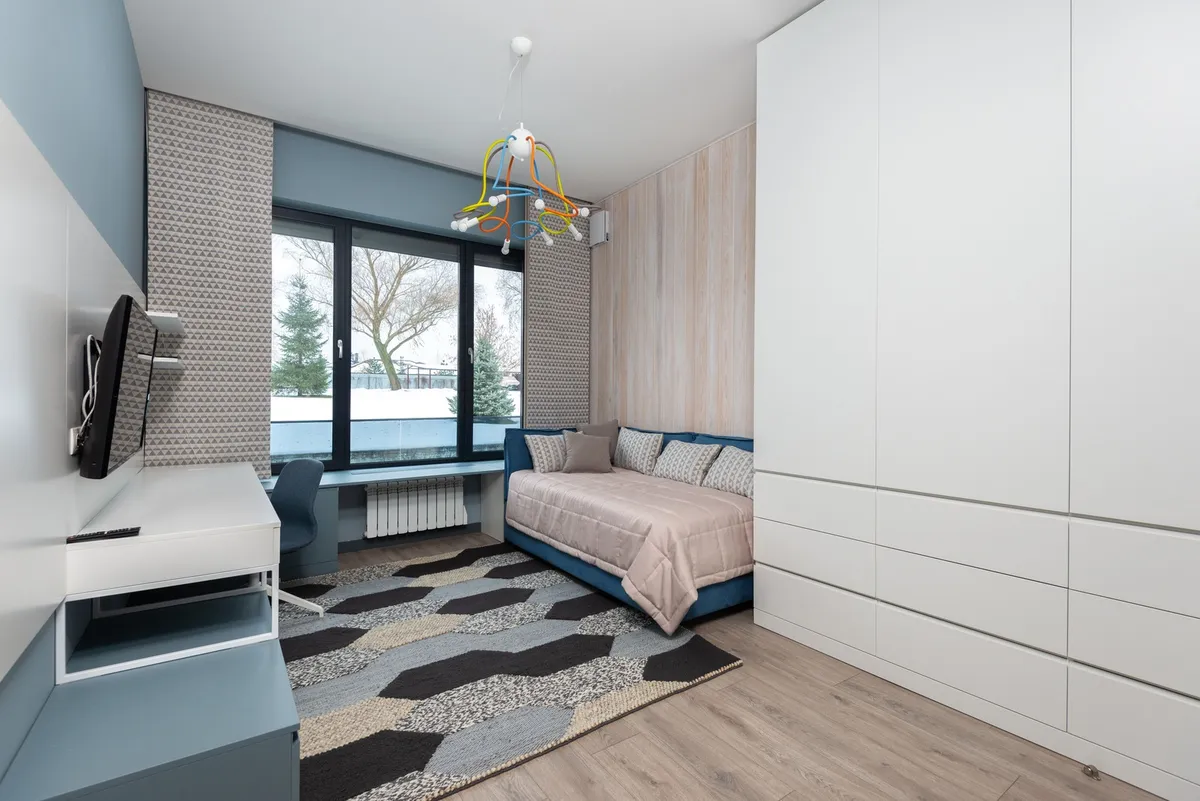
The key with any under-bed or in-bed storage: categorize it. “Stuff I shoved under here” turns into a chaos zone fast. “Extra bedding only” or “off-season clothes only” stays manageable.
2. Ditch the Nightstand and Go Floating Instead
Traditional nightstands are space hogs. A standard one is 20-24 inches wide and 20 inches deep — that’s significant real estate in a small bedroom, especially if you have one on each side of the bed.
Floating wall shelves mounted at bed height do the same job with zero floor footprint. Mount two small shelves — one for each side — at mattress height and you’ve got a spot for your lamp, phone, water bottle, and whatever book you’re currently ignoring.
The bonus isn’t just the floor space. A clear floor is dramatically easier to clean and makes the room feel more open, even if nothing else changed.
Renters: You don’t need to drill anything. Over-mattress bedside caddies hook directly over the side of the mattress and hold a surprising amount. They’re not the most glamorous solution, but they’re genuinely useful and leave no marks.
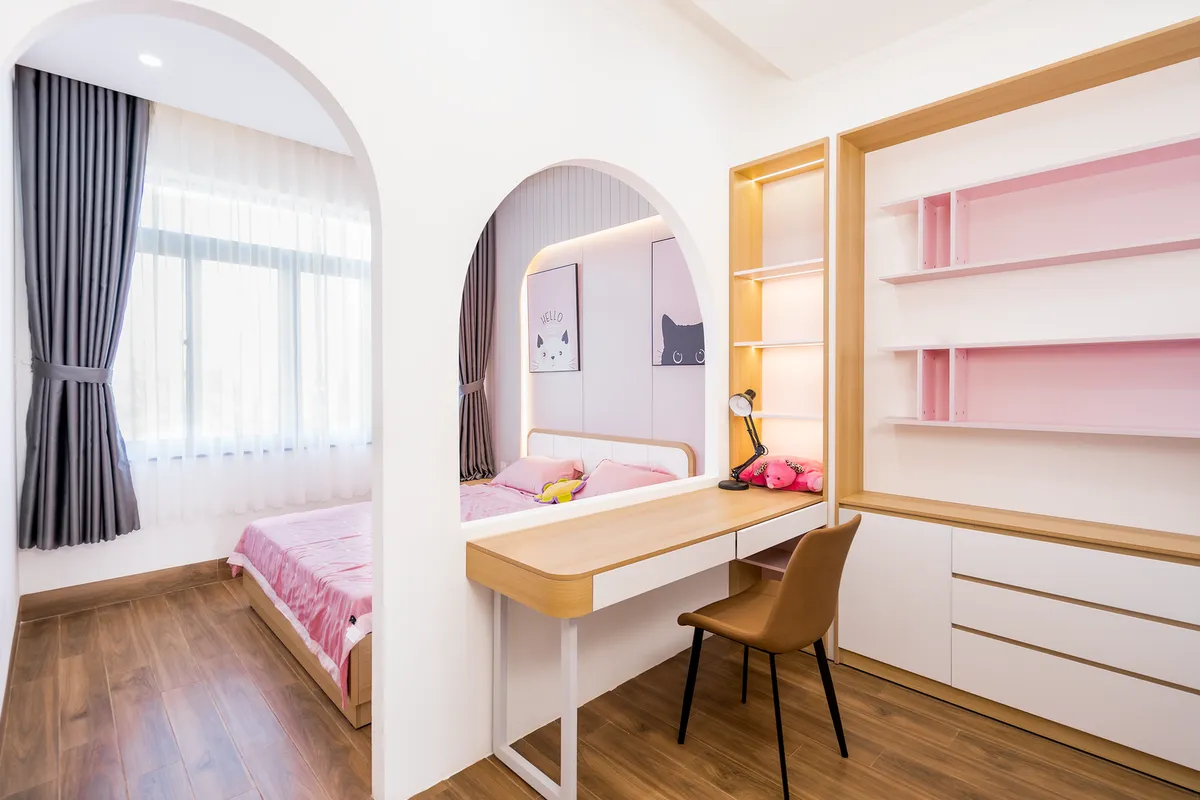
Wall-mounted bedside organizers with pockets are another renter-friendly option — they hang from the bed frame itself and keep your nighttime essentials within reach without touching a single wall.
3. Maximize Closet Space With a Simple Organizer System
Most small bedroom closets are dramatically underutilized. A single hanging rod and one shelf is the factory setting — it’s not designed for your actual wardrobe.
A double-hang rod is the highest-impact closet upgrade you can make. It splits your hanging space horizontally, creating a top section for longer items (dresses, pants on hangers) and a bottom section for shorter ones (shirts, folded pants over a hanger). You’ve essentially doubled your hanging capacity without touching the walls.
Add a slim over-the-door organizer on the closet door for shoes, accessories, or folded t-shirts. Then stack uniform bins on the top shelf — matching sizes mean you can actually get to the back row without avalanche risk.
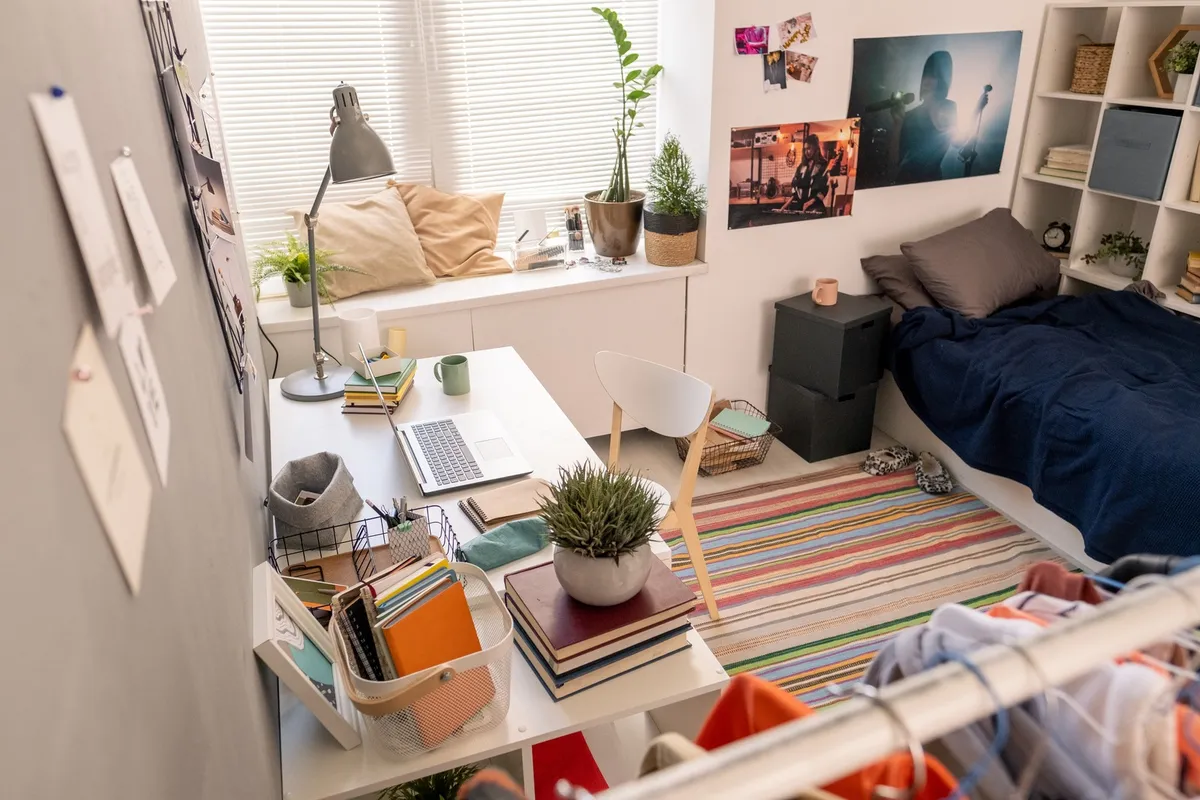
You don’t need a custom closet system to make this work. An expandable rod kit — the kind that presses between the walls and requires no drilling — handles most standard closet widths and is widely available at Target, Amazon, and most home goods stores.
The goal here is using every vertical inch of the closet, not just the zone between your shoulders and the floor.
4. Think Vertical: Floor-to-Ceiling Shelving
Here’s a comparison worth doing: a low 4-drawer dresser and a tall narrow bookshelf might have the same footprint, but the bookshelf holds significantly more because it uses the vertical space up to the ceiling instead of stopping at 4 feet.
Tall bookshelves do something else, too — they draw the eye upward, which makes the room feel taller and bigger. A narrow unit (around 12 inches deep) can tuck into a corner or along a wall without blocking traffic flow or feeling imposing.
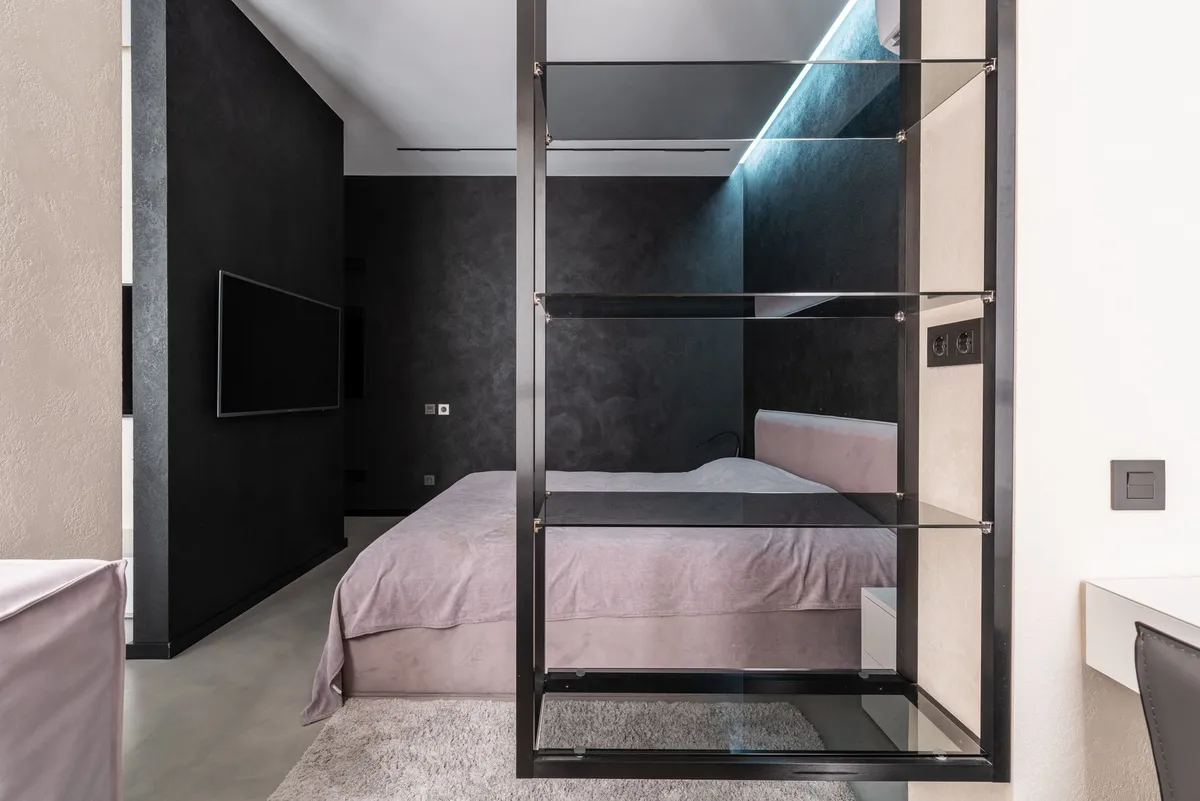
Use the top shelves — the ones you can’t easily reach — for seasonal or rarely accessed items, tucked into matching baskets so they look intentional rather than abandoned. The lower shelves handle everyday items.
The style trick here is mixing open and closed storage. A shelf full of visible mismatched stuff looks chaotic. Alternate between open shelves with a few displayed items and baskets or bins that hide the actual storage. Tidy but not precious.
This pairs well with floor-to-ceiling closet strategies — same principle, different zone of the room.
5. Choose Furniture That Does Double Duty
Every piece of furniture in a small bedroom should pull double weight. If it only does one thing, it’s a luxury you probably can’t afford space-wise.
Apply this rule to every piece you have or plan to buy:
- Storage ottoman at the foot of the bed: Stores blankets, serves as a seat, and can double as a surface for a tray or book
- Storage bench: More versatile than a chair — seating when you need it, storage always
- Small desk as a vanity: Add a mirror and a small tray for makeup, and a work desk becomes a getting-ready station
- Nightstand with a drawer: Even a tiny one — the drawer hides the things that would otherwise pile up on top
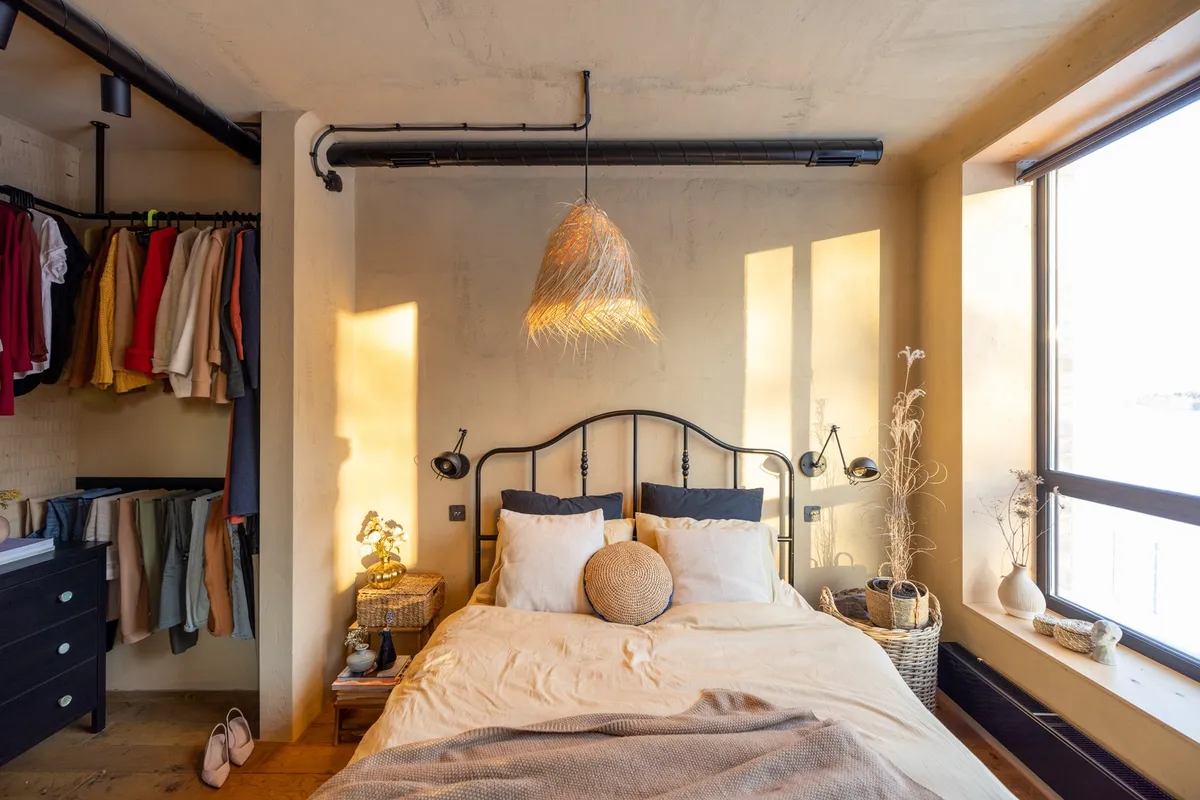
The rule of thumb: if you’re considering a piece of furniture and it only serves one purpose, ask whether something else could serve that purpose while also providing storage. Usually the answer is yes.
6. Use Every Inch of Dead Wall Space
Look around your room and count the walls. Now look at what’s actually on them. If the answer is mostly nothing, you have untapped storage.
The space above a dresser or desk is prime real estate. A single shelf installed at eye height or above doubles the utility of that zone — it keeps the dresser surface clearer because there’s somewhere else for things to go.
The back of your bedroom door is often completely ignored. A hook rail or over-the-door organizer there handles tomorrow’s outfit, your robe, bags, or belts without adding any furniture.
Inside closet doors work the same way. A small pegboard panel (yes, pegboards aren’t just for garages) mounted on the inside of a closet door organizes jewelry, hair accessories, and small items in a way that’s visible and accessible without taking up shelf or drawer space.
Renters: Command hooks handle most of this. They hold more than you’d expect, come off cleanly, and are available in every size. Install them, use them, and move out without patching anything.
7. Edit Your Wardrobe Before Buying More Storage
If you’re going to skip one idea on this list, don’t skip this one. More storage doesn’t fix a wardrobe that has three times more clothes than the space can hold. It just means you’ve organized the excess.
A 15-minute seasonal purge — actual calendar appointment, not a vague plan — will do more for your small bedroom than any bin or shelf. Go through clothes that don’t fit, haven’t been worn in the past 12 months, or that you keep “just in case.” Those items are costing you real space every single day.
The simplest habit to maintain a small bedroom long-term is the one-in, one-out rule. Something new comes in, something old leaves. No exceptions, no “I’ll get to it later.”
Keep a small donation bag in the closet at all times — not in a closet, stuffed in a corner, but literally hanging right there in the closet. When something isn’t working anymore, it goes straight in. When the bag is full, it leaves. This removes the friction of decluttering as a separate event.
For more on the full decluttering process, How to Declutter Your Bedroom in One Weekend walks through it step by step.
If you’ve been skimming, slow down here — the next few ideas are where the biggest visual payoffs happen.
8. Slim Down Your Dresser (Or Eliminate It Entirely)
A standard 6-drawer dresser is enormous. It’s often the single largest piece of furniture in a small bedroom, and in many cases, it’s only that big because it was the default choice, not because you need all that space.
Consider a narrow 4-drawer chest instead. It has a smaller footprint, fits in tighter spots, and if you fold clothes using the vertical filing method — standing items upright instead of stacking flat — a smaller dresser actually holds more usable clothes because you can see and access every item without unfolding everything underneath.
If you’ve followed idea #1 and your bed has storage drawers, you may not need a dresser at all. One or two under-bed drawers can hold the same folded clothes a dresser would, freeing up a significant chunk of floor space.
Move off-season clothes to under-bed bins or vacuum storage bags to free up drawer space for the current season. Vacuum bags in particular are good for bulky items like sweaters — they compress dramatically and store flat.
9. Use Light and Mirrors to Make the Room Feel Larger
This isn’t about decorating — it’s about visual perception. How light moves through a room affects how big it feels, and a few adjustments can change that significantly without moving a single piece of furniture.
A large mirror on one wall visually doubles the space. Full-length leaning mirrors are widely available and work well in small bedrooms because they don’t require mounting — just lean them against the wall. Position one across from a window if you can, so it reflects natural light back into the room.
Light-colored bedding and walls reflect light; dark colors absorb it. You don’t need to repaint anything — swapping to lighter bedding alone makes a noticeable difference.
If you have heavy blackout curtains, consider replacing them with sheer panels plus a separate privacy liner. You get the same light control with a much airier look during the day.
Swap table lamps for wall-mounted sconces where possible. It frees up nightstand or dresser surface space and gives the room a cleaner, more intentional look.
10. Add Storage to Awkward Nooks and Corners
The corners and odd nooks in a small bedroom are often completely wasted. That gap beside the bed — too narrow for a nightstand — is the perfect spot for a tall, slim tower shelf. These usually run about 6-10 inches deep and fit in spaces most furniture can’t.
Corner shelving units are another underused option. A corner that currently holds nothing can hold a 5-shelf corner unit without affecting traffic flow at all, because it occupies dead space.
The area under a window is worth looking at, too. A built-in window seat with storage underneath is a weekend DIY project if you’re comfortable with basic carpentry — it adds seating, storage, and a cozy nook. If that sounds like too much, a storage bench or storage ottoman placed under the window achieves a similar effect.
For more on maximizing every inch of the closet corner, see 10 Small Closet Organization Ideas That Double Your Space.
11. Keep Surfaces Clear With a “One Tray” Rule
Every flat surface in your bedroom will attract clutter. Nightstands, dressers, windowsills — if there’s a horizontal surface, things will pile up on it. It’s not a willpower issue; it’s physics.
The one-tray rule is the simplest system that actually works: every flat surface gets one tray, and only items that belong on that surface live inside the tray. The tray creates a visual boundary. When the tray is full, something has to leave before anything new can enter.
On the nightstand: lamp, one book, phone charger, water glass. That’s it. The tray makes those 4 items look intentional instead of random.
On the dresser: daily-use items only — perfume, a candle, whatever you reach for every day. Everything else goes inside the dresser.
This habit does more to maintain a small bedroom long-term than almost any storage purchase. Clutter creep is slow and invisible until it’s everywhere — the tray stops it at the source.
12. Optimize Under-Bed Storage the Right Way
Under-bed storage is one of the most valuable zones in a small bedroom — and one of the most commonly wasted ones. Bags stuffed randomly under a bed don’t count as storage. They count as a place where things disappear.
Flat rolling bins are significantly better than storage bags for anything you access more than once a year. You can pull them out, see what’s inside, and slide them back without a production.
The categories that work best under the bed:
- Seasonal clothing — off-season items rotate in and out twice a year
- Extra bedding — the set you swap for guests or weather changes
- Shoes — an under-bed shoe organizer keeps pairs together and accessible
Label every bin. Not with a vague label like “clothes” — something specific like “summer tops” or “guest bedding.” Future you will be grateful.
If the look of plastic bins bothers you, a bed skirt hides everything neatly. For more ideas on this zone, Under-Bed Storage Ideas That Keep Your Bedroom Tidy goes deep on the options.
13. Create a Dedicated Drop Zone Near the Door
Without a designated landing spot, bags, shoes, and jackets hit the floor — or worse, the bed — every single time you walk in. This is one of the biggest contributors to small bedrooms feeling chaotic, and it’s completely fixable.
A small hook rail near the door with a tray or small basket at the bottom handles the majority of daily drop-clutter. Hang tomorrow’s outfit, your bag, your jacket. Drop your keys and wallet in the tray.
Keep it deliberately small: 2-3 hooks maximum, one tray or basket. The temptation is to make it larger so it holds more, but a larger drop zone just becomes a larger clutter pile. Small and specific works better.
This single addition can change how the whole room feels because it gives the chaos a designated place to live — which means it stays contained instead of spreading.
14. Reconsider Your Furniture Layout
Most people default to the same bedroom layout: bed centered on the longest wall, dresser across from it, nightstand on each side. That’s not wrong, but it’s not always the most space-efficient option.
Pushing the bed into a corner (tucked against two walls) frees up a significant amount of floor space in a small room. You lose one side of easy access to the bed, but in a really tight bedroom, the open floor space is worth it.
A few other layout tweaks worth trying:
- Sketch a simple floor plan before moving anything — saves a lot of heavy lifting and lets you test configurations in 10 minutes instead of 2 hours
- Float furniture 2-3 inches from the wall instead of pushing it flush — counterintuitively, a small gap creates visual breathing room
- Remove any piece of furniture you walk around daily without using — if you step around it every day, it’s just taking up space
The question to ask about every piece: if this weren’t here, would I miss it or would I feel more room? The answer tells you what to do.
15. Add a Small Room Divider to Define Zones
If your bedroom doubles as a workspace, a reading nook, or a dressing area,15. Add a Small Room Divider to Define Zones
If your bedroom doubles as a workspace, a reading nook, or a dressing area, the lack of a visual boundary between “sleep” and “everything else” is part of what makes it feel chaotic. Your brain doesn’t get a clear signal that one zone has ended and another has begun, so the whole room reads as one big cluttered blur.
A narrow open bookshelf used as a room divider solves two problems at once. It creates a visual break between zones and adds storage on top of that — shelves facing the sleeping area can hold books and personal items, while the other side faces your desk or reading chair.
In a studio apartment or shared bedroom, curtains hung from a ceiling-mounted tension rod system create a soft, cozy separation without any permanent construction. Pull them closed at night for a private sleeping nook, open them during the day to reclaim the space.
Even something as simple as a strategically placed area rug can do this job. A rug under the bed signals “this is the sleep zone,” while a different rug or bare floor under a desk signals “this is the work zone.” It’s a small, low-effort cue that helps the whole room feel more organized, even if nothing physically changed except where you put a rug.
Where to Start When Your Small Bedroom Feels Overwhelming
Fifteen ideas is a lot to look at in one sitting, and trying to tackle all of them in a single weekend is exactly how people burn out and give up halfway through. Don’t do that to yourself.
Instead, pick one zone and finish it completely before moving to the next:
- Start with the closet — it usually has the most wasted space and the biggest payoff once it’s organized
- Move to the bed — under-bed storage and a bed frame upgrade (if needed) come next
- Finish with the nightstand and surfaces — quick wins that lock in the “clear surface” habit
Before any of that, do the two fastest things on this whole list: clear every flat surface in the room, and remove anything that flat-out doesn’t belong in a bedroom. Both take under 20 minutes combined and make an immediate, visible difference.
If you’re not sure where to focus your energy, prioritize by impact. Bed storage and closet organization give you the biggest return for the effort you put in — they handle the largest volume of stuff in the smallest number of steps. Everything else on this list is worth doing eventually, but those two areas will make the room feel dramatically different almost overnight.
A small bedroom will never have unlimited space, and that’s fine. The goal isn’t to make it feel like a different room — it’s to make the space you have work as hard as possible, so it feels calm instead of chaotic every time you walk in.
What is the best furniture for a very small bedroom?
Stick to multi-purpose pieces that do double duty — a platform bed with storage drawers, a storage ottoman, and floating wall shelves instead of bulky nightstands. Every piece of furniture should serve at least two functions when space is limited.
How do I make my small bedroom feel bigger without renovating?
Use light-colored bedding and walls, hang a large mirror to reflect light, keep surfaces clear, and take advantage of vertical wall space with shelves. Clearing floor clutter has the single biggest impact on how spacious a room feels.
How can renters organize a small bedroom without drilling holes?
Command hooks, over-the-door organizers, tension rods, and freestanding shelving units are all renter-friendly options that require zero wall damage. Bedside caddies that hook over the mattress replace nightstands without touching the walls at all.