You opened your detergent bottle to do a load of towels and realized it’s almost empty again — and you just bought it. Between the price creeping up every time you shop and the headache you get from the “fresh linen” scent, you’ve started wondering what’s actually in that bottle. And whether you could make something better yourself.
You can. Baking soda laundry detergent is a real thing, not a Pinterest myth, and it works well for everyday loads — towels, sheets, regular clothes, kids’ school clothes. This guide walks you through mixing it, using it correctly in any machine (including HE washers), and avoiding the mistakes that make people give up on homemade detergent after one bad batch.
Total time to mix your first batch: about 15 minutes. You already have most of what you need in your pantry.
Why Make Your Own Laundry Detergent With Baking Soda?
If you’ve ever checked the ingredient list on your detergent bottle and had no idea what half of it was, you’re not alone. Synthetic fragrances are one of the most common triggers for skin irritation, and they’re in nearly every mainstream detergent on the shelf. If you or your kids deal with eczema or general sensitivity, that “clean scent” might be working against you.
Baking soda earns its spot in a homemade detergent for a few solid reasons. It softens hard water, which helps whatever soap you’re using actually lather and clean instead of fighting mineral buildup. It also neutralizes odors instead of just masking them with fragrance — which matters a lot for gym clothes, towels, and anything that sits in the hamper a little too long.
Then there’s the cost angle. You’re working with pantry staples here instead of a name-brand bottle with marketing costs baked into the price. You’re also controlling exactly what touches your skin and your family’s clothes, batch after batch, instead of trusting a label.
What You’ll Need Before You Start
You don’t need anything fancy for this. Most of these items are either already in your kitchen or easy to grab on your next grocery run.
Ingredients:
- Baking soda — the star of the show, handles odor and water softening
- Washing soda — a stronger cousin of baking soda that does the heavy lifting on grease and dirt
- Bar soap, grated, or bar-form castile soap — this is your actual cleaning agent
- Essential oils (optional) — for a light natural scent, totally skippable
Tools:
- A mixing bowl big enough to combine everything without spilling
- A whisk or sturdy spoon for breaking up clumps
- A cheese grater, if you’re using bar soap instead of liquid castile
- An airtight storage container to keep your finished detergent fresh and dry
Washing soda and bar soap aren’t always sitting on the same shelf as regular detergent — check the laundry aisle near the specialty or eco-friendly products, or look in the baking aisle for washing soda specifically. If your local store doesn’t carry it, buying in bulk online is usually the easiest fix, and a big box lasts a long time since you use so little per batch.
Baking Soda Uses for Deep Cleaning Around the House
The Basic Baking Soda Laundry Detergent Recipe
This is the powder version, and it’s the easiest one to start with if this is your first time making detergent.
The ratio: 1 cup washing soda, 1 cup baking soda, 1 bar of soap (grated finely).
Steps to mix it:
- Grate your bar soap into fine shavings — the finer, the faster it’ll dissolve in the wash
- Combine the grated soap with the washing soda and baking soda in your mixing bowl
- Whisk everything together until it looks like a uniform, slightly gritty powder
- Transfer to your airtight container and label it with the date you made it
For dosing, use about 1-2 tablespoons per regular load and closer to 2-3 tablespoons for a large or heavily soiled load. If you have an HE washer, stick to the lower end of that range — HE machines use less water, so a little goes further.
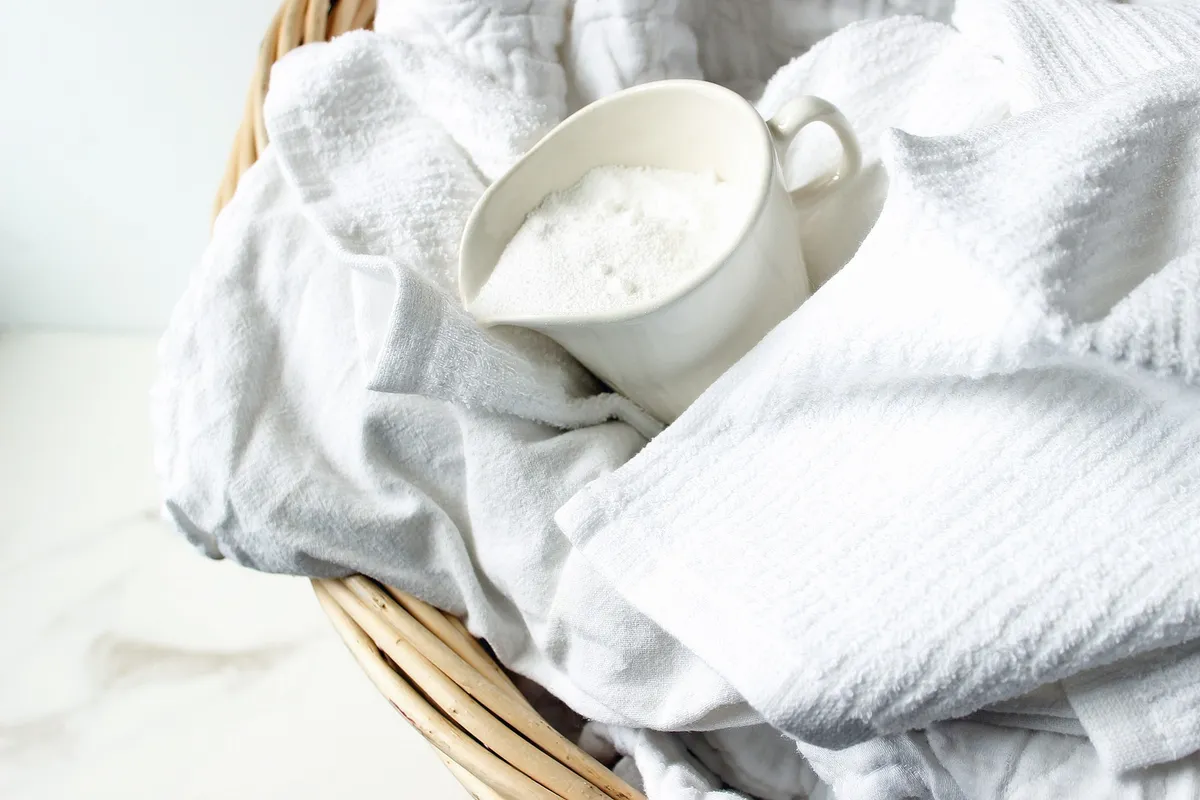
One thing to know upfront: this powder version can clump if your grated soap wasn’t fine enough, or if humidity gets into the container. A quick shake or stir before each use usually fixes it.
Liquid Version: Baking Soda Detergent for HE Washers
Some people just prefer liquid detergent, especially for HE machines where they’re used to pouring instead of scooping. The liquid version also dissolves a little more predictably since you’re not relying on the wash cycle to break down soap shavings.
Steps to make it:
- Grate one bar of soap and add it to a pot with about 4 cups of water
- Heat gently, stirring until the soap fully dissolves — don’t let it boil
- Remove from heat and stir in 1/2 cup washing soda and 1/2 cup baking soda
- Let the mixture cool completely; it will thicken as it sits
- Pour into a large storage jug using a funnel, then top off with more water to your desired consistency
How to Make an All-Purpose Vinegar Cleaning Solution
Give the jug a good shake before every use — the ingredients settle and separate over time, and you want an even mix going into the wash. This version doesn’t last quite as long as the powder, since the natural soap can start to break down in liquid form. Plan to use it up within about a month for the best results.
How to Use Your Homemade Detergent Correctly
The biggest reason people give up on homemade detergent is using too much of it. More is not better here — it just means more residue on your clothes and a bigger risk of buildup inside your machine over time, especially with HE washers.
Warm water helps everything dissolve more completely than cold, particularly for the powder version. If you’re washing on a cold cycle for colorfastness, consider pre-dissolving your detergent in a little warm water before adding it to the load.
As for where it goes: add powder detergent directly to the drum before you load your clothes, not the dispenser tray, since it can clog dispenser compartments over time. Liquid detergent is fine in either the drum or the dispenser tray, whichever your machine’s manual recommends.
Boosting Stain Power and Freshness
Homemade detergent handles regular dirt and odor well, but a few add-ons make it work even better for tougher situations.
- Add vinegar to the rinse cycle — about half a cup in the rinse compartment or added manually softens fabric and helps rinse out any lingering soap residue
- Use essential oils for scent — a few drops of lavender, eucalyptus, or lemon mixed into your batch gives a light natural fragrance without synthetic chemicals
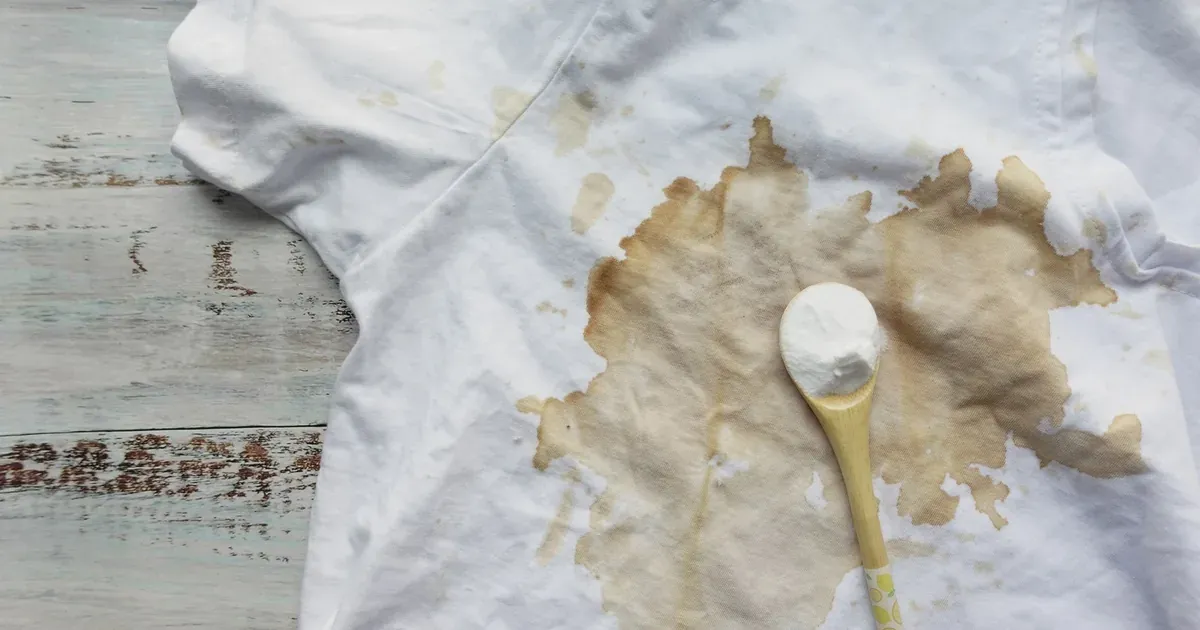
- Pretreat stains with a paste — mix baking soda with a small amount of water into a paste, rub it into the stain, and let it sit for 15-30 minutes before washing as usual
Natural Stain Remover Recipes for Common Laundry Messes
Skip the vinegar and bleach combination entirely — that’s a mistake worth flagging on its own since mixing certain cleaning agents can create fumes you don’t want to breathe in. Keep your boosters simple and separate.
Common Mistakes to Avoid
- Using too much detergent per load — this causes residue buildup, especially in HE machines, and can leave clothes feeling stiff or slightly gritty. Stick to the lower end of the dosing range and adjust only if needed.
- Skipping the washing soda — baking soda alone doesn’t have much grease-cutting power. Washing soda is what actually breaks down oils and ground-in dirt, so don’t leave it out to save a step.
- Storing detergent somewhere humid — a bathroom cabinet or damp laundry closet will turn your powder into a solid clump fast. Keep your container somewhere dry, like a linen closet or pantry shelf.
- Using heavily scented bar soap — if your bar soap already has a strong fragrance and you add essential oils on top, the combination can smell muddled or overwhelming. Choose an unscented or mild bar soap as your base.
- Skipping the patch test on sensitive skin — even natural ingredients can cause reactions for some people. Test a small batch on one load before committing your whole wardrobe to it.
How to Deep Clean a Front-Load Washing Machine
Is Homemade Detergent Right for Every Household?
For most everyday laundry — regular clothes, towels, sheets, kids’ school clothes — this detergent works great and holds up well over time. It’s a solid switch if your main goals are saving money, cutting down on synthetic fragrance, or just knowing exactly what’s in your detergent.
That said, it’s not the right tool for every job. Heavily soiled workwear, like mechanic uniforms or anything covered in grease and grime, may need something stronger than what a homemade mix can handle. Cloth diapers that need sanitizing are also better off with a detergent specifically formulated for that purpose. And if anyone in your house has significant skin sensitivities, do a patch test with a small load before switching over completely.
The smart move either way is starting small. Mix a half batch, run it through a few loads, and see how it performs on your actual laundry before you commit to a full container.
FAQ
Is baking soda safe for all washing machines, including HE models?
Yes, baking soda is safe for HE washers when used in the recommended small amounts. It doesn’t create excess suds, which is the main concern with HE machines. Just avoid overloading the detergent dispenser.
Can baking soda alone clean laundry without other ingredients?
Baking soda helps soften water and neutralize odors, but it doesn’t have strong grease-cutting power on its own. Pairing it with washing soda and soap gives you a much more effective detergent for actual dirt and stains.
How long does homemade baking soda detergent last in storage?
Powder versions can last several months if kept in an airtight container away from moisture. Liquid versions are best used within about a month, since natural soap can separate or lose potency over time.
Will homemade detergent leave my clothes smelling clean?
It won’t have the strong synthetic fragrance of store-bought detergent, but clothes will smell neutral and fresh. Adding a few drops of essential oil to the mix gives a light, natural scent if you want one.
Grab a bar of soap and your box of baking soda tonight, mix a half batch, and run it through your next load of towels. You’ll know within one wash whether this is going to be your new normal.